
Brand & Values
Creatine Marketing Claims, Ranked by Evidence
From well established to entirely speculative. A tier list for everything creatine gets sold on.
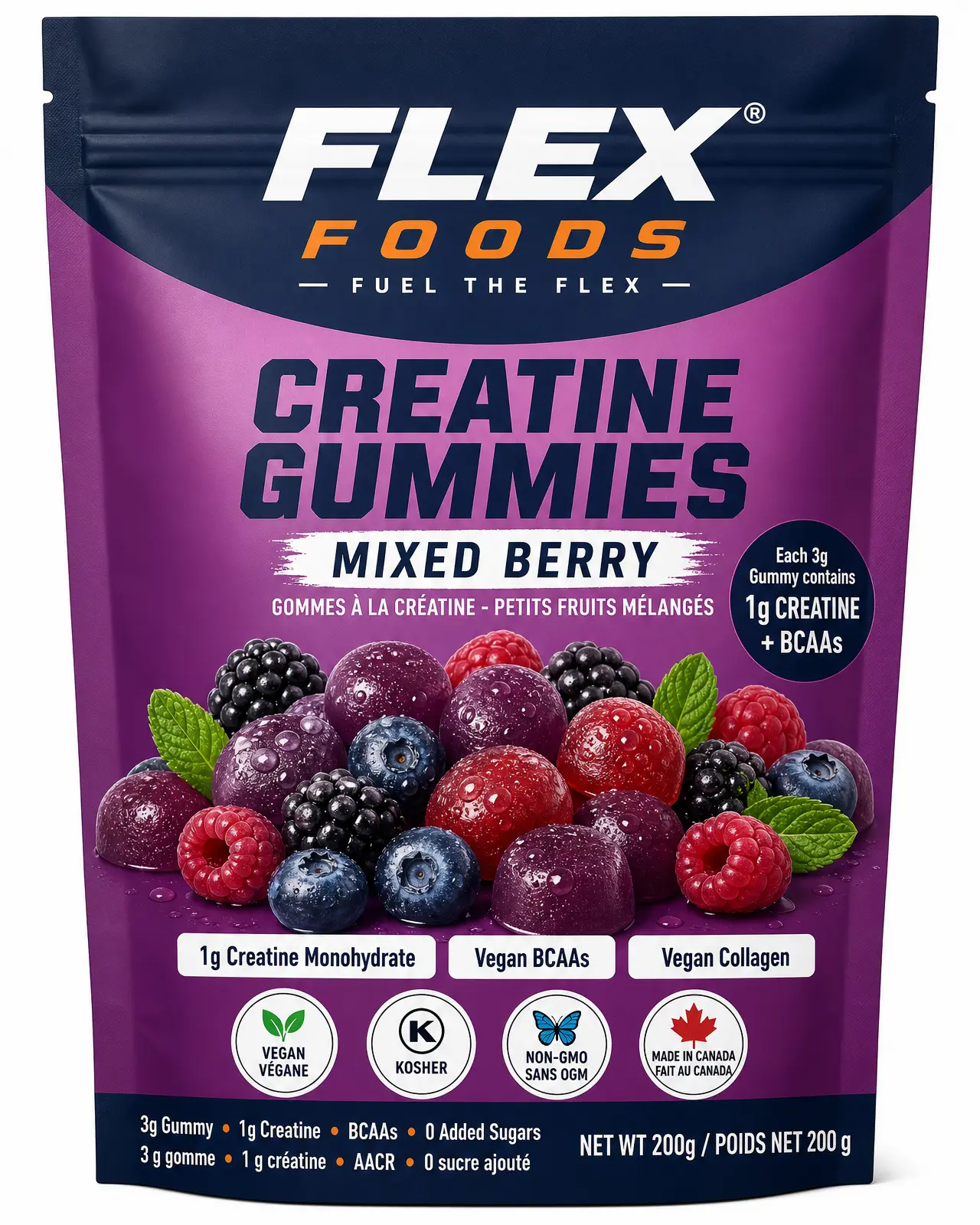
Creatine is genuinely well evidenced, which makes it a magnet for claims that ride on that reputation without sharing it. Here's a sorted list.
Tier 1: Well established
Increased strength and lean mass alongside resistance training. The core claim, supported by several hundred human trials. Meta-analyses find roughly 20% greater strength gains versus training plus placebo — a percentage of the improvement, not of total strength.
This is also the claim territory Health Canada's creatine monograph permits, which is not a coincidence. See what Health Canada lets a creatine product claim.
Improved repeated high-intensity effort. Better performance across repeated sprints with incomplete recovery. Directly follows from faster phosphocreatine resynthesis. See creatine for team sports.
Increased muscle creatine stores. Trivially true and worth listing, since it's the mechanism everything else depends on.
Tier 2: Reasonably supported, narrower
Benefit in older adults doing resistance training. Meta-analyses find greater lean mass and strength gains than training alone. The training component is essential. See creatine after 50.
Larger response in vegetarians and vegans. Lower baseline stores mean more headroom. Consistently observed. See creatine for vegans and vegetarians.
Preserving muscle during immobilisation. A small literature with a consistent direction. See creatine during injury and immobilisation.
Tier 3: Mixed or emerging
Reduced muscle damage and soreness. Some studies find lower creatine kinase and reduced soreness; others find nothing. Leans mildly positive, inconsistent. See creatine and muscle recovery.
Cognitive effects. Meta-analyses find small effects on memory, concentrated in older adults, vegetarians and people under sleep deprivation. Study doses generally exceed a maintenance serving. Not permitted claim territory in Canada. See creatine and brain energy.
Bone density with resistance training. Some positive trials in post-menopausal women; not uniform; creatine alone shows little. See creatine and bone density.
Glucose metabolism. A small research thread, with exercise doing most of the work in the positive findings. See creatine and blood sugar.
Tier 4: Weak or unsupported
Fat loss. No mechanism, no evidence. If anything the scale moves the other way from intracellular water.
Aerobic endurance performance. Studies generally find no meaningful improvement in VO₂max or steady-state performance. The added mass is a liability. See creatine for endurance athletes.
Sleep quality or reduced sleep need. Early, inconsistent, and using much higher doses. See creatine and sleep.
Mood or depression. A small adjunct literature in clinical research. Creatine is not a treatment for depression and marketing it that way would be well outside the evidence and the rules. See creatine and mood research.
Testosterone or hormonal effects. Not supported. Creatine is not a hormone. See is creatine a steroid.
Tier 5: Product claims that don't hold up
Claims about creatine products rather than about creatine.
"Better absorbed" forms. Monohydrate is already absorbed from the gut at near-complete efficiency. There's little to improve. HCl, buffered and nitrate forms cost more with less evidence, and ethyl ester degrades to creatinine in stomach acid faster than monohydrate. See monohydrate vs other forms.
"No loading required." Presented as a product advantage; loading was never required for any form. Any maintenance dose saturates in three to four weeks. See do you need to load creatine.
"No bloating." Sold against a misunderstanding — creatine's water gain is intracellular, not the subcutaneous puffiness people mean. See creatine and water retention.
"Cycling required." No evidence base. Cycling costs you saturation. See do you need to cycle creatine.
Creatine inside a proprietary blend. If the quantity isn't disclosed, assume it's below an effective dose. See proprietary blends.
The claim this list doesn't cover
One thing isn't a claim about creatine at all, and for a gummy it matters more than any tier above: whether the product contains the creatine it declares.
Creatine degrades to inert creatinine in water, acid and heat, and independent testing has found gummy products well below label claim. A Tier 1 ingredient at 40% of its stated dose is not a Tier 1 product.
Ask for finished-product testing near end of shelf life, with creatinine quantified. Ask us. See how to check a creatine gummy.
General information about a natural health product, not medical advice.