
Training
Creatine for Team Sports: Hockey, Soccer, Basketball
Repeated-sprint ability is where creatine earns its place. Hockey shifts, soccer surges, basketball transitions.
Team sports have an energy profile that suits creatine unusually well, and it isn't the one people assume.
The demand isn't a single maximal effort, and it isn't sustained aerobic work. It's repeated high-intensity efforts with incomplete recovery, over an extended period — and that's precisely the pattern phosphocreatine availability governs.
The pattern
Consider what actually happens across a game:
- Hockey: shifts of roughly 30–60 seconds at near-maximal output, separated by a few minutes on the bench, repeated 20 or more times.
- Soccer: sprints of a few seconds interspersed through 90 minutes of movement, with the decisive efforts often occurring late.
- Basketball: repeated accelerations, jumps and transitions with short recovery.
- Rugby, football, field hockey: variations on the same theme.
In every case, individual efforts fall inside the phosphocreatine window, and performance depends heavily on how completely stores are resynthesised before the next one.
Why resynthesis is the key variable
Phosphocreatine depletes rapidly during maximal effort and rebuilds during recovery — a process requiring oxygen and taking minutes for full restoration.
In a game, you rarely get full recovery. Each effort starts from a slightly lower baseline than the last, which is why sprint times degrade over the course of a match and why the fourth quarter looks different from the first.
Larger creatine stores mean more phosphocreatine available at the start of each effort and faster resynthesis between them. The practical result is less degradation across repeated sprints — the last effort looks more like the first.
Research on repeated-sprint performance has found this reasonably consistently, and it's among the better-supported applications of creatine outside the weight room.
What that means competitively
Not a faster first sprint. Games are rarely decided by a player's fresh maximum.
They're decided by whether you can still close a gap in the 55th minute, whether your last shift has the same jump as your first, whether you're still winning a race to a loose ball late in a period.
That's a fatigue-resistance benefit rather than a peak-capacity one, and it's a genuinely useful thing to buy.
The weight consideration
Roughly 1–2 kg of intracellular water accompanies saturation.
For most team-sport athletes this is a non-issue and arguably an advantage — contact sports reward mass. For sports where a player's role depends on acceleration over long distances, it's worth being aware of, though the repeated-sprint benefit generally outweighs a modest weight increase.
The exception is sports with weight classes, covered in creatine and weight classes.
Practical dosing around a season
Take it daily, year-round. Saturation is what matters, and stores wash out over four to six weeks if you stop. Taking it only on game days accomplishes nothing — you'd be sub-saturated on the days that count. See why daily consistency matters.
Start in the off-season or pre-season. Saturation takes around four weeks on a 3 g maintenance dose, so beginning mid-season means several weeks before the effect is available. Start it alongside a summer strength block.
Rest days and travel days count. Turnover continues regardless of whether you played.
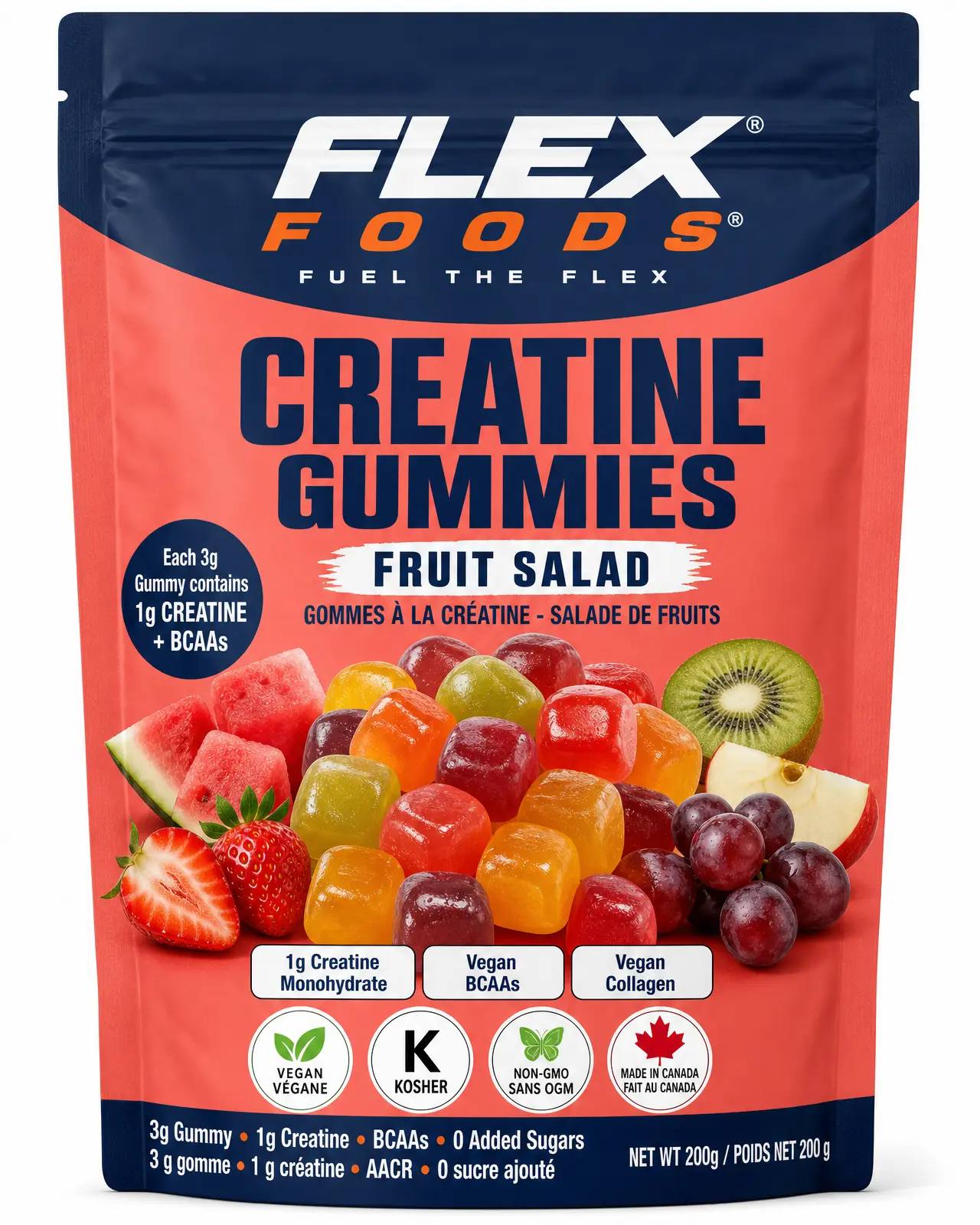
Format matters for adherence on the road. Team travel, hotel rooms and early buses are exactly where a powder requiring a shaker and water gets skipped. That's the practical argument for a chewable — see travelling with creatine.
For coaches and team staff
Three points worth knowing.
Creatine is not banned. It doesn't appear on the WADA prohibited list and is permitted across professional and collegiate sport. See is creatine a steroid.
Contamination is a real risk in supplements generally. Tested athletes should use third-party certified products, because analyses have repeatedly found undeclared substances in supplement products. This is about supply chain integrity rather than creatine itself. See contamination in supplements.
Age matters. Health Canada's creatine monograph is written for adults, and our product is intended for adults. For minor-age athletes, that's a conversation for a physician or sports dietitian — see should teenagers take creatine.
What matters more
Sleep, total energy intake, carbohydrate availability for the aerobic component, and training load management. Creatine is a marginal gain on top of those, not a substitute for any of them.
General information about a natural health product, not medical advice.