
Training
Snacking for Runners: Fuel Between Long Runs
Recovery happens in the 20 hours you're not running. That's where most runners under-fuel.
Running nutrition advice is overwhelmingly about the run itself — what to eat before, what gels to carry, how to fuel a marathon. All useful, and all covering maybe 10% of the week.
The adaptation happens in between. And the between is where most runners, particularly recreational ones, quietly under-eat.
The two things runners under-consume
Carbohydrate
Running is glycogen-dependent, and glycogen stores are finite. Sports nutrition guidance for endurance athletes commonly puts carbohydrate needs somewhere between 5 and 10 g per kilogram of bodyweight per day depending on training volume — considerably higher during heavy blocks.
For a 65 kg runner in a solid training block, that's 325–500 g of carbohydrate daily. It's a lot, and low-carbohydrate eating patterns sit awkwardly with high running volume for exactly this reason.
Under-fuelling carbohydrate shows up as heavy legs on easy runs, sessions that fall apart in the last interval, and a persistent sense of running at a slightly higher effort than the pace warrants.
Protein
Runners often think of protein as a strength-sport concern. It isn't. Endurance training damages muscle tissue that needs repairing, and a small fraction of amino acids get oxidised for fuel during prolonged work, especially when carbohydrate runs low.
Guidance for endurance athletes commonly lands around 1.2–1.7 g per kilogram daily — above the general population figure. For a 65 kg runner that's 78–110 g.
Under-fuelling protein shows up as soreness that doesn't clear between sessions and a slow drift in body composition despite high training volume.
A word about under-fuelling generally
Worth being direct. Chronically eating less energy than training demands — known as low energy availability, and in its clinical form Relative Energy Deficiency in Sport — is common in endurance running and genuinely harmful. It affects bone density, hormonal function, immunity, mood and performance, in both men and women.
The warning signs include recurrent stress injuries, frequent illness, disrupted or absent menstrual cycles, unusual fatigue, and performance that declines despite consistent training. If any of that is familiar, it's worth raising with a doctor or a sports dietitian rather than adjusting your snacks. This is one area where individual assessment genuinely matters.
Where snacks actually help
Two specific gaps.
The post-run window, when you don't want food
Hard running suppresses appetite for a while afterward — an effect of exercise on the appetite-regulating hormones ghrelin and PYY. Which means the moment you most need to eat is often the moment you least want to.
Glycogen resynthesis is fastest in the first few hours after finishing. If you're running once daily with 20+ hours before the next session, normal meals handle it. If you're doubling, racing tomorrow, or running on consecutive hard days, being deliberate matters.
Practical answer: something small, palatable and easy rather than a proper meal. Chocolate milk earned its reputation here for good reason — carbohydrate plus protein plus fluid, in a form you'll actually get down.
The between-meals gap
High-volume runners need more total energy than three meals comfortably deliver. Snacks are how the total gets there.
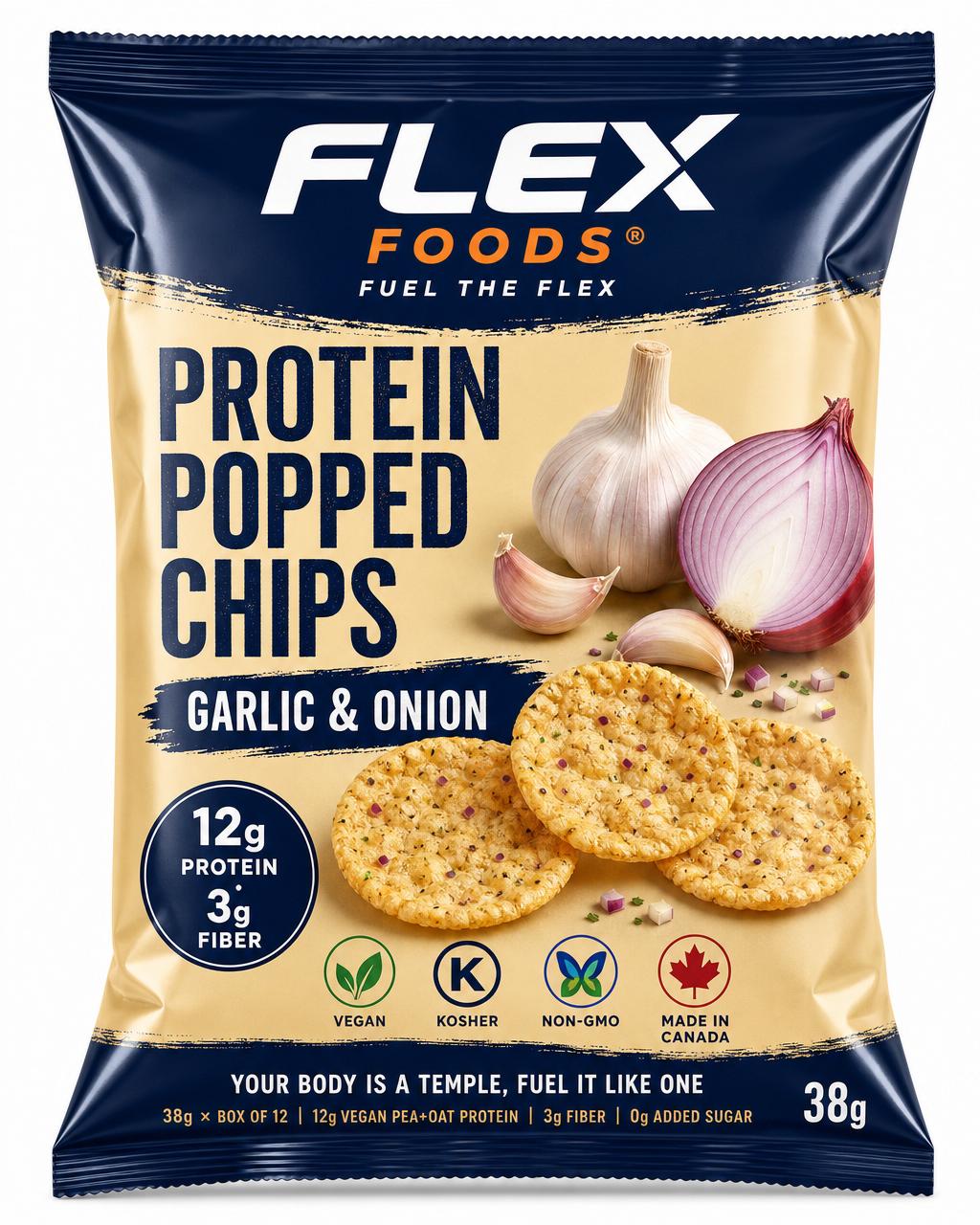
This is where a protein-forward snack does useful work: a 38 g bag of Protein Popped Chips is 150 calories with 12 g of protein and 16 g of carbohydrate — some of both, in a shelf-stable form that survives a kit bag.
Honest limit: 16 g of carbohydrate is modest for a runner's needs. If your primary gap is carbohydrate rather than protein, fruit, rice cakes, bread and dried fruit deliver far more per calorie. A protein snack solves the protein half.
What to eat when, around a long run
| Timing | Focus | Example |
|---|---|---|
| Night before | Carbohydrate | A normal large dinner with rice, pasta or potatoes |
| 2–3 h before | Carbohydrate, low fibre | Toast with jam, oats, banana |
| 30 min before | Small fast carbohydrate | Banana, dates, sports drink |
| During (>75 min) | Carbohydrate + fluid | Gels, chews, sports drink |
| Within 1 h after | Carbohydrate + protein + fluid | Whatever you'll actually consume |
| Rest of the day | Both, spread out | Meals plus two protein-containing snacks |
The last row is the one people neglect and it does most of the work. Our post on protein distribution covers why spreading it matters.
Three practical notes
Practise race fuelling in training. Gut tolerance for eating during exercise is trainable, and race day is a bad time to discover a product doesn't agree with you.
Watch fibre before long runs. The strategies that make a snack filling — fibre, volume — are the ones most likely to cause gastrointestinal distress mid-run. Save them for after.
Iron matters, especially for female runners. Endurance running is associated with increased iron losses, and deficiency is common and performance-limiting. Worth testing rather than guessing, and worth discussing with a clinician before supplementing.
More on shorter distances in running fuel for a 5K.