
Training
Creatine for CrossFit and Hybrid Training
Mixed-modal work sits squarely in the window creatine supports. The complication is training frequency.
CrossFit and hybrid training present an unusual energy profile — heavy lifting, gymnastics, and conditioning inside the same session, often with minimal rest.
That mix happens to overlap heavily with what creatine does, which makes it one of the more straightforward applications.
The energy profile
A typical mixed-modal workout involves repeated near-maximal efforts with incomplete recovery over 5 to 20 minutes. Within that, several distinct demands:
- Heavy barbell work — cleans, snatches, squats, deadlifts. Short maximal efforts, directly phosphocreatine-dependent.
- Gymnastics volume — pull-ups, muscle-ups, handstand push-ups. Repeated efforts to near-failure.
- Conditioning intervals — rowing, assault bike, sprints. Repeated high-intensity efforts.
All three involve repeated hard efforts with insufficient recovery, which is the pattern where phosphocreatine availability governs how much output degrades across a workout.
What to expect
Realistic and specific:
- Less degradation across rounds. Round five closer to round one. This is the clearest benefit.
- More reps before breaking on gymnastics. Unbroken sets holding longer.
- Better barbell cycling under fatigue.
- Slightly better between-session recovery across a high-frequency training week.
What not to expect: an improvement in longer aerobic pieces. A 20-minute steady effort is largely aerobic, and creatine contributes little there. See creatine for endurance athletes.
The complication: training frequency
Hybrid athletes often train five to seven days a week, sometimes twice daily. That has two implications.
Turnover is higher. More frequent high-intensity work means more phosphocreatine cycling and, plausibly, somewhat higher creatine requirements. The 3–5 g maintenance range still applies, but sitting at the upper end makes sense for high-volume athletes.
Recovery is the limiting factor, not creatine. Athletes training at that frequency are typically constrained by sleep, total energy intake and cumulative fatigue. Creatine won't fix under-recovery, and it's worth being direct that no supplement will.
Dosing
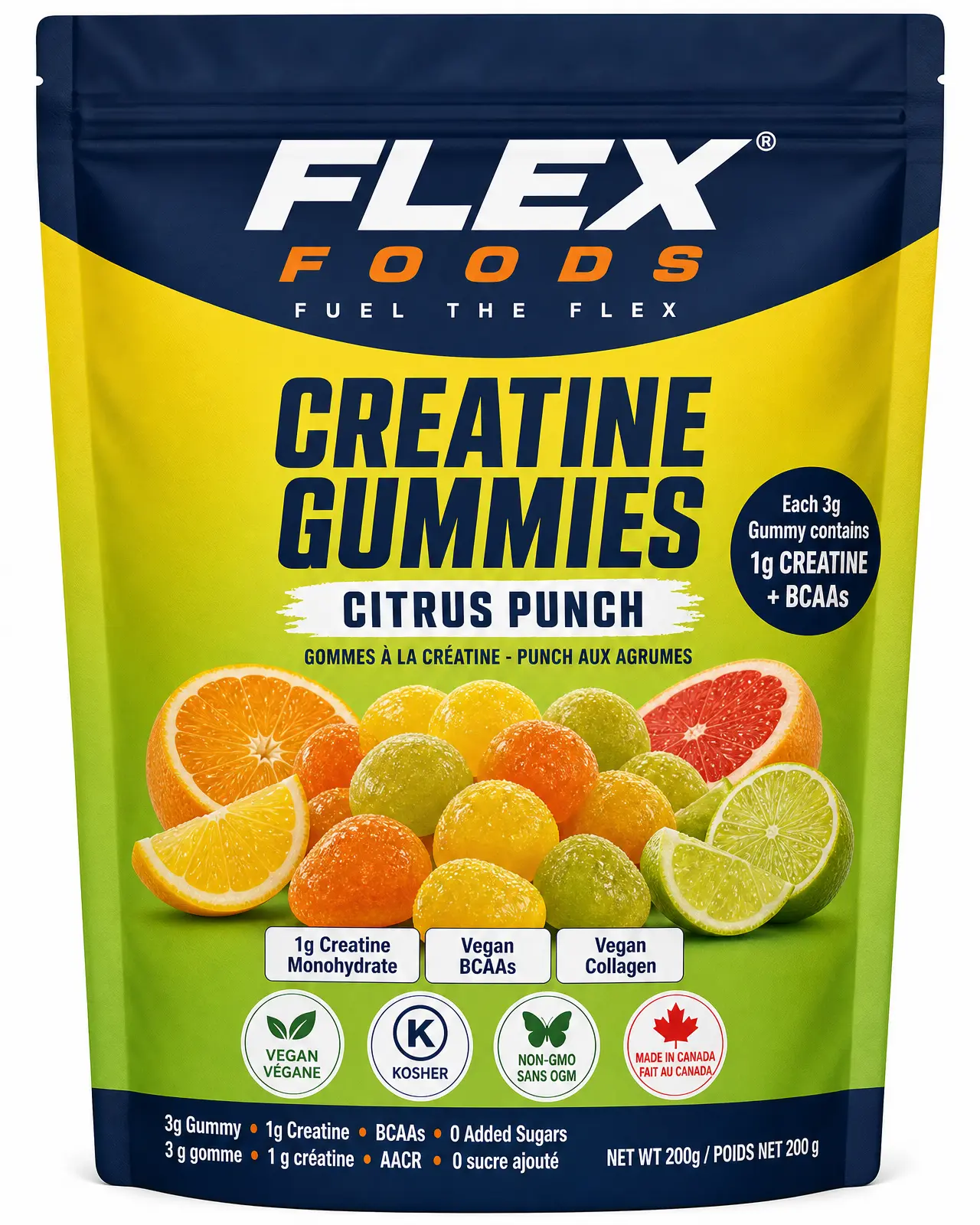
Our gummies deliver 1 g of creatine monohydrate per 3 g gummy, with a label serving of three gummies daily for 3 g.
For a hybrid athlete above roughly 85–90 kg training at high volume, that's the low end. Four or five gummies, or topping up with monohydrate powder, is closer to appropriate — with the caveat that sugar alcohols scale with gummy count. Detail in dose by bodyweight and the maltitol post.
Take it daily including rest days. Turnover doesn't pause.
The weight question
Roughly 1–2 kg of intracellular water comes with saturation.
For most hybrid athletes this is neutral or positive — heavier tends to help on barbell work and hurt on bodyweight movements, and the two roughly offset across mixed programming.
It matters more if your limiting movements are gymnastics-heavy — high-volume pull-ups, muscle-ups, handstand walks — where you're moving your own mass repeatedly. Worth being aware of rather than worrying about.
Sequencing it with a training cycle
Saturation takes around four weeks on a 3 g dose. If you want the effect available for a competition or a testing block, start at least six weeks out — four to saturate, plus time for training volume to convert into adaptation.
Starting two weeks before a competition means arriving mid-saturation with new water weight and no accumulated training benefit. That's the worst timing available.
See how long until creatine works.
What actually limits hybrid athletes
Keeping proportion, because this is a population prone to over-supplementing and under-recovering:
- Sleep. The primary recovery variable, and the one most often sacrificed for early classes.
- Total energy intake. High training volume with inadequate intake produces the pattern of stalled progress, recurrent niggling injuries and frequent illness. Chronic under-fuelling relative to demand is genuinely harmful and worth raising with a doctor or sports dietitian if it sounds familiar.
- Programming. Intensity every day isn't a programme.
- Protein intake, spread across the day.
- Creatine. A real but marginal gain on top of the above.
General information about a natural health product, not medical advice.