
Nutrition 101
Maltitol and Sugar Alcohols: What's Sweetening Your Gummy
Nine grams per serving, a real glycemic response, and a digestive threshold worth knowing before you chew six.
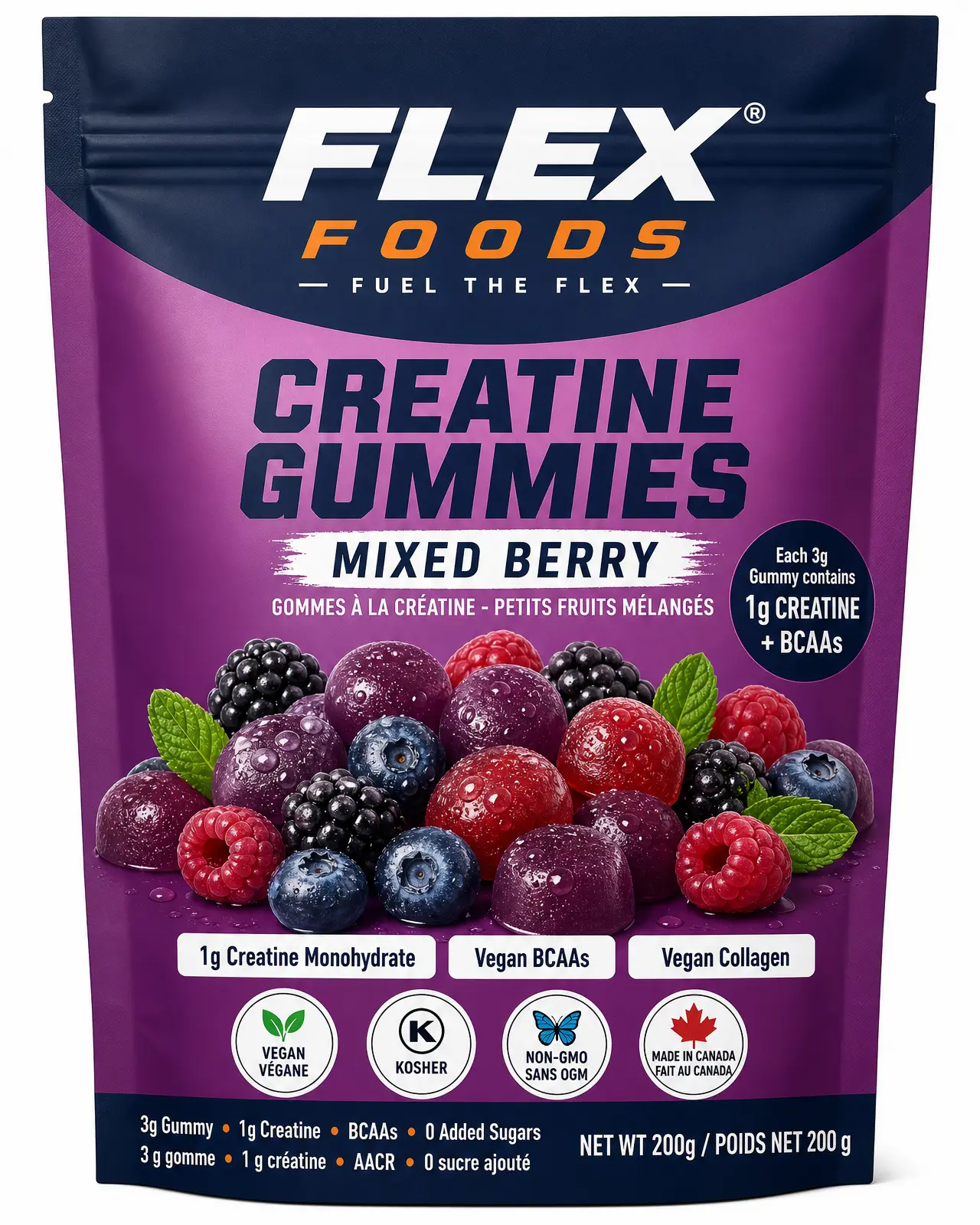
Our gummies are sweetened with maltitol and a small amount of stevia leaf extract. Maltitol is the first non-medicinal ingredient on the label, and three gummies contain 9 g of sugar alcohols.
That's a number worth understanding rather than glossing over, because maltitol has two properties people don't expect.
What sugar alcohols are
Polyols — carbohydrates structurally between a sugar and an alcohol, despite containing no ethanol. They occur naturally in some fruits and are manufactured commercially by hydrogenating sugars.
They're used because they taste sweet, provide bulk and texture that high-intensity sweeteners like stevia can't, and are only partially absorbed — so they contribute fewer calories than sugar.
Maltitol carries roughly 2.1 calories per gram against sugar's 4, and is around 75–90% as sweet as sucrose. It's the workhorse of sugar-free confectionery specifically because it behaves most like sugar in manufacturing.
The first thing people don't expect: it raises blood glucose
"Sugar-free" and "0 g sugars" imply glycemic inertness. For maltitol, that's not accurate.
Maltitol has a glycemic index commonly cited in the range of roughly 35 to 52 depending on the source and form. That's lower than sucrose at around 65, and it is not zero. Maltitol is partially digested to glucose and sorbitol in the small intestine, and the glucose portion enters circulation.
Compare that with erythritol, which has a glycemic index near zero because it's absorbed and excreted largely unchanged, and is far better tolerated digestively. Erythritol is the better polyol on both counts — it's also more expensive, less sweet, and produces a cooling sensation that's difficult to work with in some flavour profiles.
Practical implication: if you're managing blood glucose, don't treat maltitol as free. Nine grams is a modest but non-zero carbohydrate load, and our panel declares 11 g total carbohydrate per serving. If you count carbohydrate for insulin dosing, count it — and confirm your method with your diabetes care team rather than a label claim.
The second thing: the digestive threshold
Because sugar alcohols are incompletely absorbed in the small intestine, the unabsorbed portion reaches the colon. Two things happen there.
Osmotic effect. Polyols draw water into the intestinal lumen, which can produce loose stools or diarrhoea.
Bacterial fermentation. Gut bacteria ferment them, producing gas — bloating, cramping, flatulence.
Individual tolerance varies a great deal, but rough guidance from the literature is that maltitol commonly produces symptoms somewhere above about 20–30 g per day, with sensitive individuals reacting well below that.
At the label serving of three gummies, you're at 9 g — under the threshold for most people, though not everyone.
Where it becomes a genuine problem is if you scale up. Five gummies for a 5 g creatine dose is 15 g of sugar alcohols. And a 20 g creatine loading protocol would mean twenty gummies and roughly 60 g of maltitol daily, which would cause significant distress in most people. That's the arithmetic behind our advice not to load with gummies — see do you need to load creatine.
Also worth knowing: maltitol is a FODMAP. Anyone following a low-FODMAP protocol for IBS should be aware that polyols are the "P" in the acronym, and sugar-free confectionery is a common unrecognised trigger.
Why maltitol rather than something else
Honest answer: texture and manufacturing.
A gummy needs bulk. Sweetness alone doesn't build one — you need something occupying volume, providing the right solids content for pectin to set against, and behaving predictably when heated and deposited. Sugar does this excellently; maltitol is the closest sugar-free substitute.
Stevia contributes sweetness at tiny doses but no bulk whatsoever. Used alone it would produce a gummy that doesn't set. It's in the formulation to round out the sweetness profile and reduce the amount of maltitol required, not as the primary sweetener.
Could we use erythritol instead? It's glycemically inert and better tolerated, which are real advantages. It's also less sweet, more expensive, prone to crystallising, and produces a cooling mouthfeel. It's a legitimate direction and a genuine formulation trade-off, not a settled question.
What's on our panel
| Per 3 gummies (9 g) | |
|---|---|
| Calories | 45 |
| Total carbohydrate | 11 g |
| Sugars | 0 g |
| Sugar alcohols | 9 g |
| Fibre | 0 g |
| Sodium | 15 mg |
| Protein | 0 g |
Note that sugars read 0 g and sugar alcohols read 9 g. Both are accurate, and they mean different things — a distinction covered in zero added sugar vs sugar alcohols.
Practical guidance
- Start with the label serving. Three gummies. Don't begin with six to "get ahead."
- Take them with food if you're sensitive. It generally slows the polyol load reaching the colon.
- If you're managing blood glucose, count the 11 g of carbohydrate and discuss with your care team.
- If you have IBS or follow low-FODMAP, polyols are a known trigger category. Proceed cautiously or use powder instead.
- Don't try to load. The arithmetic doesn't work.
General information about a natural health product, not medical advice.