Nutrition 101
Zero Added Sugar vs Sugar Free vs Sugar Alcohols
Three claims with three different legal meanings, and one of them is doing less work than it appears to.
Sugar-related claims are among the most confusing on any label, because several similar-sounding phrases have distinct regulatory definitions — and a product can legitimately carry one while failing another.
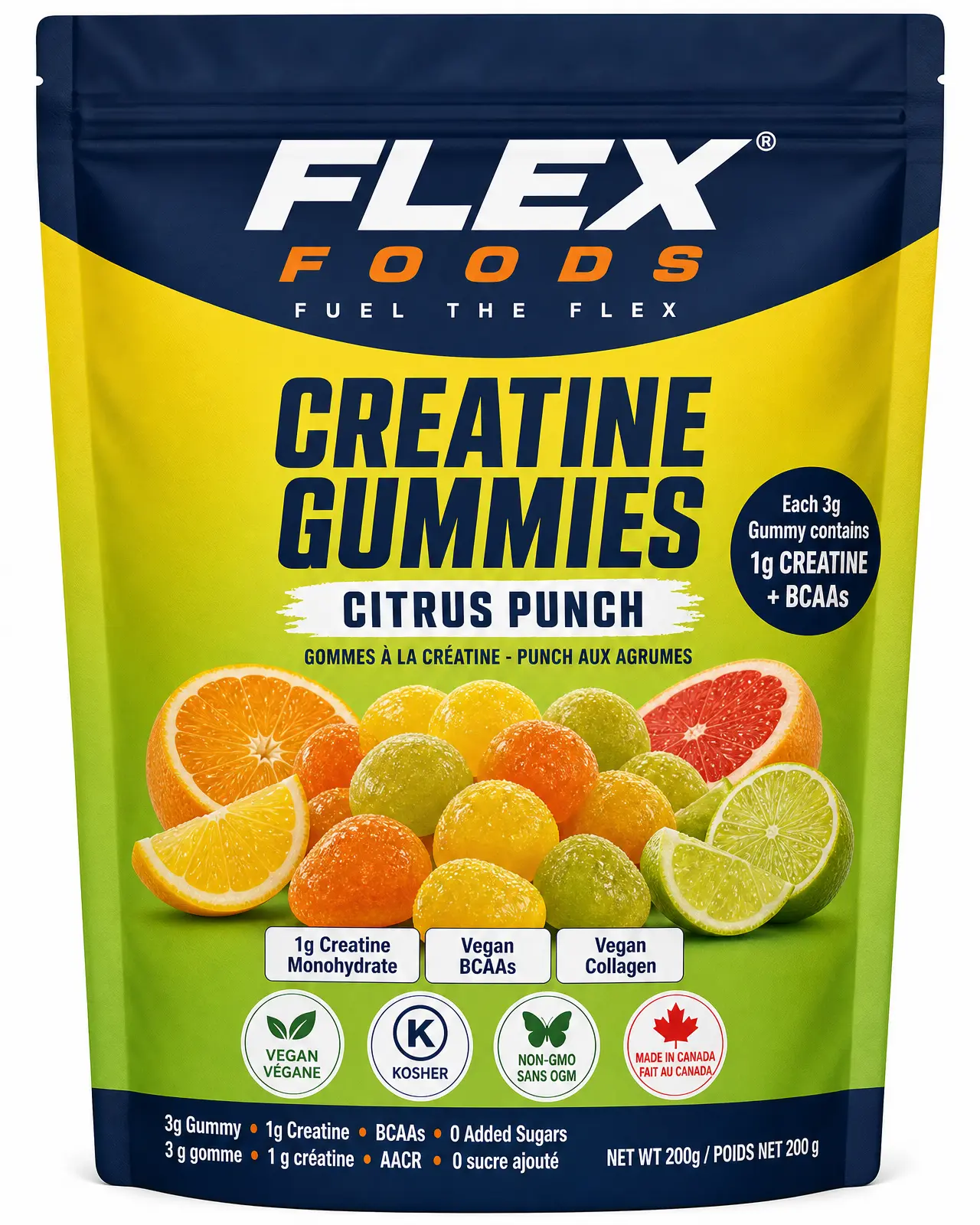
Our packaging says 0 Added Sugars. Here's what that does and doesn't tell you.
The three claims
"No added sugars" / "0 added sugars"
Means no sugars were added during processing, and no ingredients containing added sugars were used. It also excludes ingredients whose sugars have been concentrated to functionally sweeten the product.
What it doesn't address: naturally occurring sugars, or non-sugar sweeteners. A fruit juice can have no added sugars and plenty of sugar.
"Sugar-free" / "free of sugar"
A stricter claim. In Canada it requires the food to contain a negligible amount of sugars — generally less than 0.5 g per reference amount and per serving — and to meet the conditions for a low-energy claim.
That energy condition is the part people miss. A sugar-free claim isn't only about sugar content; the product also has to be low in calories.
Sugar alcohols
Not a claim — a declaration. Polyols are carbohydrates that aren't classified as sugars for labelling purposes, so they're listed on their own line within total carbohydrate.
This is the crucial mechanic: a product sweetened entirely with sugar alcohols can accurately declare 0 g sugars while being distinctly sweet.
How our label works
Per 3 gummies: Carbohydrate 11 g, Sugars 0 g, Sugar alcohols 9 g, Calories 45.
Every one of those is accurate. The sweetness comes from maltitol, a sugar alcohol, plus a small amount of organic stevia leaf extract.
So "0 Added Sugars" is a true statement about what we put in. It is not a statement that the product has no glycemic effect, and we'd rather say that plainly than let the claim work harder than it should.
Why 0 g sugars doesn't mean no glucose response
The point that matters most here.
Maltitol is partially digested to glucose in the small intestine. Its glycemic index is commonly cited somewhere between 35 and 52 — lower than sucrose at around 65, and clearly above zero.
Compare erythritol, which has a glycemic index near zero because it's absorbed and excreted largely unchanged. Different polyols behave very differently, and grouping them together as "sugar alcohols" obscures that.
If you're managing blood glucose, count the total carbohydrate figure rather than reading the sugars line, and confirm your method with your care team. See creatine and blood sugar.
The other thing sugar alcohols do
Because polyols are incompletely absorbed in the small intestine, the unabsorbed portion reaches the colon, where it draws water in osmotically and is fermented by gut bacteria.
Result: bloating, gas, cramping, loose stools. Individual tolerance varies widely, with symptoms commonly appearing above roughly 20–30 g of maltitol daily and sensitive people reacting well below that.
At three gummies you're at 9 g, under the threshold for most people. Scaling up scales the polyol load. Full detail in the maltitol post.
Polyols are also a FODMAP, which matters for anyone with IBS.
A quick guide to the sweeteners you'll encounter
| Sweetener | Type | Glycemic | Digestive tolerance |
|---|---|---|---|
| Sucrose | Sugar | High | Good |
| Maltitol | Polyol | Moderate | Moderate |
| Sorbitol | Polyol | Low–moderate | Poor |
| Xylitol | Polyol | Low | Moderate |
| Erythritol | Polyol | Near zero | Good |
| Stevia (steviol glycosides) | High-intensity | None | Good |
| Monk fruit | High-intensity | None | Good |
One important note: xylitol is highly toxic to dogs, causing severe hypoglycaemia and liver damage. Our product doesn't contain it, but any sugar-free confectionery should be kept away from pets regardless.
Why we don't use only stevia
Because a gummy needs bulk, not just sweetness.
Stevia is intensely sweet at tiny doses and contributes no physical volume. A gummy built on stevia alone wouldn't set — there'd be nothing for the pectin to structure against. Maltitol provides both sweetness and the solids the matrix requires.
Stevia is in the formulation to round out the sweetness profile and reduce the amount of maltitol needed. See stevia, anthocyanins and natural colour.
The honest summary
"0 Added Sugars" is accurate and narrower than it sounds. The product is sweetened with a partially glycemic sugar alcohol at 9 g per serving, declared on the panel.
Read the sugar alcohol line, not just the sugars line.
General information about a natural health product, not medical advice.