
Nutrition 101
How Much Creatine Do You Actually Need Per Day?
Three to five grams is the standard answer. Here's where that number comes from and when yours differs.
The maintenance dose for creatine is one of the more settled numbers in sports nutrition: 3–5 grams per day for most adults. That figure appears consistently across position stands and review papers.
Worth understanding where it comes from, because it explains when your number should sit at the top of the range rather than the bottom.
The arithmetic behind the number
Muscle has a finite creatine storage ceiling — roughly 150–160 mmol per kilogram of dry muscle. Most omnivores sit somewhere around 120 mmol/kg without supplementing, so there's meaningful headroom.
Once saturated, you lose creatine at a fairly steady rate. Creatine spontaneously and irreversibly converts to creatinine at roughly 1.5–2% of the total pool per day, and the creatinine is excreted in urine.
For someone with a total body creatine pool around 120–140 g, that daily loss works out to roughly 2 g. Add what your body makes endogenously (about 1 g/day) and what you eat (variable), and 3–5 g of supplementation comfortably covers turnover and holds saturation.
That's it. The dose isn't calibrated to produce an effect — it's calibrated to replace what you lose.
Where you should sit in the range
Toward 5 g or above if:
- You're larger. More muscle mass means a bigger pool and more absolute daily turnover. A commonly cited weight-adjusted figure is around 0.03 g per kilogram of bodyweight — about 2.7 g for a 90 kg person, though many practitioners round up.
- You train frequently and hard. Higher turnover.
- You want to reach saturation faster without a formal loading phase.
Three grams is reasonable if:
- You're smaller or carry less muscle mass
- You're not in a hurry — 3 g will saturate stores, just over a longer timeframe
- You eat meat and fish regularly, so dietary intake is contributing
Where our gummies land
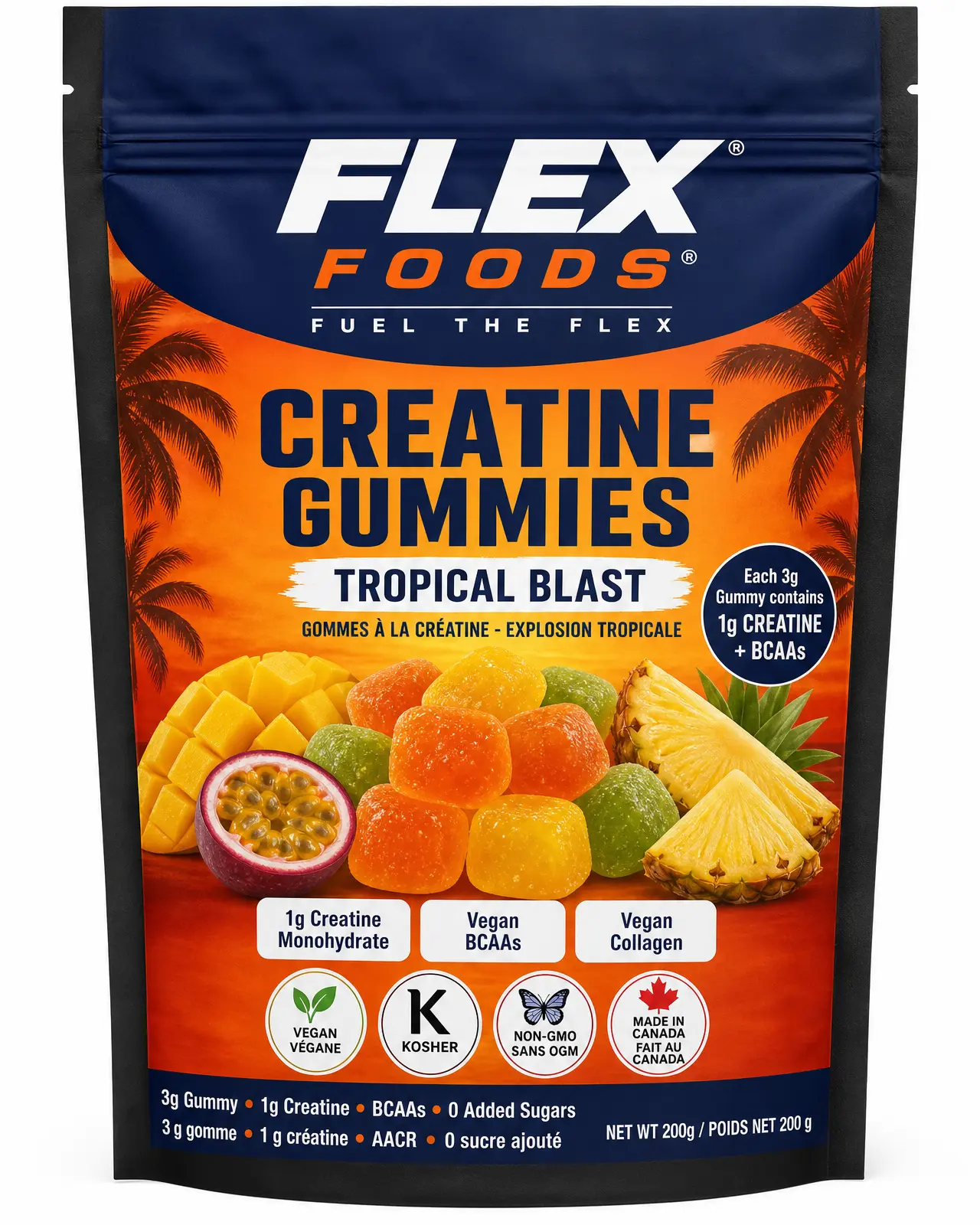
Each gummy is 3 g and contains 1 g of creatine monohydrate. The label directs three gummies daily — 3 g of creatine, at the bottom of the standard range.
Being straightforward about what that means: 3 g a day will get you to saturation and hold you there. It will take longer than 5 g would, and considerably longer than a loading protocol. If you're a larger person or training heavily, the top of the range is more appropriate for you than the bottom.
The practical constraint is that scaling up means more gummies, and more gummies means more maltitol — 9 g per three-gummy serving, so five gummies would be 15 g. For many people that approaches the threshold where sugar alcohols cause digestive symptoms. See the maltitol post before you decide to increase.
An alternative some people use: gummies for convenience most days, with a small amount of powder to top up. Less elegant, and it works.
How long to saturation
| Protocol | Time to saturation |
|---|---|
| 20 g/day loading (4 × 5 g) | 5–7 days |
| 5 g/day | ~3–4 weeks |
| 3 g/day | ~4 weeks or longer |
All three arrive at the same endpoint. Loading gets there faster and produces the water-weight gain faster; it also means a larger single-day dose, which is where most digestive complaints come from. Detail in do you need to load creatine.
Can you take too much?
Creatine has an unusually strong safety record. The International Society of Sports Nutrition's position stand describes doses up to 30 g per day for extended periods as not showing evidence of harm in healthy individuals, and long-term monitoring studies have run for years without adverse findings on kidney, liver or cardiovascular markers.
But there's no benefit to exceeding saturation. Once muscle stores are full, additional creatine is simply converted to creatinine and excreted. You're paying for urine.
Two practical caveats:
Digestive tolerance. Large single doses are the main cause of stomach upset. Splitting a dose across the day helps if you're taking more than 5 g.
Blood tests. Creatine supplementation raises serum creatinine, which is a marker used to estimate kidney function. It rises because you're consuming more of its precursor, not because kidneys are struggling — but a doctor who doesn't know you supplement may reasonably investigate. Tell them. See creatine and blood tests.
The short version
Three to five grams daily, every day, indefinitely. Consistency matters far more than the exact figure inside that range, and far more than timing.
General information about a natural health product, not medical advice. If you have kidney disease, take prescription medication, or are pregnant or breastfeeding, speak with your doctor or pharmacist first.