
Training
Do You Need to Load Creatine? The Case For and Against
Loading saturates muscle in a week. Skipping it takes a month and arrives at exactly the same place.
The creatine loading protocol — 20 g a day for five to seven days, then drop to a maintenance dose — dates to the early 1990s research that established creatine supplementation in the first place.
It works. It's also optional, and for a lot of people it's the wrong choice.
What loading does
Muscle creatine uptake isn't instant. Saturating stores from a typical baseline takes a certain total quantity of creatine delivered over time, and the rate is limited by transport into muscle cells rather than by how much you swallow.
Flooding the system with 20 g daily — usually split into four 5 g doses — reaches full saturation in about five to seven days. A steady 3–5 g daily reaches the same saturation in roughly three to four weeks.
Same endpoint. Different arrival time. This is the crucial point and it's often lost: loading does not produce a higher ceiling, better results, or a stronger effect. It produces the same result sooner.
When loading is worth it
Three situations:
A competition or event within a few weeks. If you want the effect present by a specific date and that date is close, loading is the way to get there.
You want to know quickly whether you respond. Around a fifth to a third of people see minimal benefit, usually because baseline stores are already near capacity. Loading compresses the answer into a week rather than a month. See non-responders.
Starting a defined training block. If you want the supplement working from week one rather than week four.
When it isn't
Digestive tolerance. The overwhelming majority of creatine-related stomach complaints come from large single doses. Twenty grams a day is where bloating, cramping and diarrhoea show up, and it's why the protocol splits into four doses.
The water weight arrives all at once. Loading produces a rapid 1–2 kg gain from intracellular water. That's not fat, and it's not subcutaneous bloating — but seeing it on the scale in five days unsettles people, and it's a genuine problem if you're in a weight class. See creatine and water retention.
You have no deadline. If you're supplementing for the next several years, whether saturation happens in week one or week four is irrelevant.
Why loading isn't practical with gummies
Here's the part specific to this format, and it's a real limitation rather than something to talk around.
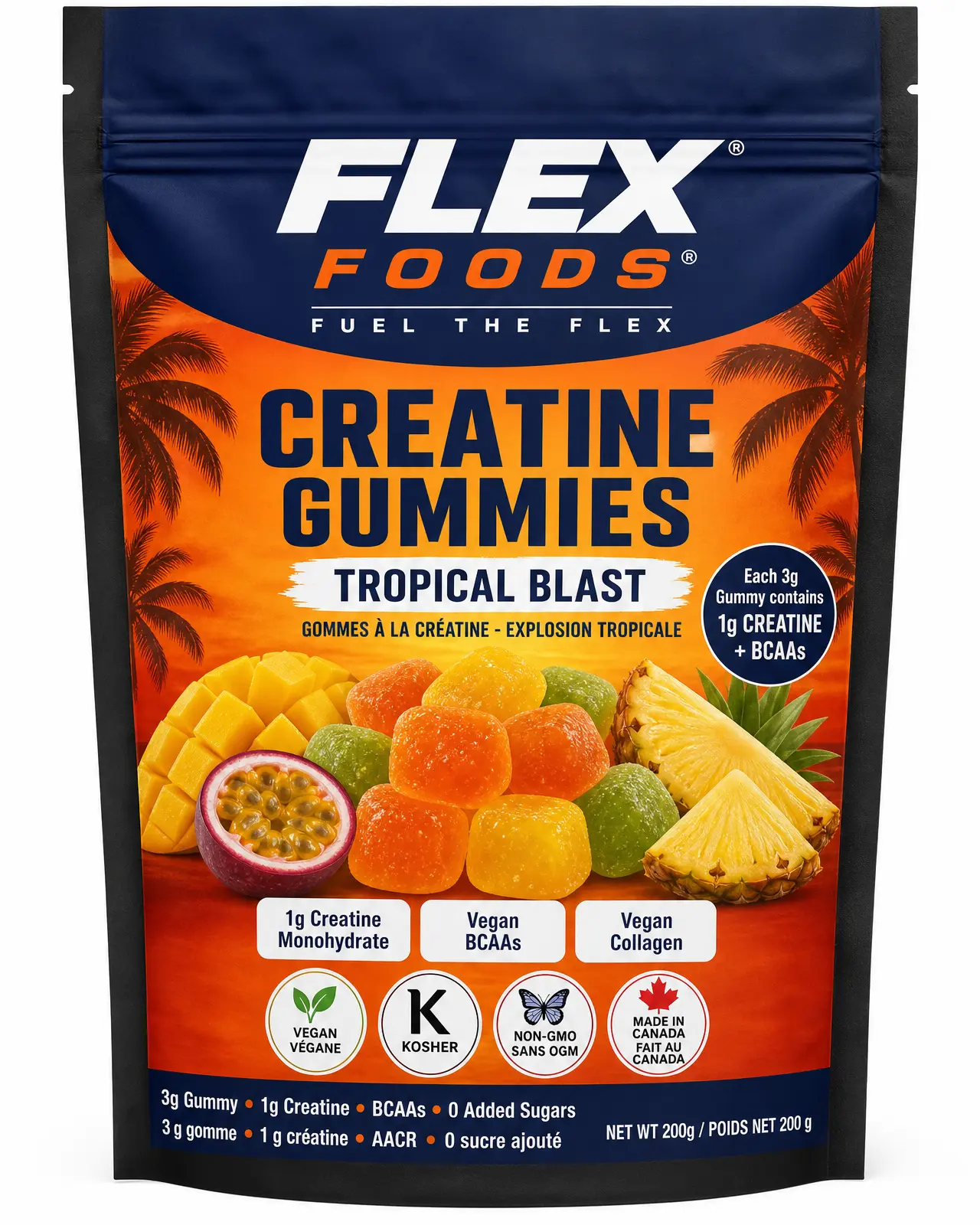
Our gummies contain 1 g of creatine per 3 g gummy. A 20 g loading dose would mean:
- 20 gummies per day
- 60 g of gummy
- Roughly 60 g of sugar alcohols per day
That last figure is the problem. Maltitol at that intake would cause significant digestive distress in most people — sugar alcohols draw water into the intestine osmotically and are fermented by gut bacteria, and 60 g is far past the threshold where that becomes uncomfortable. It would also cost you a third of a pouch per day.
So: don't try to load with gummies. If you want to load, use powder for the loading week and switch to gummies for maintenance afterward. That's a perfectly sensible approach and it plays to each format's strength. Background in the maltitol post.
The three approaches
| Approach | Protocol | Saturation | Suits |
|---|---|---|---|
| Classic loading | 20 g/day × 5–7 days, then 3–5 g | ~1 week | Deadlines, powder users |
| Straight maintenance | 3–5 g/day from the start | ~3–4 weeks | Most people, gummy users |
| Modified load | 10 g/day × 2 weeks, then 3–5 g | ~2 weeks | Compromise, powder users |
What to expect either way
Once saturated, the effect is the same regardless of how you got there. A few extra reps at a given load. Better performance on repeated sprints. Around a kilogram of scale weight from intracellular water.
The one thing that genuinely matters more than loading: taking it consistently afterward. Saturation washes out over four to six weeks once you stop, so a perfect loading week followed by sporadic use accomplishes very little. See why daily consistency matters.
General information about a natural health product, not medical advice.