
Training
Creatine and Water Retention: Intracellular vs Bloating
Creatine pulls water into muscle cells, not under the skin. Why the scale moves and what it actually means.
Weight gain is the most reliably reported effect of starting creatine, and it's the reason a lot of people stop.
The gain is real. What it consists of, and where it sits, is different from what most people assume.
The mechanism
Creatine is osmotically active. When muscle cells take up creatine, water follows it in to maintain osmotic balance — this is basic cell physiology rather than anything specific to supplements.
The key word is intracellular. The water moves into the muscle cell, not into the subcutaneous space between skin and muscle.
That distinction is the whole subject. Subcutaneous water retention is what produces a soft, puffy, blurred appearance — the thing people mean by "bloated." Intracellular water increases cell volume, which makes muscle look slightly fuller rather than softer.
How much and how fast
Typical figures from the literature: roughly 1–2 kg gained in the first week or so of a loading protocol, or more gradually over three to four weeks on a maintenance dose without loading.
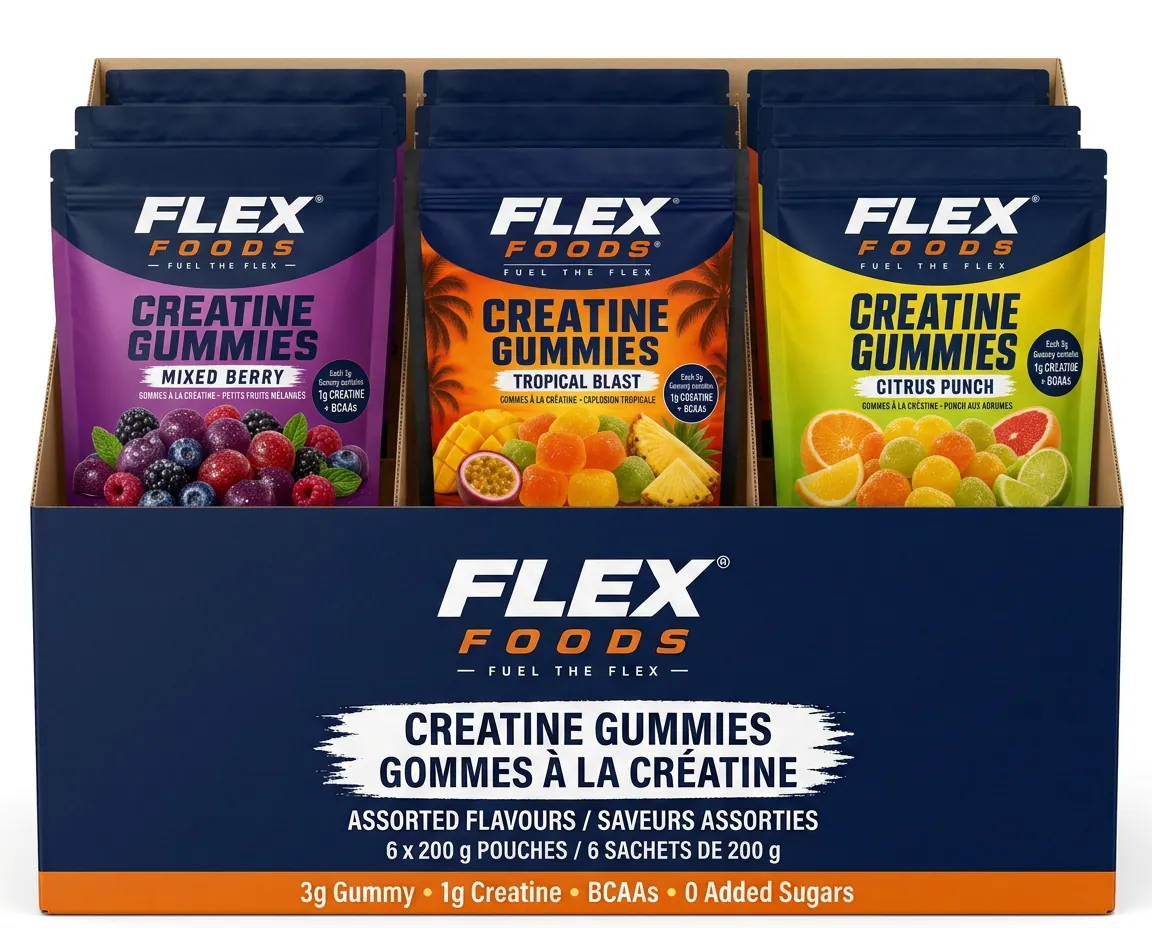
Our gummies deliver 3 g of creatine daily at the label serving of three gummies, which is a maintenance dose — so any water weight arrives gradually over weeks rather than in a few days. Some people barely notice it. Detail on the alternative in do you need to load creatine.
After the initial phase, the water weight plateaus. It isn't cumulative — you don't keep gaining. Stores saturate, cell volume stabilises, and that's where it stays until you stop.
What it isn't
Three clarifications worth making.
It isn't fat. Creatine is not a meaningful calorie source. Three of our gummies is 45 calories, almost entirely from sugar alcohols. Nobody gains fat from creatine itself.
It isn't the puffy kind of retention. Intracellular is not subcutaneous. The visual effect, if any, is fuller-looking muscle rather than a softer outline.
It isn't a sodium effect. Three of our gummies contain 15 mg of sodium — about 1% of a daily value. That's negligible and unrelated to the mechanism.
Is the water weight useful?
Interestingly, possibly yes.
Cell swelling is itself a signal. There's a body of work suggesting increased cell volume acts as an anabolic stimulus — a swollen cell behaves as though it's in a growth-favourable state, influencing protein synthesis and breakdown signalling.
This is a plausible partial mechanism for why creatine supports muscle growth beyond simply allowing more training volume. It's not fully settled, and it shouldn't be oversold. But it does mean the water isn't merely a cosmetic side effect.
When it's a genuine problem
Three situations where the weight gain matters practically rather than psychologically.
Weight-class sports. Wrestling, boxing, judo, rowing, weightlifting. One to two kilograms is a meaningful fraction of a cut. Standard practice is to time creatine use around the competitive calendar — off during cutting phases, on during training blocks. See creatine and weight classes.
Endurance sports with a power-to-weight constraint. Climbing on a bike, distance running. You're carrying additional mass for a benefit that's minimal in steady-state aerobic work. The arithmetic often doesn't favour it. See creatine for cyclists.
Tracking weight loss. Starting creatine at the same time as a deficit means the scale won't move for a few weeks even if fat loss is happening. That's demoralising and it causes people to abandon working programmes. Stagger the two, or track something other than scale weight. See creatine in a cut.
When it isn't
For most people training for strength, size, general fitness or health, a kilogram of intracellular water is not a downside. It comes with the effect you wanted, it plateaus, and it reverses within four to six weeks if you stop.
If the scale number itself is the concern rather than any practical consequence, that's worth examining. A kilogram of water in your muscle cells has no bearing on health, appearance or fitness — it's a measurement artefact of an intervention working as designed.
Two things that don't help
Drinking less water. Doesn't reduce intracellular retention and makes you dehydrated. Creatine doesn't require dramatically increased fluid intake either — see creatine and hydration.
Cycling off to "flush it." You'll lose the water and the saturation together, then have to rebuild both. There's no evidence base for cycling. See do you need to cycle creatine.
General information about a natural health product, not medical advice.