
Training
Team Snacks: Feeding a Roster Without a Sugar Crash
Coaches and team parents: bulk snacking that keeps a bench alert in the third period.
Feeding a team is a logistics problem with a nutrition problem hiding inside it. The nutrition part is straightforward. The logistics — allergens, budget, tournament schedules, twenty different sets of parental opinions — is what actually determines whether it works.
Written for whoever ends up organising this, which is usually one volunteer.
Start with the allergen problem, because it's non-negotiable
Before nutrition, before budget. Get this wrong and nothing else matters.
Ask every family in writing. Not verbally at a practice. A short form at the start of the season listing Canada's priority allergens — peanuts, tree nuts, milk, eggs, fish, crustaceans and shellfish, sesame, soy, wheat and triticale, mustard, sulphites — plus a free-text field for anything else, including religious and dietary restrictions.
Assume the strictest common denominator. One nut allergy in a roster of eighteen means the team snack is nut-free. Not "nut-free options available" — nut-free.
Know where the epinephrine auto-injectors are and who's trained. This is a coaching responsibility regardless of snacks.
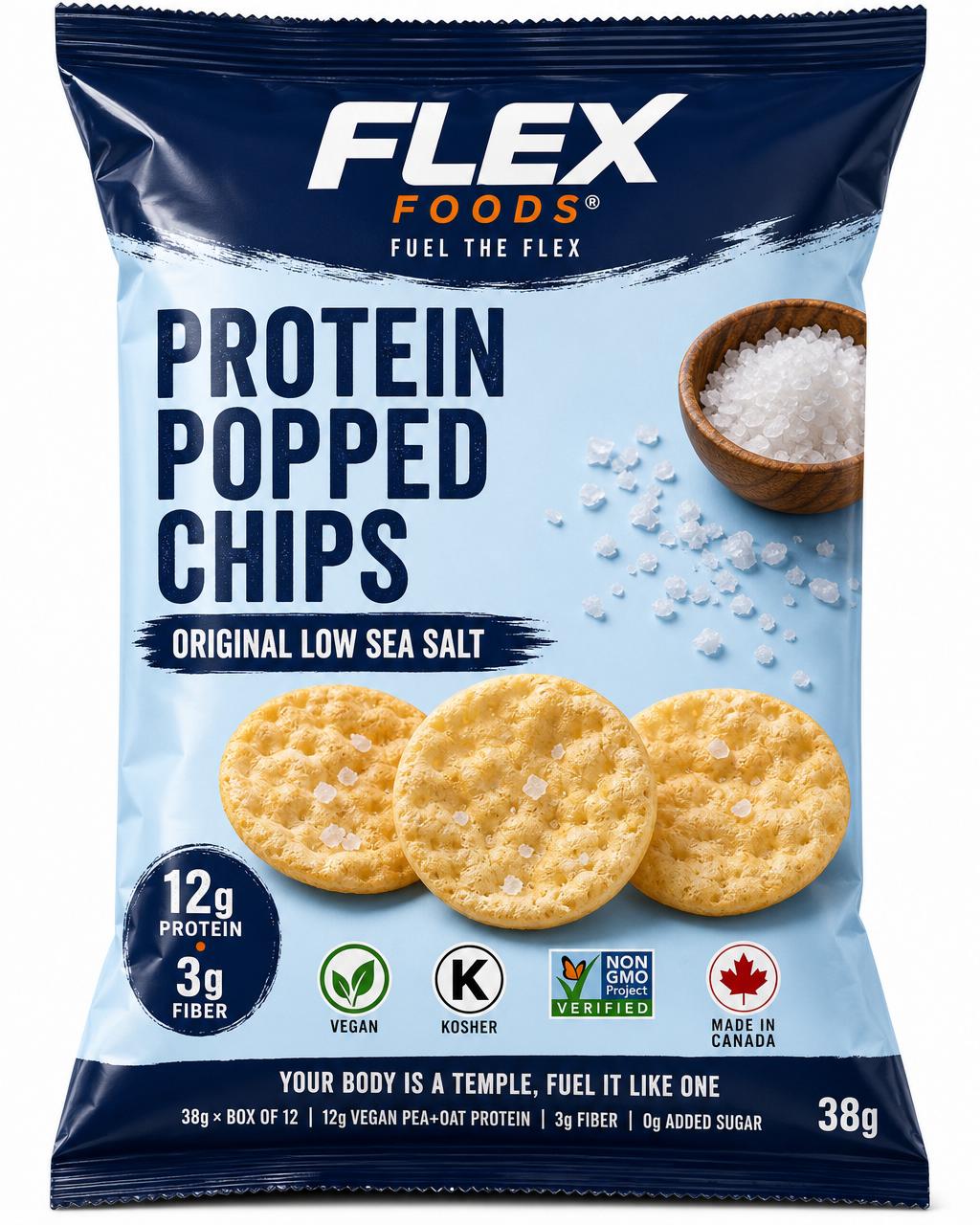
On our own product, honestly: the ingredient list for Protein Popped Chips is pea protein isolate, oat protein, brown rice, sunflower oil, natural seasoning, sea salt and spices — no nuts, dairy, egg, soy or wheat, and the only precautionary statement on the bag is "may contain oats." For a team with a severe allergy, email hello@flexfoods.ca for current facility documentation rather than relying on that summary. A parent managing anaphylaxis risk deserves paperwork. Our guide to reading these statements is in allergen labelling.
What actually happens to a bench on sugar
The default team snack is candy, juice boxes and granola bars. There's a reason it's the default — cheap, popular, easy — and a reason it underperforms.
Rapidly digestible carbohydrate with no protein or fibre produces a glucose rise, an insulin response, and often a dip that lands twenty to forty minutes later. Larger post-meal glucose dips correlate with more hunger and lower reported energy. In a third period, that shows up as sloppy decisions and slower recovery between shifts.
The fix isn't eliminating carbohydrate — athletes need it, and during competition fast carbohydrate is genuinely useful. The fix is not making sugar the only thing on offer.
Timing, by slot
| When | What | Why |
|---|---|---|
| 2–3 h pre-game | Real meal, carb-forward | Time to digest; fills the tank |
| 30–60 min pre | Small fast carbohydrate | Topping up without gut load |
| During / intermission | Fluid, electrolytes, small carb | Short windows, hot athletes |
| Immediately after | Protein + carbohydrate | The most neglected and most valuable slot |
| Tournament between games | Both, moderate portions | Recovery for the next game |
The post-game slot is the one to fix first. Games end late, everyone's tired, families drive home, and frequently nothing gets eaten for hours — which for young athletes on consecutive tournament days compounds fast.
What to buy
The post-game bag
- Single-serve protein snacks. A 38 g bag is 150 calories, 12 g of protein, 3 g of fibre, no refrigeration, no mess, no sharing. For a bench, individually sealed is the only realistic format.
- Fruit. Bananas, oranges, apples. Cheap, carbohydrate, hydration.
- Water, more than you think. Plus an electrolyte option for hot conditions or long tournaments.
Tournament day, between games
- Sandwiches or wraps, if someone has a cooler
- Rice cakes, pretzels, or bread for carbohydrate
- Protein snacks for the recovery half
- Something that isn't sweet — twelve hours of sugary snacks defeats even enthusiastic kids
What to leave out
- Shared bowls or open bags. A hygiene issue, an allergen cross-contact issue, and an uncontrolled-portion issue in one.
- Anything needing cutlery or a plate.
- Chocolate in summer.
- Energy drinks. Not appropriate for youth athletes, and Health Canada advises against caffeinated energy drinks for children and adolescents.
Budget and logistics
Buy by the case. Cost per unit drops substantially, and for an eighteen-player roster you'll get through a 24-pack in one or two games. It's the main practical argument for club packs.
Rotate the snack parent, keep the list fixed. The most common failure is a different family bringing something different each week, with no allergen consistency. A fixed approved list plus a rotating volunteer is more robust than a rotating menu.
Rotate flavours, not categories. Kids get bored of a specific flavour faster than of a food type — sensory-specific satiety again. A variety pack keeps the macros identical while the experience changes, which matters over a twenty-game season.
Set expectations with parents once, in writing. "We're a nut-free bench, we bring protein and fruit rather than candy, here's why." One message at the start of the season prevents twenty conversations later.
The realistic standard
Not optimal nutrition. A bench where every player gets fluid, some carbohydrate before, and some protein after, without anyone having an allergic reaction.
That's achievable with a case of something, a bag of fruit, and a cooler of water. Our post on hockey season snacking covers the rink-specific version.