
Seasonal
Hockey Season Snacking for Rink Parents
Cold rinks, 6am ice, and a bag that has to feed two kids and occasionally a coach.
Hockey season is a nutrition problem shaped by a schedule nobody would choose. Games at 6:40am. Practices that end at 9pm. Tournaments with three games in a day and forty minutes between them. A rink that's cold enough to make everyone hungrier and a canteen selling exclusively fried food and blue slushies.
Here's what actually works, written for whoever's carrying the bag.
The three things a rink does to appetite
Cold raises energy expenditure. Thermoregulation costs energy, and standing in a cold arena between shifts adds to what the skating already burned. Kids come off the ice hungrier than the same activity in a warm gym would leave them.
Cold suppresses thirst. This is the underrated one. Players sweat heavily under full gear, and dry arena air accelerates fluid loss through breathing — but the cold blunts the thirst signal. Dehydration on the ice is more common than parents assume, and it presents as fatigue and sloppiness rather than as thirst.
The schedule breaks normal meals. A 6:40am game means a pre-game meal at 4am that nobody will eat, or no pre-game meal at all. Both are bad, and something small is the realistic compromise.
Timing, by slot
| When | What | Why |
|---|---|---|
| 2–3 h pre-game | Real meal, carbohydrate-forward | Time to digest, fills the tank |
| 30–60 min pre | Small fast carbohydrate | Top-up without gut load |
| Intermissions | Fluid first, then small carbohydrate | Short windows, overheated players |
| Immediately post-game | Protein + carbohydrate | The most valuable and most-skipped slot |
| Tournament, between games | Both, moderate portions | Recovery for the next game |
The post-game row is the one to fix first. Games end late, everyone's tired, families drive home, and frequently nothing gets eaten until the next morning. On consecutive tournament days that compounds fast — third-period glycogen depletion is real, and it shows up in game two as legs that won't go.
The early-game problem
A 6:40am puck drop is genuinely hard. Two workable approaches:
Something small at 5:15. A banana, toast with jam, a few dates. Fast carbohydrate, low fat, low fibre, low volume. Not a meal — just enough that they're not skating on nothing.
A proper breakfast immediately after. This is where the real fuelling happens, and it's also the recovery window. Protein and carbohydrate together.
What doesn't work: forcing a full breakfast at 5am, or a canteen breakfast sandwich at 6:15. High fat close to activity sits badly, because blood flow shifts away from the gut during exercise and slows digestion — the mechanism is in pre-workout snacks that don't sit like a brick.
What goes in the bag
Always
- Water, more than you think. One large bottle per player, plus a spare. This is the single highest-value item in the bag.
- An electrolyte option for tournaments and long days.
- Fruit. Bananas, oranges, apples. Cheap carbohydrate plus some fluid. Oranges between periods are a hockey tradition for a reason.
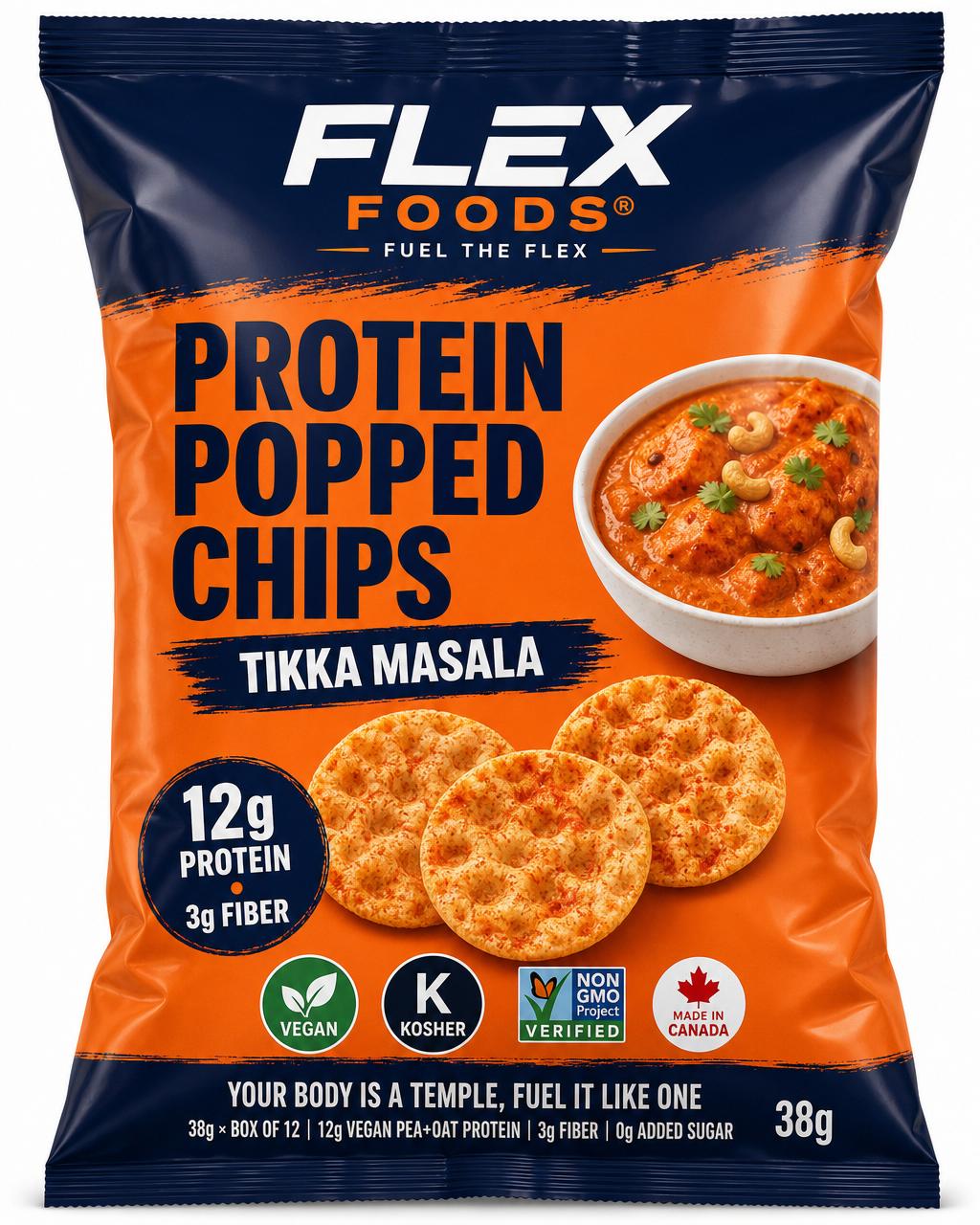
- Single-serve protein snacks for after. A 38 g bag of Protein Popped Chips is 150 calories, 12 g of protein, 3 g of fibre, no refrigeration, no mess, individually sealed. For a bench, sealed singles are the only realistic format.
Tournament days
- Sandwiches or wraps in a cooler
- Rice cakes, pretzels or bread for carbohydrate between games
- Something savoury — twelve hours of sweet snacks defeats even enthusiastic kids
- A thermos of soup in January. Disproportionately appreciated.
Leave out
- Energy drinks. Health Canada advises against caffeinated energy drinks for children and adolescents. Not appropriate for youth athletes, regardless of what's sold in the lobby.
- Shared open bags. Hygiene issue, allergen cross-contact issue, and uncontrolled portions.
- Chocolate in a warm car.
The allergen conversation, once
Collect allergy information from every family in writing at the start of the season — Canada's priority allergens plus religious and dietary restrictions, with a free-text field. Then default to the strictest requirement on the roster.
Know where the epinephrine auto-injectors are and who's trained. That's a coaching responsibility regardless of who brings snacks.
One message to parents at the start of the season — "we're a nut-free bench, we bring protein and fruit rather than candy, here's why" — prevents twenty conversations in November. More in team snacks.
The realistic standard
Not optimal sports nutrition. A player who gets fluid, some carbohydrate before, and some protein after, without anyone having a reaction.
That's a case of something, a bag of fruit, a cooler of water, and a fixed restock day. Buying by the case rather than the bag is where the cost savings are — an eighteen-player roster gets through a 24-pack in a game or two.