
Seasonal
Holiday Party Snacking: The Plate Strategy
Not a damage-control plan. A way to enjoy the food without arriving so hungry that you don't taste any of it.
Let's start by discarding the standard version of this article.
The usual holiday advice — skip lunch to save calories, work out extra to earn the meal, drink water to fill up so you eat less, atone in January — is both ineffective and a genuinely unhelpful way to relate to food. Restricting before a party reliably produces overshoot at it. Framing food as something to be earned or repaid tends to make eating worse rather than better.
So this isn't that. It's a much smaller idea: arrive able to taste things, and stop when you're done.
The actual problem
Holiday party eating goes sideways for three specific reasons, none of which is willpower.
You arrive too hungry. Most people under-eat during the day of an evening event, either deliberately or because the day was busy. Arriving at 7pm having eaten a coffee and a sandwich means the first twenty minutes are spent eating whatever is nearest, fast, without much attention.
Grazing has no endpoint. A meal has a plate and a finish. A table of appetizers you return to every fifteen minutes for three hours has neither, and there's no point at which you register having eaten.
Alcohol lowers the resolution. It reduces inhibition around food, adds calories that don't register as food, and disrupts sleep — which affects appetite regulation the following day.
The strategy, in three parts
1. Eat properly during the day
The opposite of the usual advice, and the part that does the most work.
A normal breakfast and lunch with actual protein in them means you arrive hungry rather than ravenous. That single change alters the first twenty minutes at the table more than any amount of intention.
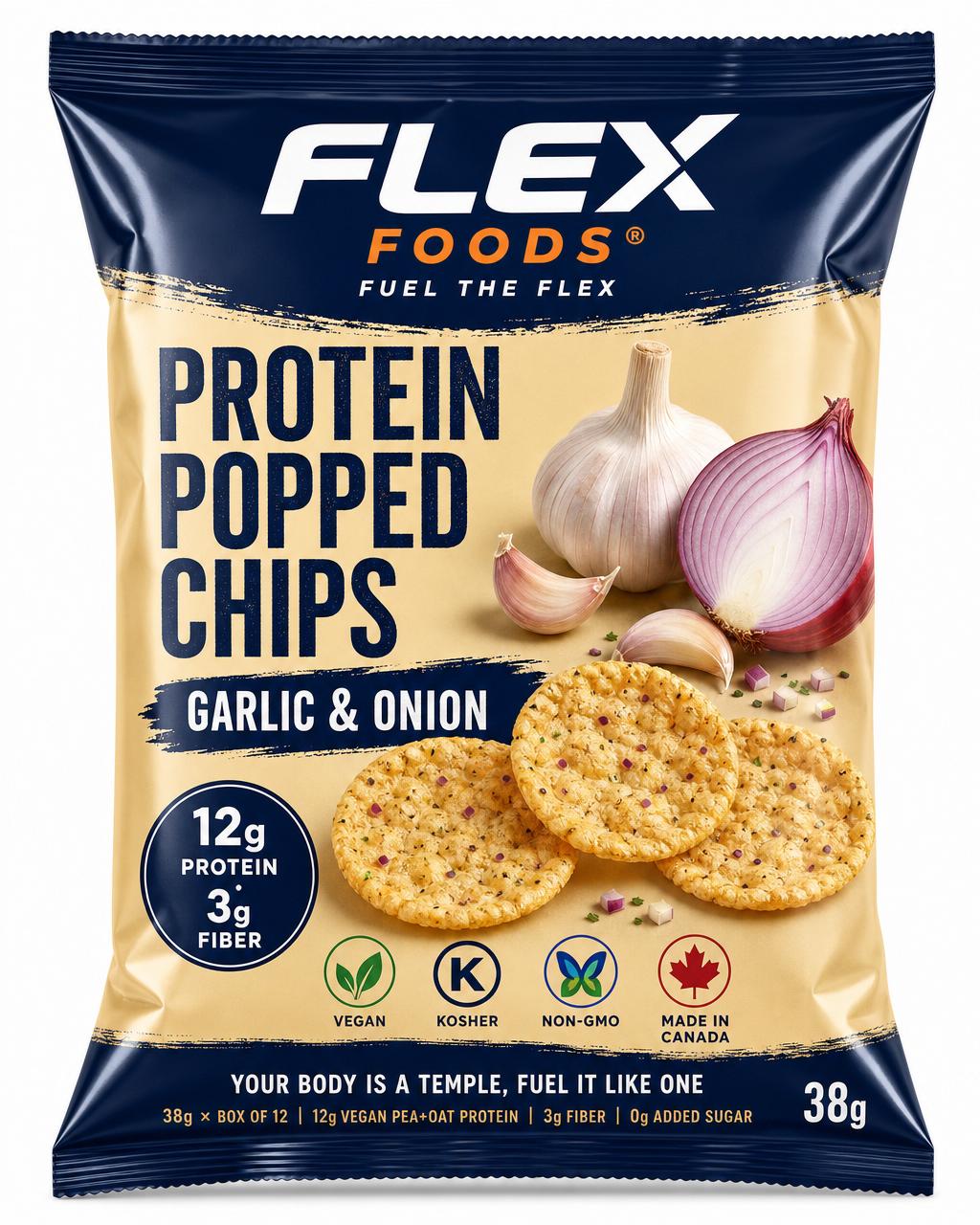
If dinner is late, a protein-forward snack an hour or two beforehand bridges the gap. A 38 g bag of Protein Popped Chips is 150 calories with 12 g of protein — enough to take the edge off without displacing an appetite for the meal you're going to. Protein preloads reliably reduce intake at the following meal, which is the whole mechanism here.
2. Build one plate
Not a small plate. A plate.
Walk the whole table first, then choose. Put the things you actually want on it — the things that only exist at this time of year, made by someone specific. Then sit down and eat it.
The point isn't portion control. It's that a plate has a beginning and an end, and grazing doesn't. Going back for more is completely fine; the difference is that it becomes a decision rather than a default.
3. Sit down, and away from the table
Standing next to the food for three hours is the single strongest predictor of how much gets eaten. Proximity drives consumption more reliably than intention does — this is among the most consistent findings in food environment research.
Get a plate, get a drink, and go and talk to someone across the room. It's not a diet tactic; it's just a better party.
If you're hosting
You control the environment, which is more leverage than any guest has.
- Put out something with real protein. Most party spreads are pastry, cheese and crisps. A bowl of edamame, a bean dip, hummus, or protein chips alongside means guests have something that holds them.
- Vegetables and a good dip, at the front. Whatever's nearest the door gets eaten most.
- Small plates and actual seating. Both encourage eating as an event rather than a background activity.
- Water visible and easy. More effective than any amount of encouragement.
- Label the food. Small cards noting nuts, dairy, gluten. Costs ten minutes and matters enormously to the guest with an allergy who otherwise has to interrogate a stranger.
What not to do afterwards
Three things, and they matter more than anything above.
Don't compensate the next day. Skipping breakfast after a big evening produces the same overshoot pattern in reverse. Eat normally.
Don't add punitive exercise. Training is worth doing for its own reasons. Using it as repayment for eating is a framing that tends to make both worse.
Don't extend one evening into a story about the whole season. One party is one meal. Two thousand extra calories in December is not a meaningful event in a year, and treating it as one is how people talk themselves into six weeks of disordered eating over a single dinner.
The honest version
Holiday food is one of the genuinely good parts of a Canadian winter, and it's mostly made by people who care about you. Eating it attentively and enjoying it is a better goal than minimising it.
If food or bodyweight is occupying a large share of your attention around the holidays — or any time — that's worth talking to a doctor or a registered dietitian about, not managing with a plate strategy. Our take on the January side is in a reset without a restrictive diet.