
Training
Pre-Workout Snacks That Don't Sit Like a Brick
Timing, portion and the digestion reason light-and-crisp beats dense-and-chewy before you train.
Everyone has done this once: eaten a sensible, protein-rich meal forty minutes before training and then spent the session feeling like they'd swallowed a paperweight.
The food wasn't wrong. The timing was, and the reason is mechanical rather than nutritional.
What happens to digestion when you train
During exercise, blood flow is redistributed — away from the digestive tract and toward working muscle and skin. At moderate intensities the reduction in splanchnic blood flow is meaningful; at high intensities it's substantial.
Less blood to the gut means slower gastric emptying and slower digestion. Food that would have cleared your stomach comfortably at rest sits there instead. That's the brick.
Two further factors compound it:
Fat and fibre both slow gastric emptying independently. Useful qualities in a snack designed for satiety, actively unhelpful thirty minutes before a session. This is the awkward truth that the best snacks for holding you between meals are the wrong snacks immediately pre-training.
Mechanical position matters. Anything involving inversion, compression or heavy bracing — squats, deadlifts, core work, cycling in the drops, swimming — physically raises intra-abdominal pressure against a full stomach. Reflux and discomfort follow.
The timing ladder
Roughly how it works for most people, with wide individual variation:
| Time before training | What works |
|---|---|
| 3–4 hours | A full meal — protein, carbohydrate, some fat. No restrictions. |
| 1.5–2 hours | A small meal or substantial snack. Moderate protein, low-ish fat and fibre. |
| 30–60 minutes | Small, mostly carbohydrate, low fat, low fibre. Under ~200 calories. |
| Under 20 minutes | Liquid carbohydrate, or nothing. Solid food is a gamble. |
Individual tolerance varies enormously and it's trainable — endurance athletes who practise eating during activity tolerate far more than untrained people. Find your own line by experimenting on easy sessions rather than important ones.
Why light and crisp works in the 30–60 minute slot
Aerated, low-moisture foods leave the stomach relatively quickly, because there's less mass and less water to process per unit of volume. You get a sense of having eaten something without much sitting in there.
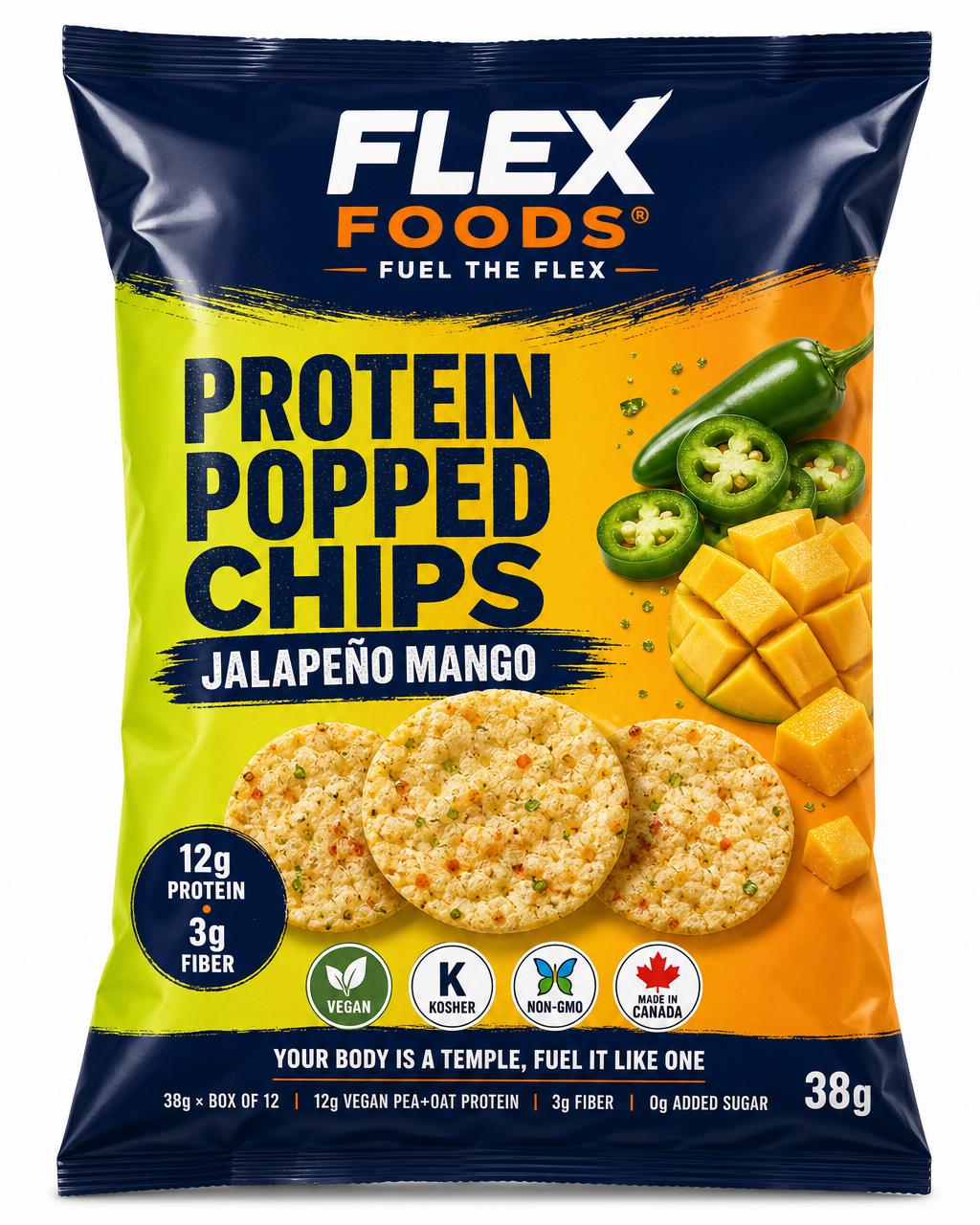
This is where a popped chip is genuinely well suited, and it's worth being specific about why: a 38 g bag of Protein Popped Chips is 150 calories with 4 g of fat — low enough not to slow emptying much — and it's physically light. Half a bag in the 45-minute slot is a reasonable pre-training snack.
The honest caveat: the 3 g of fibre and 12 g of protein that make it a good afternoon snack are the exact qualities you'd de-emphasise immediately pre-session. Which means a half portion, not a full one, and it's not the ideal choice at twenty minutes out. A banana beats it that close.
What actually works, by slot
30–60 minutes out
- A banana. The default for a reason — fast carbohydrate, minimal fat and fibre, and it requires no thought.
- Half a bag of protein chips. Light, savoury, and some protein without much volume.
- A rice cake with a thin scrape of jam or honey. Almost pure fast carbohydrate.
- Dates, two or three. Concentrated carbohydrate, small volume.
- A small sports drink or diluted juice if you're training in under twenty minutes.
What to skip in that window
- Nuts and nut butter. High fat, slow emptying. Excellent food, wrong timing.
- Beans and lentils. High fibre, high fermentable carbohydrate. Fine three hours out, unpleasant at forty minutes.
- A large protein shake. Casein and whole-milk versions particularly. Liquid doesn't guarantee comfort when the volume is large.
- Anything high-fat and savoury. Cheese, fried food, creamy sauces.
- Large volumes of raw vegetables. Bulk plus fibre plus water.
Do you actually need to eat before training?
Depends on the session and on when you last ate.
Short and moderate — under an hour, general fitness. Fasted is fine for most people. Performance differences at this duration are small, and if you ate a real meal three or four hours earlier you have plenty of available fuel.
Long or high-intensity — over 90 minutes, intervals, heavy strength work. Eating beforehand helps, and the evidence is reasonably clear on this. Glycogen availability limits performance at these durations and intensities.
Early morning training. The hardest case, since you've been fasting overnight and there's no time for a proper meal. A small carbohydrate snack twenty to thirty minutes before is the usual compromise. Some people genuinely do better fasted; the only way to know is to try both.
Our post on pre-workout nutrition covers the fuelling side in more depth, and post-workout snacking handles the other end.
The practical rule
The closer to training, the simpler and smaller. Save the protein, fibre and fat for afterwards, when slower digestion is a feature rather than a problem.