Nutrition 101
Gluten-Free and Soy-Free Chips: A Canadian Shopper's Guide
Two restrictions, one shopping trip. How Canadian labelling law actually handles both — and what 'may contain' means.
Shopping for one dietary restriction is manageable. Shopping for two narrows the aisle dramatically, and gluten-free plus soy-free is a particularly awkward pair — because soy protein and soy lecithin are extremely common in gluten-free processed foods, where they do structural work that gluten normally handles.
Here's how the labelling actually works in Canada, and how to read a bag quickly.
What 'gluten-free' legally means here
Canada regulates this one properly. Under the Food and Drug Regulations, a gluten-free claim means the food contains no gluten protein from wheat, barley, rye, triticale or oats, or their crossbred hybrids — and Health Canada considers products with less than 20 parts per million of gluten to meet the standard.
Two things follow from that.
First, gluten-free is a claim with teeth. Making it falsely is a regulatory violation, not a marketing grey area.
Second — and this surprises people — oats are on that list. Oats don't naturally contain gluten, but conventional oat supply chains are shared with wheat, so cross-contamination is the default rather than the exception. Health Canada permits gluten-free claims on products containing specially produced uncontaminated oats, but any product with ordinary oats can't make the claim.
Where soy sits in Canadian law
Soy is one of Canada's priority allergens, alongside peanuts, tree nuts, milk, eggs, fish, crustaceans, shellfish, sesame, wheat, mustard and sulphites. Priority allergens must be declared, either in the ingredient list or in a separate "Contains" statement.
The practical upshot: if soy is present as an ingredient, it must be named. You don't need to decode anything — soy lecithin, soy protein isolate, hydrolysed soy protein and soybean oil all appear plainly.
What isn't mandatory is a soy-free claim. Absence claims are voluntary, so plenty of soy-free products don't say so. If the ingredient list and the Contains statement are both clean, the product is soy-free whether or not the front of the bag mentions it.
Decoding 'may contain'
This is the line that causes the most confusion, so let's be precise.
Precautionary allergen labelling — "may contain," "produced in a facility that also processes" — is voluntary in Canada. It signals a risk of unintentional cross-contact from shared equipment, shared lines or airborne particulates. It is not a declaration that the allergen is present.
Two consequences worth understanding:
- Its absence proves nothing. A product without a precautionary statement may still be made on shared equipment. The manufacturer simply chose not to say so, or assessed the risk as negligible.
- Its presence isn't equal across cases. "May contain" covers everything from a genuinely shared production line to an abundance-of-caution statement on a dedicated line in a multi-allergen building.
Health Canada's guidance is that people with allergies should avoid products carrying a precautionary statement for their allergen. That's the safe rule and we won't argue with it. If a statement is ambiguous and the stakes are high, phoning the manufacturer is genuinely worth the four minutes — most food companies will tell you exactly what the line runs.
How our chips sit against both
Straight answer, including the part that requires a caveat.
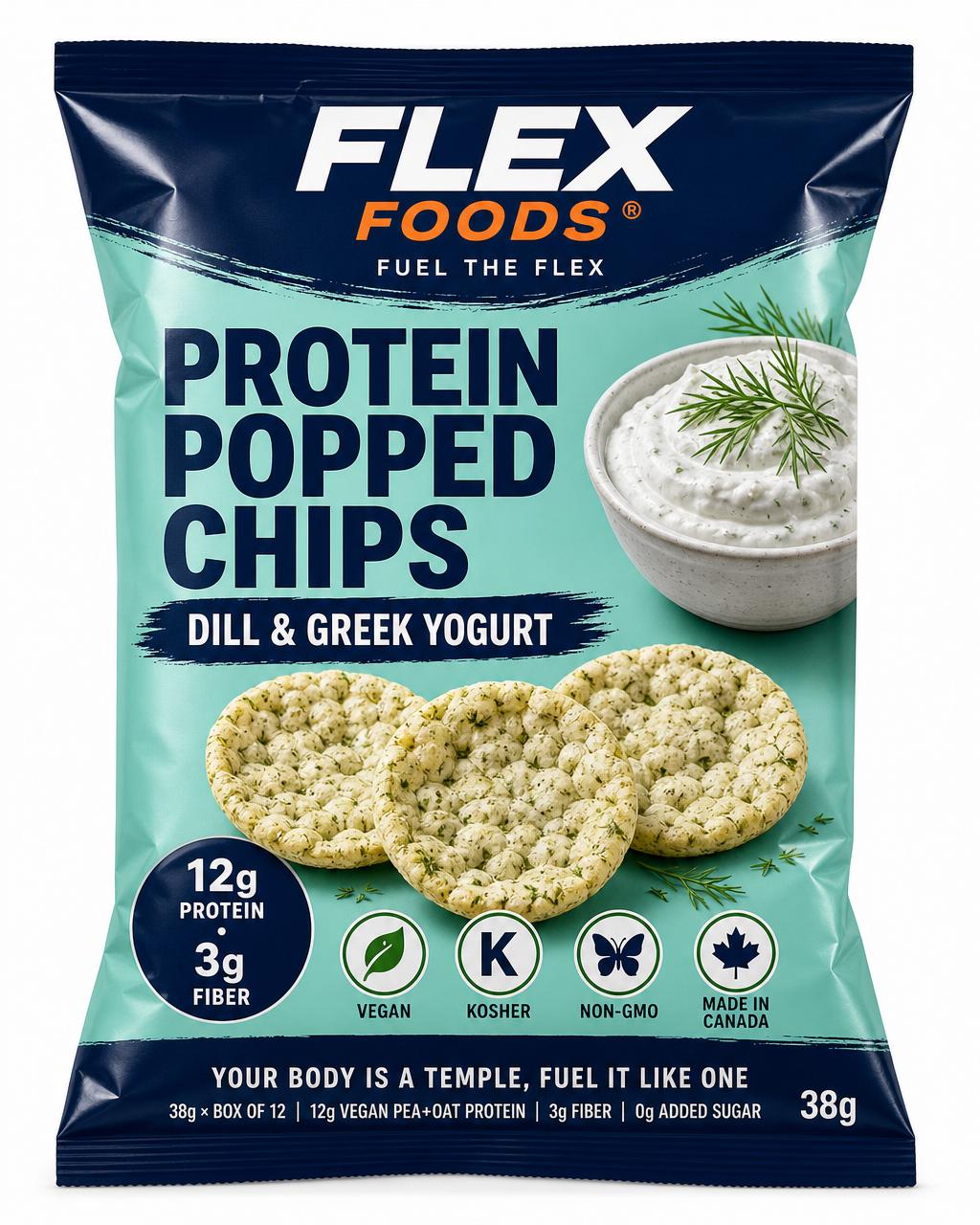
Protein Popped Chips contain no soy. The protein comes from pea protein isolate and oat protein, and there is no soy lecithin, soy oil or soy derivative anywhere in the formulation — a deliberate choice, since soy is a priority allergen and one of the most common sensitivities among our customers.
On gluten: the bag carries a gluten-free claim and an allergen statement reading "may contain oats." Both are accurate and worth reading together. Oat protein is an intentional ingredient — it's what closes the methionine gap in pea protein — and the precautionary statement reflects the oat supply chain.
If you have coeliac disease, this is the detail that matters, and we'd rather you scrutinise it than take a front-of-bag claim on trust. Contact us at hello@flexfoods.ca for current certification documentation on the oat supply for the lot you're holding. That's a more useful answer than a reassuring sentence in a blog post.
The aisle routine, in order
- Ingredient list first, front of bag last. The list is regulated; the front is marketing.
- Scan for the eleven priority allergens plus sulphites. They must be named. This is fast once you know the list.
- Read the Contains statement. Mandatory when a priority allergen is present.
- Read the precautionary statement. Voluntary, and it means what it says — a cross-contact risk.
- Then check the nutrition panel. Being safe to eat and being worth eating are separate questions, and gluten-free processed foods are notorious for being high in refined starch and low in protein and fibre.
That last point deserves emphasis. Removing gluten from a snack tells you nothing about its nutritional quality — a great many gluten-free chips are potato or corn starch with almost no protein. Our guide to reading a nutrition label covers what to check once the safety question is settled.
Building a rotation
Both restrictions together rule out most crackers, pretzels, wheat-based snacks and a good share of protein bars. What survives:
- Pea- or fava-protein popped and puffed snacks
- Rice cakes, though check for barley malt in flavoured versions
- Roasted chickpeas and roasted fava beans
- Nuts and seeds, plain or salted
- Corn tortilla chips, watching for wheat-containing seasonings
It's a shorter list than most people get, but it's enough for a genuine rotation — which matters, because flavour fatigue ends more dietary habits than difficulty does.