Nutrition 101
Reading a Supplement Facts Panel vs a Nutrition Facts Table
Two different labelling systems for two different product categories. A creatine gummy sits awkwardly between them.
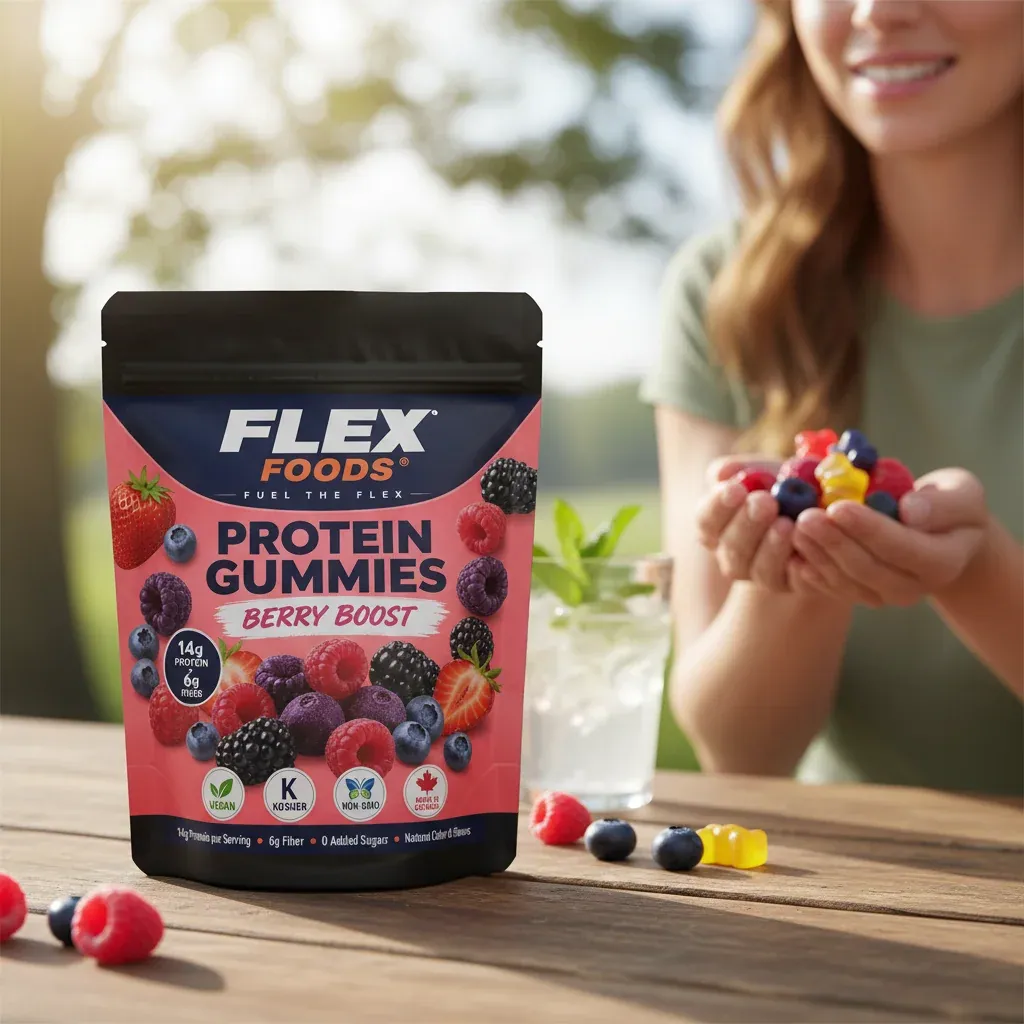
Pick up a protein bar and a bottle of vitamin D and you'll see two quite different label formats. That isn't a design choice — it reflects which regulatory category the product falls into.
Knowing which you're reading changes what the information means.
The two categories in Canada
Foods are regulated under the Food and Drug Regulations and the Safe Food for Canadians Regulations. They carry a Nutrition Facts table in a prescribed format, listing calories and a defined set of core nutrients with % Daily Values, plus an ingredient list in descending order of weight.
Natural Health Products are regulated under the Natural Health Products Regulations. Their labels are built around a different structure:
- Medicinal ingredients with quantity per dosage unit
- Non-medicinal ingredients, listed separately
- NPN — the product licence number
- Recommended use or purpose — the authorised claim
- Recommended dose, by population
- Risk information — cautions, contraindications, known adverse reactions
The distinction is meaningful: a food label tells you about nutritional composition; an NHP label tells you about an active ingredient and how to use it.
Reading our label
Our pouch has elements of both, which is worth explaining.
The medicinal ingredient section reads: creatine monohydrate 1 g per gummy. That's the NHP structure — the active, quantified per unit.
The non-medicinal ingredients are listed separately: maltitol, water, glycerin, pectin, citric acid, natural flavour, sodium citrate, organic rice flour, organic sunflower oil, anthocyanins, organic stevia leaf extract. Everything present that isn't the active.
The nutrition panel declares, per 3 gummies (9 g): 45 calories, 0 g fat, 15 mg sodium, 11 g carbohydrate, 0 g fibre, 0 g sugars, 9 g sugar alcohols, 0 g protein, and 0 for potassium, calcium and iron.
Directions: chew 3 gummies daily. Twenty-two servings per 200 g pouch.
Why the non-medicinal list matters
People skip it, and it's frequently where the practically relevant information is.
In our case, maltitol is the first non-medicinal ingredient, and at 9 g of sugar alcohols per serving it's the most likely cause of any digestive symptoms — considerably more likely than the creatine. Someone reading only the medicinal ingredient would miss that entirely. See the maltitol post.
The non-medicinal list is also where allergens, animal-derived ingredients and sweeteners live. Pectin rather than gelatin is what makes the product vegan, and pectin is a non-medicinal ingredient. See pectin vs gelatin.
The declaration people misread most
Protein 0 g.
That reads as odd on a sports product, and it's accurate. Creatine is an amino acid derivative, not a protein, and at 3 g daily it contributes essentially nothing to protein intake.
Which means a creatine product doesn't substitute for protein in any way. If you're training, protein intake is a separate and considerably more important variable.
It's also a useful cross-check on any supplement label: a product declaring 0 g protein cannot contain a meaningful amount of any amino acid or protein-based ingredient, since those would register. That arithmetic is worth applying to whatever's in your cupboard.
Four things to check on any NHP label
- The medicinal ingredient and its quantity per dose. Named specifically — "creatine monohydrate 1 g" rather than a blend total. Proprietary blends that give a total without individual amounts are a warning sign.
- The NPN. Verifiable in Health Canada's Licensed Natural Health Products Database. See what an NPN means.
- The non-medicinal ingredients. Sweeteners, allergens, animal-derived components.
- Risk information and recommended dose by population. This is where you'll find whether a product is intended for adults, and the cautions for pregnancy, breastfeeding and existing conditions.
What neither label format tells you
Whether the declared active is actually present at the declared amount in the pouch you're holding.
Labels state intended composition. For an active that degrades across shelf life, that's a different question from finished-product content — and only testing answers it. See how to check a creatine gummy.
General information about a natural health product, not medical advice.