Brand & Values
Stevia, Anthocyanins and Natural Colour in Gummies
Where the purple, orange and yellow come from, and why natural colours behave differently from synthetic ones.
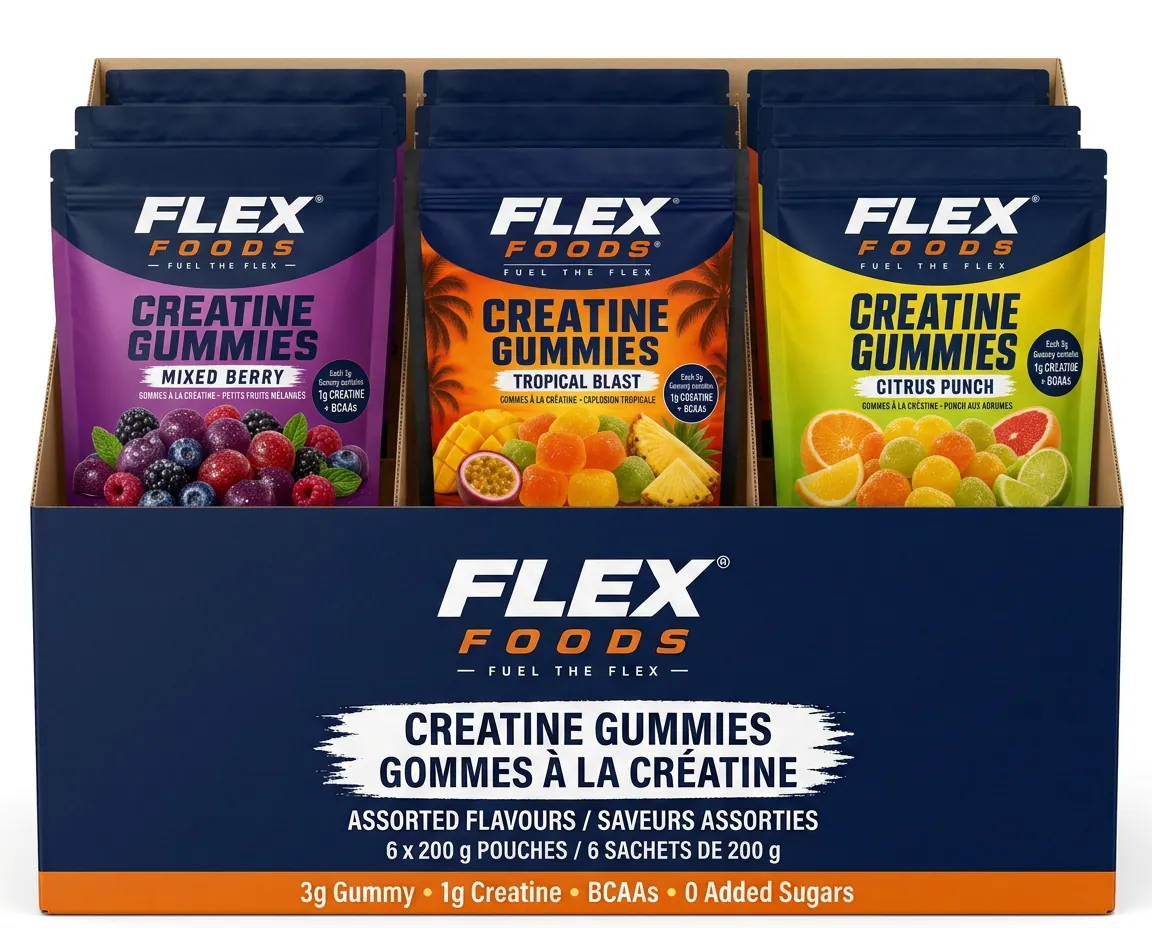
Two of the more interesting non-medicinal ingredients on our label are anthocyanins and organic stevia leaf extract. Both are plant-derived, and both come with real formulation trade-offs.
Anthocyanins: where the colour comes from
Anthocyanins are the pigments responsible for red, purple and blue in plants — the colour of blueberries, blackcurrants, red cabbage, purple carrots, elderberries and grape skins.
They're flavonoids, a class of plant polyphenols, and they're commercially extracted from fruit and vegetable sources for use as colouring foods.
The pH quirk
Anthocyanins are unusual among colours: they change colour with pH.
In acidic conditions they appear red or pink. Toward neutral they shift purple, and in alkaline conditions they turn blue or even green.
This is the same chemistry behind the red cabbage indicator experiment familiar from school science.
For a formulator it's a genuine complication. A gummy's pH is set by the acid and buffer system, and that system also has to serve flavour, pectin setting and — critically for creatine — stability. Change the pH to protect the active and the colour shifts with it.
It's a nice illustration of how interconnected formulation decisions are. See why creatine degrades in water.
They fade
Anthocyanins are sensitive to light, heat and oxygen, and degrade over time. Synthetic colours are far more stable.
Practical consequences: the pouch is opaque partly to protect colour as well as the active, and colour may vary slightly between batches depending on the pigment source. Natural variation, not a defect.
What about the antioxidant angle
Anthocyanins are studied as dietary polyphenols with antioxidant properties, and there's research interest in anthocyanin-rich foods.
Worth being clear: the quantity used for colouring in a gummy is small, and we make no health claim on that basis. Anthocyanins are here to colour the product. If you want the researched benefits of anthocyanin-rich foods, eat berries.
Stevia: sweetness without bulk
Stevia sweeteners come from Stevia rebaudiana, a South American plant. The sweet compounds are steviol glycosides — principally stevioside and rebaudioside A — extracted from the leaves.
They're roughly 200–350 times sweeter than sucrose, which means they're used in milligram quantities.
Why it's a supporting ingredient
That intensity is also the limitation. Stevia provides sweetness and no bulk whatsoever.
A gummy needs physical volume. Something has to occupy space, provide the solids content pectin structures against, and give the product body. Sugar does this excellently; maltitol is the closest sugar-free substitute.
Stevia alone wouldn't produce a gummy at all — you'd have a small amount of intensely sweet powder and nothing to set.
So stevia is here to round out the sweetness profile and reduce how much maltitol is needed. Since maltitol is the main driver of both the calorie count and the digestive threshold, reducing it is worth doing. See the maltitol post.
The taste problem
Honestly: stevia has a characteristic bitter, liquorice-adjacent aftertaste at higher concentrations, which some people detect strongly and others barely notice — partly a matter of individual taste receptor variation.
Using it in a supporting role at lower concentration alongside a bulk sweetener minimises this. It's a real reason stevia rarely appears as a sole sweetener in confectionery.
Regulatory status
Steviol glycosides are permitted sweeteners in Canada, listed in Health Canada's permitted food additive lists with specified conditions of use, and have been assessed by international bodies including JECFA.
What "organic" means on these lines
Our label specifies organic stevia leaf extract, organic rice flour and organic sunflower oil.
Organic certification governs how an ingredient was grown and processed — restrictions on synthetic pesticides and fertilisers, prohibition of GMOs, and requirements around processing aids.
It says nothing about nutritional content or about the finished product's efficacy. It's a production standard, not a quality claim about the molecule. Worth knowing so it isn't over-read.
The other two you'll see
Organic rice flour — typically functions as a dusting or anti-stick agent, preventing gummies from adhering to each other and to equipment.
Organic sunflower oil — a light coating applied after demoulding for the same reason. Conventional confectionery often uses sanding sugar instead, which a sugar-free product can't.
Each non-medicinal ingredient has a structural job. Full walkthrough in glycerin, pectin and citric acid explained.
General information about a natural health product, not medical advice.