Fuel Science
Glycerin, Pectin and Citric Acid: What Each Does
Eleven non-medicinal ingredients, each with a structural job. Here's what every one is doing.
Ingredient lists on supplements get skimmed, and the non-medicinal section gets skipped entirely. That's a mistake — it's frequently where the practically relevant information lives.
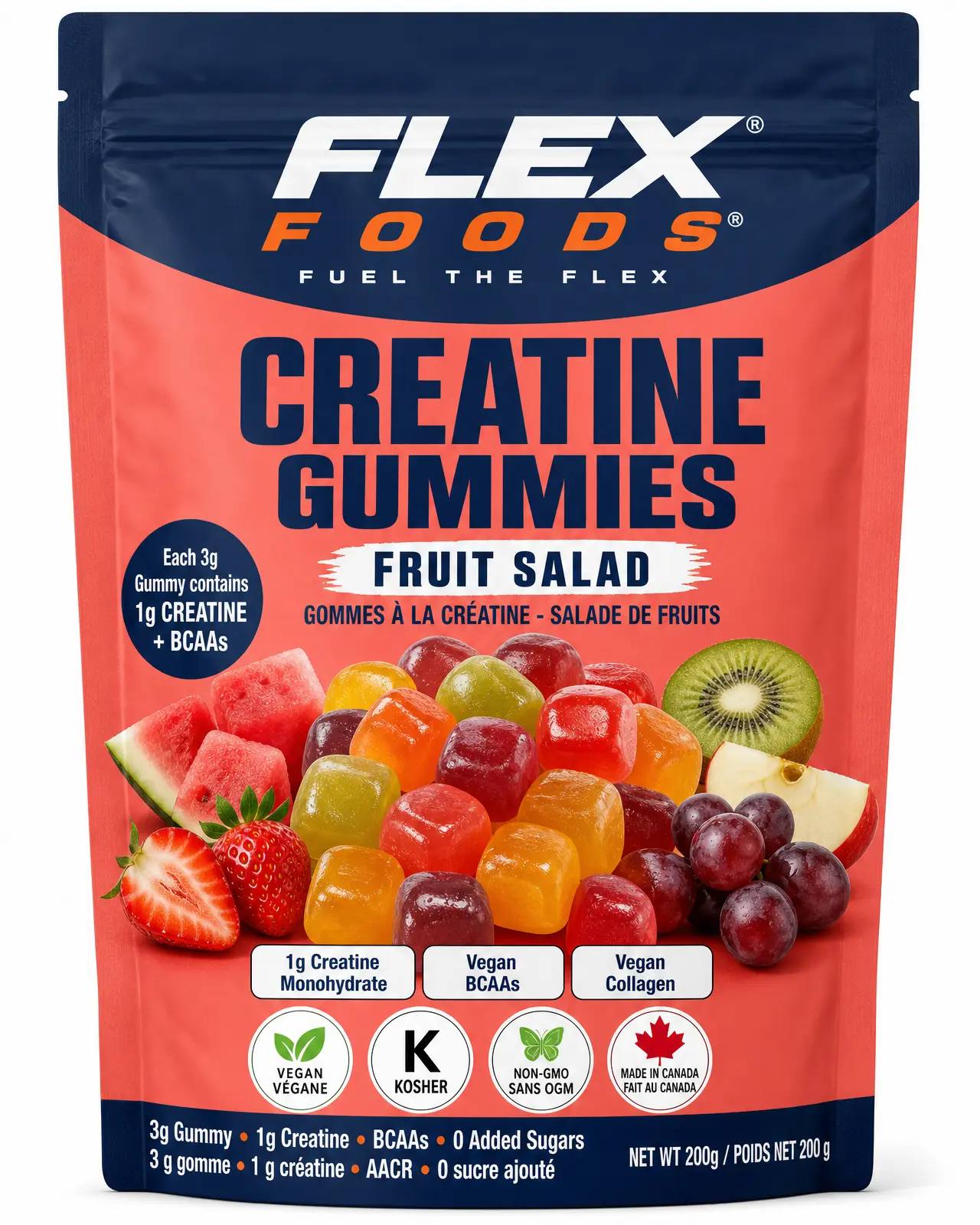
Here's every non-medicinal ingredient in our gummies and what it's actually for.
The list
Maltitol, water, glycerin, pectin, citric acid, natural flavour, sodium citrate, organic rice flour, organic sunflower oil, anthocyanins, organic stevia leaf extract.
Eleven, alongside the single medicinal ingredient: creatine monohydrate, 1 g per gummy.
The structural core
Maltitol — bulk and sweetness
The largest component by weight and the most consequential. It provides sweetness, physical volume, and the solids content pectin needs to set against.
It's also the ingredient most likely to cause you problems. Nine grams per serving of sugar alcohols, partially glycemic, and the usual cause of any digestive symptoms. See the maltitol post.
Water — the medium
Necessary to dissolve solids and hydrate the pectin. Also, unavoidably, the thing that lets creatine convert to inert creatinine. Curing reduces it to a level that's microbiologically stable and still chewable, but it can't be eliminated. See why creatine degrades in water.
Glycerin — humectant and plasticiser
The unsung ingredient. Glycerin holds moisture in the product, keeping gummies soft rather than hardening, while simultaneously lowering water activity — the measure of chemically available water that determines microbial stability.
That combination is genuinely useful: chewable texture with less free water. It also carries around 4.3 calories per gram, contributing to the 45-calorie total. See calories in a creatine gummy.
Pectin — the gelling agent
A plant polysaccharide from citrus peel and apple pomace that forms the network holding everything together. It's why the product is vegan — conventional gummies use gelatin, which is animal collagen. See pectin vs gelatin.
The pH system
These two work as a pair, and they're the most interesting part of the formulation.
Citric acid — tartness and setting
Provides the sour note fruit flavours need, and participates in triggering the pectin set. Also functions as a mild preservative by lowering pH.
The tension: acidity is the strongest accelerant of creatine's conversion to creatinine. Citric acid does three necessary jobs and works against the active while doing them.
Sodium citrate — the buffer
The counterweight. Sodium citrate moderates pH swings, keeping the system in a workable range rather than letting it drift too acidic.
For a creatine product this matters more than it would for ordinary confectionery — every fraction of a pH unit affects how much creatine survives manufacturing and shelf life.
It's also the source of the 15 mg of sodium per serving, which is about 1% of a daily value and nutritionally negligible.
Flavour and colour
Natural flavour
A class name covering the flavour system. Canadian labelling permits certain ingredient groups to be declared collectively rather than component by component, and flavour is one.
Worth being honest: this means you can't determine from our label what's in it. That's a real limitation, shared with essentially every flavoured product on the shelf. Priority allergens must still be declared regardless of class names — that protection remains. If you need specifics for an allergy or dietary requirement, email hello@flexfoods.ca.
Anthocyanins
Plant pigments providing colour. They shift hue with pH and fade with light and heat, which is part of why the pouch is opaque. See stevia, anthocyanins and natural colour.
Organic stevia leaf extract
High-intensity sweetener used in a supporting role. Contributes sweetness at tiny doses and no bulk, reducing the amount of maltitol required.
Processing aids
Organic rice flour
Typically a dusting or anti-stick agent, preventing gummies from adhering to each other and to equipment during and after demoulding.
Organic sunflower oil
A light coating applied after demoulding, for the same purpose. Conventional confectionery frequently uses sanding sugar here; a sugar-free product can't, which is why the surface texture differs from a standard gummy.
Note the panel declares 0 g fat — the quantity is small enough to round to zero.
What isn't in there
No gelatin. No artificial colours. No preservatives — water activity control and pH do that work. No protein source, no fibre source: the panel declares 0 g for both, accurately.
The point of reading this section
Two practical reasons the non-medicinal list matters more than people assume.
It's where your side effects come from. If a gummy causes digestive symptoms, maltitol is a considerably more likely culprit than creatine. See creatine and digestive upset.
It's where dietary status is determined. Pectin rather than gelatin is what makes this product vegan, and pectin is a non-medicinal ingredient. Reading only the medicinal line would miss it.
General information about a natural health product, not medical advice.