
Fuel Science
Why Creatine Degrades in Water: The Creatinine Problem
Heat, acid and moisture convert creatine into an inert waste product. Every gummy maker is fighting this reaction.
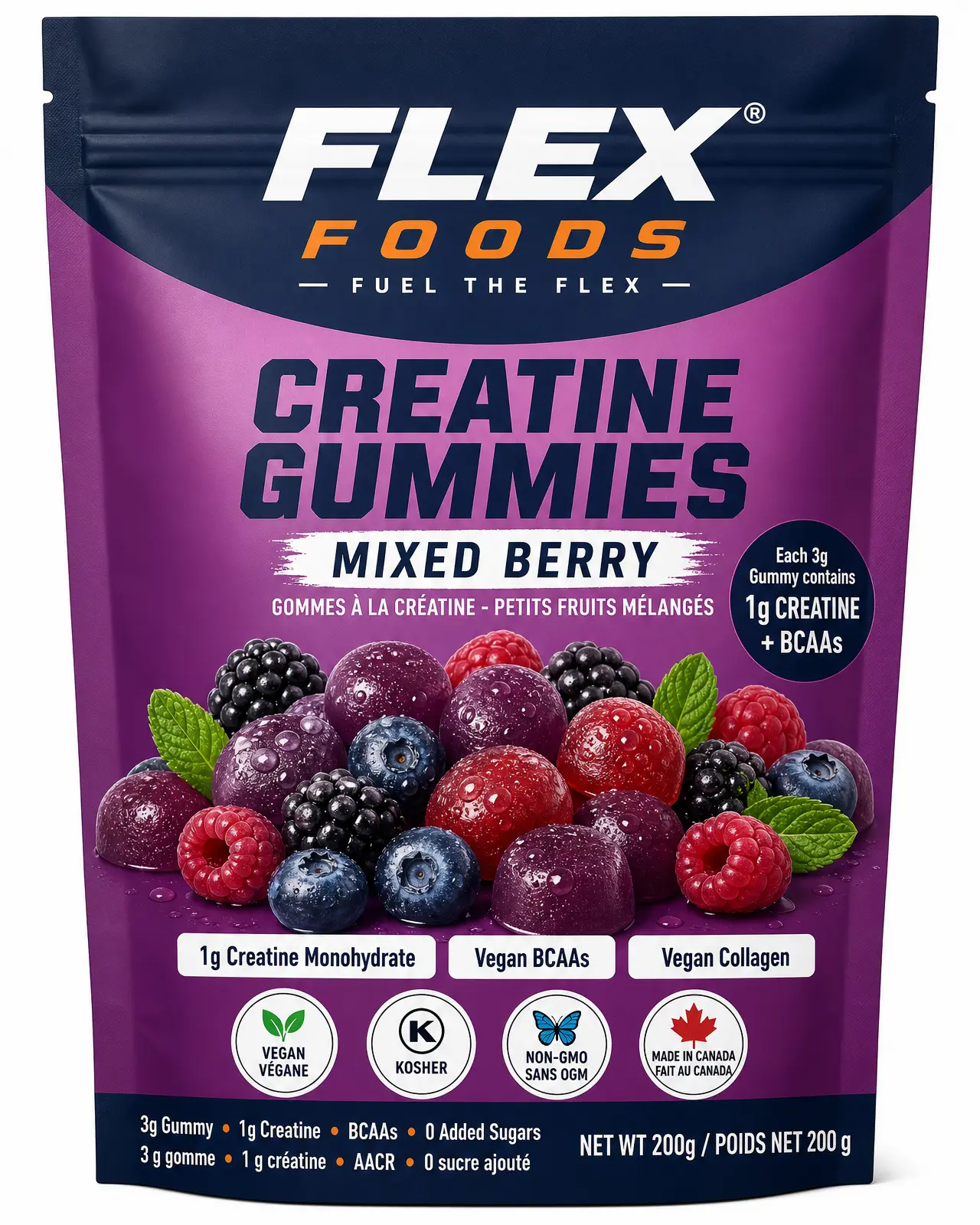
Creatine monohydrate is one of the most stable supplement ingredients in existence — as a dry powder. Sealed in a tub in a cupboard, it holds its potency for years.
Put it in water and the picture changes. Understanding why explains most of what's difficult about this product category.
The reaction
In aqueous solution, creatine undergoes intramolecular cyclisation — the molecule folds and bonds to itself, losing a water molecule and forming a ring.
The product is creatinine. It is not a different form of creatine. It is a biologically inert waste product that your kidneys excrete, and it does nothing for muscle phosphocreatine stores.
The reaction is also effectively irreversible under any conditions relevant to food. Once creatine becomes creatinine, it stays creatinine.
This is the same conversion happening in your body at roughly 1.5–2% of your creatine pool per day, which is why you need a daily maintenance dose. See why daily consistency matters.
The three accelerants
Water. The reaction requires an aqueous environment. Dry powder is stable because the chemistry can't proceed without it.
Acidity. The conversion is acid-catalysed, and the rate rises sharply as pH falls. At low pH creatine degrades in hours; at neutral or slightly alkaline pH it's far more stable. This is the single largest controllable variable.
Heat. As with most chemical reactions, rate increases substantially with temperature. Every additional degree during processing and storage costs creatine.
The three compound. Acidic and hot and wet is dramatically worse than any one alone.
Why this is a problem for gummies specifically
Look at what a fruit gummy structurally is.
| Gummy characteristic | Effect on creatine |
|---|---|
| Water and glycerin in the matrix | Provides the aqueous environment |
| Citric acid for flavour and setting | Lowers pH, catalyses conversion |
| Heated slurry during manufacture | Accelerates the reaction |
| Extended curing at warm temperature | Prolongs exposure |
| Months of shelf life | Degradation continues slowly |
Every one of those is necessary to make a gummy that sets, tastes good and doesn't spoil. This isn't a manufacturing defect anyone can simply eliminate — it's inherent to putting creatine into a confectionery matrix.
What can actually be controlled
Five levers, in rough order of impact:
pH buffering. The biggest one, since acidity is the strongest accelerant. Buffering agents raise pH toward a range where creatine is more stable. Sodium citrate appears in our non-medicinal ingredients and serves this function alongside its role in setting.
The tension: pectin needs acidity to set, and fruit flavours need acidity to taste right. So there's a genuine formulation conflict between stability and both texture and flavour.
Temperature and dwell time. Adding creatine as late as possible in the process, at the lowest workable temperature, for the shortest time.
Water activity. Lower available water slows the reaction across shelf life. Curing and drying reduce it, though the curing step is itself warm and prolonged.
Overage. Adding more creatine than the label claims, so degradation across shelf life still leaves the declared amount at expiry. Standard practice — see supplement overage explained.
Packaging. Opaque, moisture-barrier, resealable. See how to store creatine gummies.
What this means for you
The uncomfortable implication: the number on a creatine gummy label tells you what a manufacturer put in, not what's in the pouch when you open it.
Independent testing of creatine gummy products has repeatedly found substantially less creatine than declared, with correspondingly elevated creatinine. Some products test near their claim. From the outside they look identical.
The only thing that resolves this is testing — specifically, testing of finished product near the end of shelf life, with creatinine also quantified. Raw material testing and day-one results answer a different question.
Ask us for that data. Ask any brand for it. The full question to use is in how to check a creatine gummy actually contains creatine.
The same chemistry elsewhere
Two related cases worth recognising.
Liquid creatine. Pre-dissolved creatine sitting on a shelf for months is the worst possible format for exactly this reason. Analyses have found low creatine and elevated creatinine.
Creatine ethyl ester. Marketed on improved absorption; research found it degrades to creatinine in stomach acid faster than monohydrate. See monohydrate vs other forms.
What doesn't matter: mixing monohydrate powder into water and drinking it within minutes. The reaction takes far longer than that. Don't leave a mixed shake sitting overnight, and don't mix it with hot water.
General information about a natural health product, not medical advice.