
On The Go
How to Store Creatine Gummies
Heat and humidity are the enemies. A hot car is worse for a gummy than for a tub of powder.
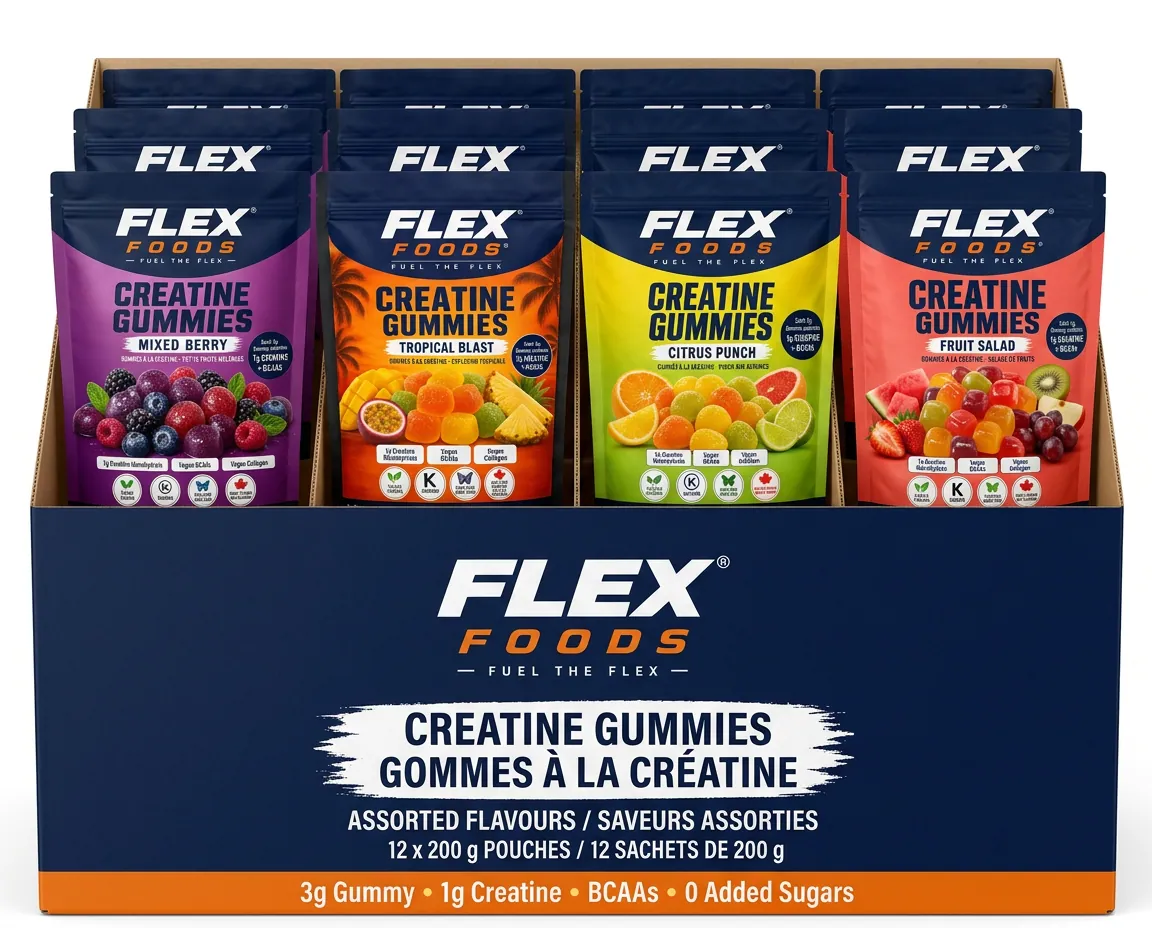
Storage matters more for a gummy than for most supplements, because the two things that degrade creatine — heat and moisture — are exactly the two things a gummy is vulnerable to.
Short version: cool, dry, sealed, out of the sun. Here's the reasoning.
Why heat matters
Creatine converts to inert creatinine in aqueous conditions, and reaction rate rises substantially with temperature. A gummy already contains water and mild acidity, so the reaction is proceeding slowly at room temperature throughout shelf life. Warmth speeds it up.
The practical implication: a pouch left in a hot car is losing potency faster than one in a cupboard. Vehicle interiors can exceed 50 °C in summer sun, and that's a meaningfully different degradation environment.
Heat also softens a pectin gummy and encourages the pieces to fuse. Less important than potency, more immediately annoying.
Detail on the chemistry in why creatine degrades in water.
Why humidity matters
Gummies are cured to a specific water activity — low enough to be microbiologically stable without preservatives, high enough to stay chewable.
Left open in a humid environment, they absorb moisture from the air. That does three things: raises water activity toward the range where microbial growth becomes possible, softens and sticks the pieces together, and increases available water for creatine degradation.
In a dry environment the reverse happens — they lose moisture, harden and become unpleasantly tough.
This is why the pouch is resealable. It isn't a convenience feature; it's maintaining the water activity the product was engineered to.
The rules
Keep the pouch sealed between uses. Press the closure properly. An open pouch is the single most common storage mistake.
Store cool and dry. A pantry or cupboard is ideal. Room temperature, away from heat sources.
Keep it out of direct sunlight. The pouch is opaque for this reason, and sunlight also means heat.
Don't store it above the stove or fridge. Both accumulate warm air. The top of a fridge is warmer than people assume.
Don't leave it in a car. Summer heat is the worst case; winter freezing is less damaging but causes texture changes and condensation on thawing.
Should you refrigerate them?
No, and this is the counterintuitive one.
Refrigeration lowers temperature, which slows degradation — but fridges are humid, and every time you take the pouch out, condensation forms on the cool surface as it warms. That adds moisture to a product engineered around a specific water activity.
The condensation problem generally outweighs the temperature benefit. A cool cupboard is better than a fridge.
Freezing is worse again — ice crystal formation damages the gel structure, and thawing produces condensation.
Travel
The format's genuine advantage, with caveats.
Gummies need no water, no shaker and no measuring, which makes them considerably easier on the road than powder. For airport security, they're solid food and not subject to liquid restrictions.
Two practical points: decant a few days' worth into a small sealed container rather than carrying an opened pouch, and keep them out of a car dashboard or a bag left in the sun. See travelling with creatine.
How to tell if they've gone off
The awkward truth: you can't detect creatine degradation by looking, smelling or tasting. Creatinine is odourless and tasteless at these levels. A gummy that has lost most of its creatine looks and tastes identical to one that hasn't.
What you can detect is physical change:
- Fused into a mass — heat exposure. Still edible; potency may be reduced.
- Sticky or wet surface — moisture uptake. Discard if the pouch was left open in humidity for an extended period.
- Very hard — moisture loss. Texture issue rather than a safety one.
- Any visible mould, off smell, or unusual appearance — discard.
Observe the best-before date. It reflects the period over which the product is expected to meet its label claim under proper storage, and improper storage shortens that.
The general point
The reason storage matters more here than for powder is the same reason gummies are harder to formulate: water is already present. Powder has none, which is why a tub in a cupboard is stable for years.
That's a real disadvantage of the format, honestly stated. The offsetting advantage is that you'll actually take it daily. See gummies vs powder.
General information about a natural health product, not medical advice.