On The Go
Why the 24-Pack Wins: High-Protein Snacking for Bulk Shoppers
Cost per gram of protein, portion control and the pantry logic behind buying a case instead of a bag.
Buying snacks in bulk feels like the opposite of eating well. Warehouse quantities have a reputation for encouraging exactly the behaviour you're trying to avoid.
For single-serve protein snacks, though, the arithmetic runs the other way — and the reason has more to do with portion architecture than with price.
The unit economics
Start with the boring part. At a single-bag price of $3.72, a case of 24 comes to $89.28 if you bought them one at a time. Club-pack and case pricing typically lands meaningfully below that, which is the entire premise of bulk retail.
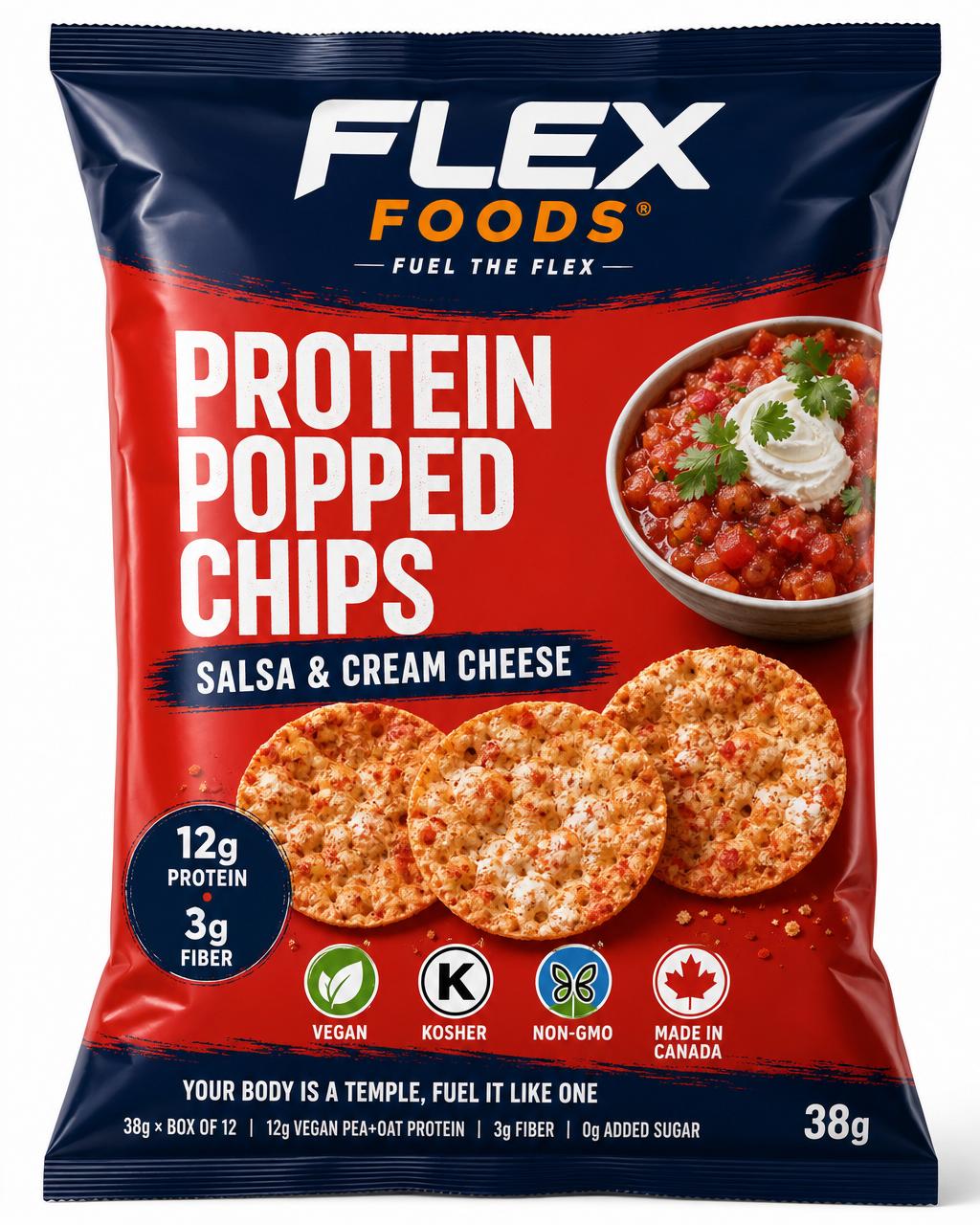
Translated to what actually matters — cost per gram of protein — a 38 g bag delivers 12 g of protein. At single-bag pricing that's about 31 cents per gram. Case pricing pulls it toward the low-20s.
For context, per gram of protein: eggs run roughly 3–5 cents, canned lentils 2–4 cents, chicken breast 5–8 cents, most protein bars 25–40 cents, ready-to-drink protein shakes 20–30 cents. Convenience snacks sit at the expensive end of the protein market and always will. Buying by the case moves you from the very expensive end to merely the expensive end.
Be honest with yourself about that trade. You're paying for shelf stability and zero preparation. Some days that's worth it and some days it isn't.
The part that matters more than price: portion architecture
Here's the counterintuitive bit. A 24-pack of 38 g bags is a better portion-control tool than a single large bag, and it isn't close.
The reason is that portion decisions are made once per package, not once per mouthful. Open a 300 g bag and you're renegotiating with yourself continuously — there's no natural stopping cue until the bag is empty or you actively decide to stop, which is a decision most people lose most of the time. Sensory-specific satiety declines as you eat, but not as fast as the bag empties.
A sealed single-serve bag makes the decision structural. Finishing it is a complete act. Having a second one requires standing up, choosing, and opening something new — a small friction, but friction applied at exactly the right moment.
This is the same reasoning behind pre-portioning nuts into jars instead of eating from the bulk bin. Bulk purchasing plus single-serve packaging gets you the price of the former and the discipline of the latter.
Shelf life makes it work
Bulk buying only makes sense if the food outlasts the pantry. Popped protein chips have a real advantage here: the popping process drives water activity very low, and low water activity is what prevents microbial growth without preservatives. Combined with a barrier film and a nitrogen flush, that yields months of shelf stability with a seven-ingredient list.
Compare that to bulk-buying anything refrigerated, where you're racing a clock, or bulk-buying a large bag of chips, where the clock starts the moment you open it and staleness sets in within days.
Who a case actually suits
Not everyone. Being specific:
- Households with more than one snacker. Two people at one bag a day is a case every twelve days.
- Anyone packing lunches. Single-serve is the entire point of a lunchbox item. No decanting, no containers.
- Gym bags, glove boxes, desk drawers. Distributed stashes need a supply. One bag in each location means you're never choosing between a vending machine and nothing. See our guide to building a gym-bag snack kit.
- Coaches, offices, teams. Feeding a group from single bags is straightforward in a way a shared bowl isn't.
Who it doesn't suit: anyone trying a product for the first time. Buy one bag. Flavour is not a thing you can predict from a nutrition panel, and a case of something you don't enjoy is 24 units of waste.
The variety-pack question
Our 24-pack is four bags each of six flavours, and that isn't a merchandising decision — it's a compliance one.
Sensory-specific satiety means your appetite for a specific flavour declines with repeated exposure faster than your appetite for food in general. Eat the same snack daily for two weeks and you'll like it measurably less by the end, even if nothing about the snack changed. This is the single most common reason people abandon an otherwise sensible nutrition habit.
Rotation defeats it. Six flavours in a case means the specific thing you're eating changes day to day while the macros stay identical — 12 g of protein and 3 g of fibre whether it's Tikka Masala or California Limón. The habit survives longer because it doesn't get boring.
Storage, briefly
Keep the case sealed, somewhere cool and dark, away from the stove. Heat and light are what degrade the oil and the seasoning over time, not air — the individual bags handle that. A pantry shelf is fine; the top of the fridge, where warm air collects, is worse than people assume.
Then move a handful to wherever you'll actually be when you're hungry. A case in the basement helps nobody. You can find a local retailer or order direct from the shop.