
On The Go
Camping, Hiking and Backcountry: Creatine Without a Kitchen
Weight, volume and heat. For multi-day trips, gummies are the wrong format and we'll say so.
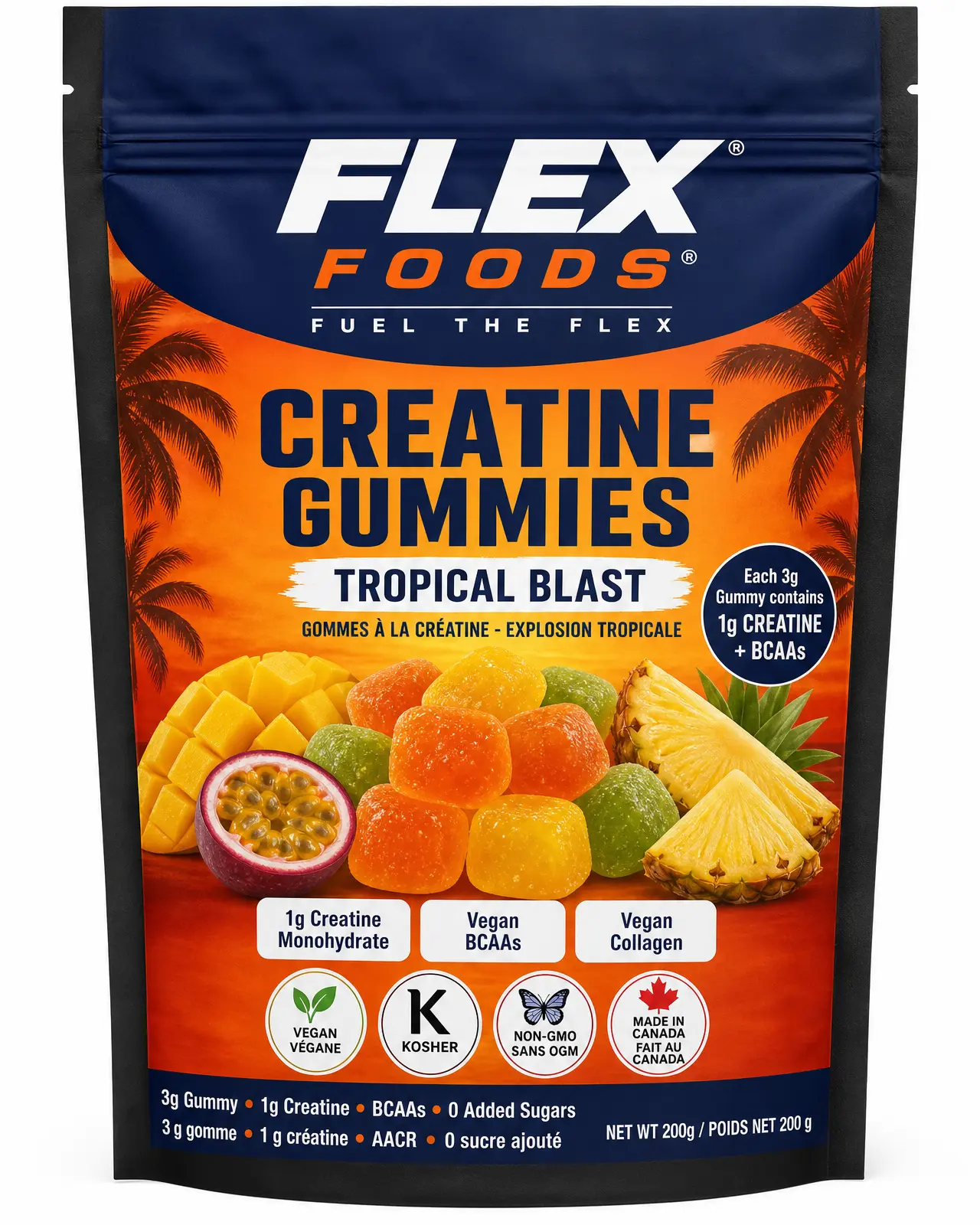
This is a post where our own product loses clearly, so let's start there.
For backcountry travel, creatine monohydrate powder beats gummies decisively. The arithmetic isn't close, and pretending otherwise would be silly.
The weight and volume problem
Backcountry food selection optimises for delivering the most of what you need per gram and per cubic centimetre carried.
Run creatine through that filter:
| Format | Weight carried per 1 g creatine |
|---|---|
| Monohydrate powder | ~1 g |
| Capsules | ~1.5 g |
| Our gummies | 3 g |
A gummy is 3 g of product for 1 g of creatine, because two-thirds of it is sweetener, gelling agent and water — the things that make it a gummy.
Over a seven-day trip at 3 g daily: 21 g of powder, or 63 g of gummies. Not a huge absolute difference, but the volume penalty is worse than the weight one — gummies don't compress, and pack space is frequently the binding constraint. A powder dose can go in a tiny zip bag; a week of gummies is a fist-sized lump.
The heat and moisture problem
Worse than the weight issue.
Creatine degrades to inert creatinine faster with heat, and a gummy already contains water and mild acidity. A pack sitting in the sun on a granite slab, a canoe barrel in August, a tent in the afternoon — all warm environments over days.
Gummies also soften and fuse in heat, and absorb moisture in humid conditions if the container isn't properly sealed.
Powder is indifferent to all of this. Dry, stable, unaffected. See how to store creatine gummies.
The one thing gummies do better out there
They need no water.
In situations where water is scarce, has to be filtered or treated, or is a genuine logistical constraint — desert travel, winter camping where water means melting snow — a chewable that requires nothing is a real advantage.
Powder needs a container, clean water, and something to mix in. Not difficult, but not nothing when every litre has been filtered.
That's a narrow advantage against a substantial disadvantage. For most backcountry trips it doesn't outweigh weight, volume and stability.
The bigger question: should you bother?
Worth asking before optimising the format.
Creatine supports short maximal efforts — the phosphocreatine system, lasting seconds. Backcountry travel is overwhelmingly aerobic: hours of steady walking or paddling under load.
That's the energy system creatine contributes least to. Studies have generally found no meaningful improvement in aerobic endurance performance. See creatine for endurance athletes.
You'd also be carrying an extra 1–2 kg of intracellular water up every hill — which for a hiker under a heavy pack is a real cost with no aerobic return.
So for a week in the backcountry, the honest answer is that creatine probably isn't doing much for you.
When it might still be worth taking
Two situations.
Maintaining saturation across a longer trip. If creatine is part of your ongoing routine and you're away for three or four weeks, stores decline substantially over that period. Carrying powder to maintain saturation means returning to training without a rebuild. See what happens when you stop.
Trips with genuine anaerobic demands. Technical climbing, whitewater, ski mountaineering with steep bootpacking. Repeated hard efforts with incomplete recovery is where creatine helps.
For a week of walking, skipping it costs you very little.
If you do bring it
- Bring powder. Pre-portion daily doses into small sealed bags, or measure by eye — precision isn't required.
- Keep it dry. Double-bag it. Powder that gets wet in a pack starts degrading immediately.
- Keep it out of direct sun. Inside the pack, not strapped to the outside.
- Don't stress a missed day. You lose about 1.5–2% of your pool daily. A few missed days is negligible. See daily consistency.
Day hikes and car camping
Different situation entirely. If you're back to a vehicle or a cabin each night, none of the weight or volume concerns apply, and gummies work fine — keep them out of a hot car.
The backcountry argument is specifically about multi-day self-supported travel.
General information about a natural health product, not medical advice.