
Fuel Science
What Happens When You Stop Taking Creatine
Stores wash out over four to six weeks. What you keep, what you lose, and what doesn't happen at all.
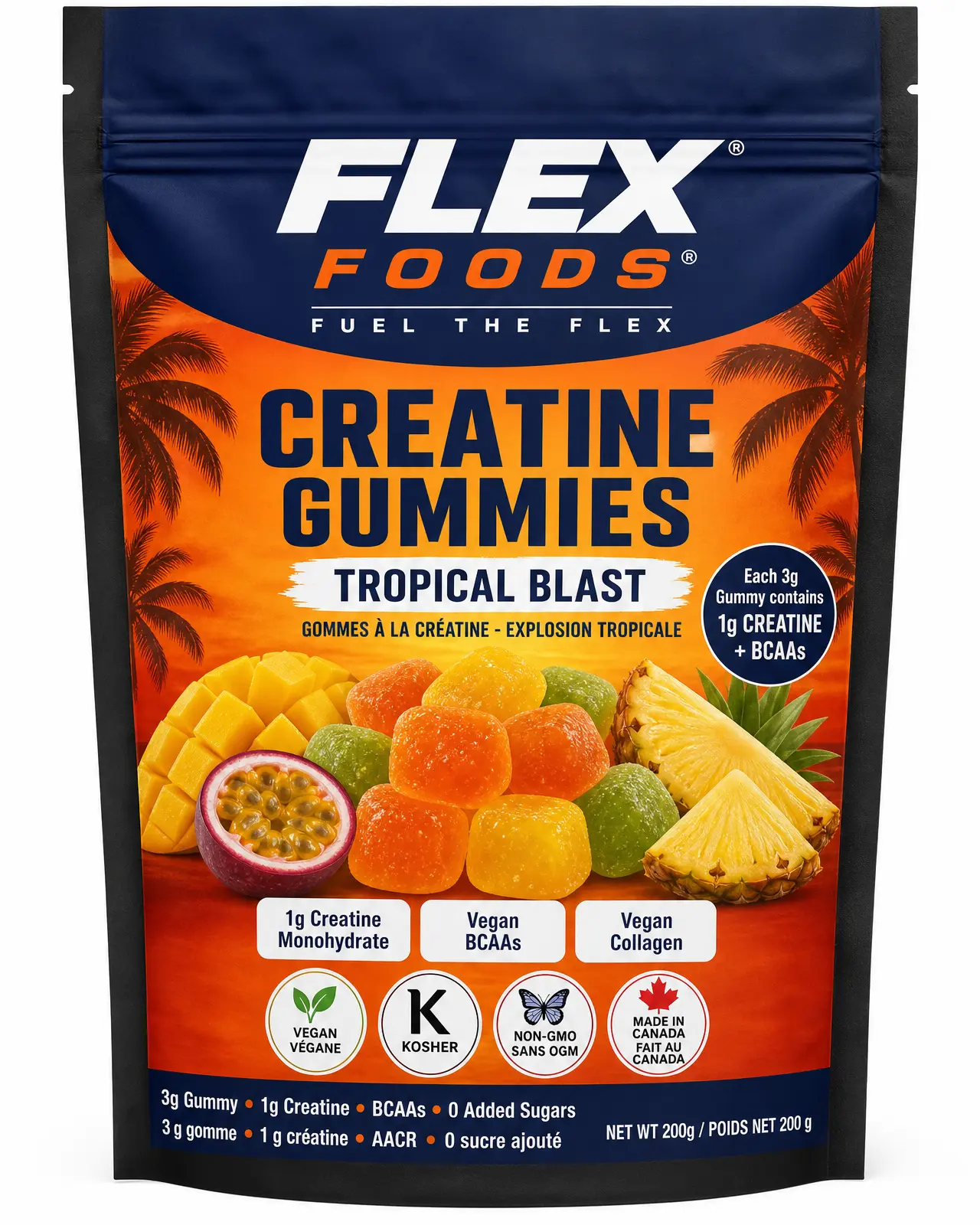
Whether you're taking a break, running out, or deciding it isn't for you, it's worth knowing what actually happens when you stop — because the process is slower and less dramatic than most people expect.
The washout
Muscle creatine doesn't disappear when you stop supplementing. It declines gradually as normal turnover continues without replacement.
Roughly 1.5–2% of your total creatine pool converts to creatinine and is excreted each day. Your body continues synthesising about a gram daily, and dietary intake continues if you eat meat and fish. What stops is the supplemental top-up.
The result is a gradual decline back toward your natural baseline over roughly four to six weeks.
Not a cliff. Not overnight. Most people notice nothing in the first two weeks.
What you lose
The water weight. As muscle creatine declines, the intracellular water it drew in leaves with it. Expect to lose the 1–2 kg you gained, over a few weeks. This is the most visible change and it's the one people misread as losing muscle. It isn't. See creatine and water retention.
The extra reps. Once phosphocreatine stores return to baseline, the additional capacity in short maximal efforts goes with them. You'll be back to whatever you'd have been doing without supplementation.
What you keep
This is the part that matters and it's frequently missed.
The muscle and strength you built. Creatine's contribution was allowing more training volume. That volume produced real adaptation — actual contractile tissue, actual neural adaptation. Those don't reverse because you stopped supplementing.
Put another way: creatine helped you do the work, and the work is what changed you. Stop the supplement and you keep the results of the work, minus the ongoing performance edge.
You'll lose muscle only if you also stop training, and that's true regardless of supplements.
What doesn't happen
Four things people worry about that don't occur.
No rebound below baseline. Stores return to your natural level, not below it. There's no penalty phase.
No permanent suppression of your own production. Endogenous synthesis is downregulated during supplementation — a normal feedback response — and available evidence indicates it returns to normal after stopping. No research has demonstrated lasting suppression in humans.
No withdrawal. Creatine isn't a stimulant or a substance the body becomes dependent on. There's nothing to withdraw from.
No sudden collapse in performance. The decline tracks the washout — gradual over weeks, not a bad session the day after you stop.
The washout timeline
| Time since stopping | What's happening |
|---|---|
| Days 1–7 | Nothing perceptible. Stores still near saturation. |
| Weeks 1–3 | Gradual decline. Water weight starts coming off. |
| Weeks 4–6 | Stores approaching natural baseline. Performance edge gone. |
| Beyond 6 weeks | Back to your unsupplemented normal. |
Why this argues against cycling
Run the arithmetic on a typical eight-weeks-on, four-weeks-off cycle.
The four weeks off is spent losing saturation. Then resuming takes another three to four weeks to rebuild it — longer on a 3 g maintenance dose than with loading, and loading isn't practical with gummies.
So each cycle costs you roughly seven weeks of sub-saturation for no demonstrated benefit. Repeated through the year, that's a large fraction of the time not getting the effect. Fuller argument in do you need to cycle creatine.
When stopping makes sense
Practical reasons rather than physiological ones:
- Making weight. Coming off four to six weeks before a weigh-in sheds the intracellular water. A legitimate strategy in weight-class sports.
- An endurance event where power-to-weight dominates. Same reasoning.
- An extended break from training. The performance case requires a training stimulus.
- Cost. Entirely reasonable — it's a modest-benefit supplement, not a necessity.
- Digestive tolerance. With a polyol-sweetened gummy, 9 g of sugar alcohols per serving doesn't suit everyone. See the maltitol post.
Restarting
No special protocol needed. Resume the daily dose and stores refill over three to four weeks, the same as the first time.
If you've been off for less than two or three weeks you'll still be partly saturated, so it'll be quicker.
General information about a natural health product, not medical advice.