
Nutrition 101
Creatine and Digestive Upset: Causes and Fixes
Dose size, particle size, and — with a gummy — the sweetener. Working out which one is actually causing it.
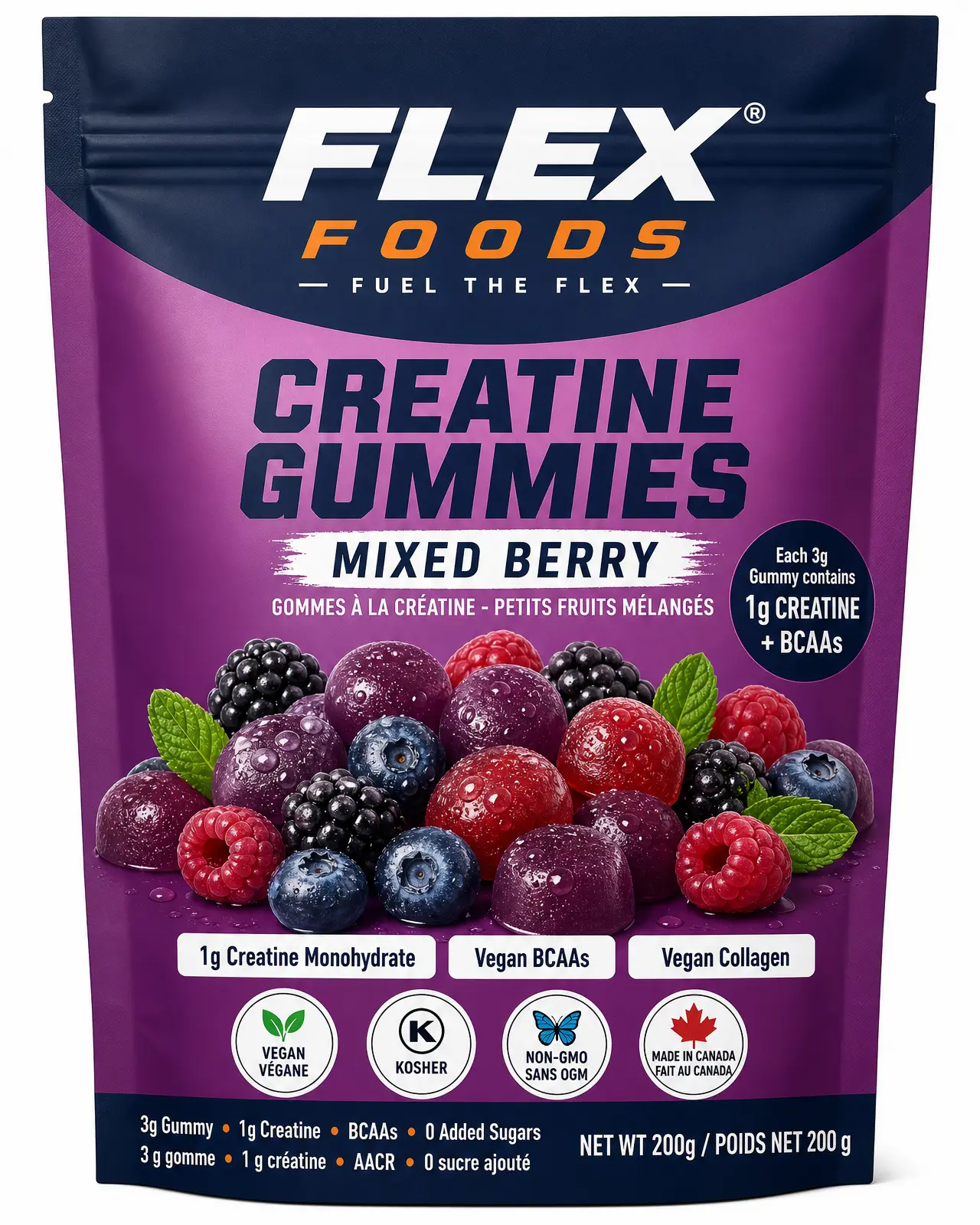
Digestive complaints are the most commonly reported side effect of creatine. They're also frequently misattributed, because with a gummy there are two candidate causes and the more likely one isn't the creatine.
Here's how to work out which you're dealing with.
Cause one: dose size
The classic creatine-related complaint, and it's dose-dependent.
Creatine is osmotically active. A large amount arriving in the gut at once draws water into the intestinal lumen, which produces bloating, cramping and sometimes diarrhoea. Unabsorbed creatine also passes further along, where it can contribute to discomfort.
This is why loading protocols are the main source of creatine stomach problems. Twenty grams a day is where it shows up, which is precisely why the protocol splits into four separate 5 g doses rather than one.
At a 3–5 g maintenance dose, creatine-driven digestive upset is uncommon.
Cause two: particle size
Relevant to powder rather than gummies, but worth knowing.
Standard creatine monohydrate dissolves poorly in cold water. Undissolved crystals sitting in the stomach are a plausible contributor to the gritty, heavy feeling some people report.
Micronized monohydrate — the same molecule milled to a smaller particle size — suspends better and is often better tolerated. Same compound, easier handling. See monohydrate vs other forms.
Cause three, and the likely one with our product: sugar alcohols
Being direct about this, because it's our formulation and it's the most probable explanation.
Three of our gummies contain 9 g of sugar alcohols, predominantly maltitol. Polyols are incompletely absorbed in the small intestine, and the portion reaching the colon does two things: it draws water in osmotically, and gut bacteria ferment it, producing gas.
The result is bloating, cramping, flatulence and loose stools — symptoms essentially identical to those attributed to creatine, from a completely different ingredient.
Individual tolerance varies a great deal. Maltitol commonly produces symptoms somewhere above roughly 20–30 g daily, with sensitive people reacting well below that. Nine grams is under the threshold for most people and not for everyone.
Maltitol is also a FODMAP — polyols are the "P" — so anyone with IBS or following a low-FODMAP protocol may react at lower intakes. Full detail in the maltitol post.
Telling them apart
A simple diagnostic:
| Observation | Points to |
|---|---|
| Symptoms scale sharply with number of gummies | Sugar alcohols |
| Gas and bloating hours later | Sugar alcohols (colonic fermentation) |
| Discomfort within 30 minutes of a large dose | Creatine osmotic load |
| Fine on creatine powder, symptoms on gummies | Sugar alcohols |
| Symptoms on both formats | Creatine or dose size |
| You react to sugar-free sweets generally | Sugar alcohols |
That fourth row is the cleanest test. If you tolerate monohydrate powder and not our gummies, the creatine isn't the problem.
What to try
Take them with food. Slows the rate at which the polyol load reaches the colon. Often sufficient on its own.
Split the serving. Two gummies in the morning, one later, rather than three at once. Same daily creatine, smaller individual polyol load.
Start at one gummy and build up over a week. Tolerance to fermentable carbohydrates does adapt somewhat with regular exposure.
Don't try to load. Twenty gummies would be around 60 g of sugar alcohols daily, which would cause significant distress in most people. See do you need to load creatine.
If it persists, switch to powder. Genuinely — a maintenance dose of monohydrate powder is cheaper and contains no polyols. If sugar alcohols don't suit you, that's the answer rather than persevering. We'd rather you take creatine in a form that works for you.
What isn't causing it
Two things creatine gets blamed for that don't hold up:
Dehydration. Creatine increases total body water rather than sequestering it, and studies have not found impaired hydration status. See creatine and hydration.
Kidney strain producing gut symptoms. Not a mechanism. See does creatine damage your kidneys.
When to see someone
Persistent digestive symptoms deserve proper assessment rather than an elimination exercise. Ongoing symptoms, unintended weight loss, blood in stool, or symptoms waking you at night are reasons to see a doctor rather than to switch supplement brands.
General information about a natural health product, not medical advice.