Brand & Values
Non-GMO Project Verified: What the Butterfly Really Means
One of the few third-party food seals with a published standard and mandatory testing. Also one of the most misunderstood.
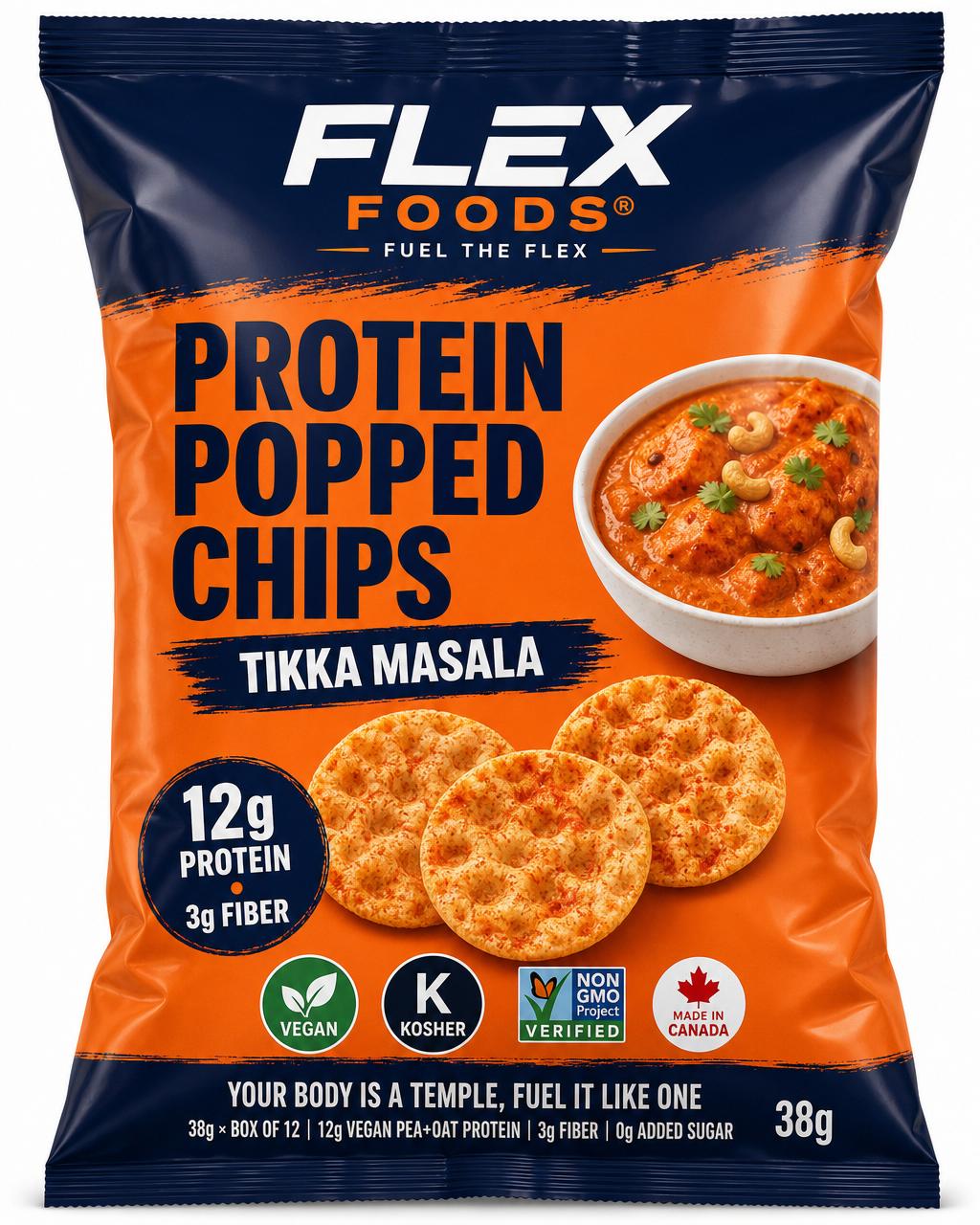
The butterfly logo on our bag is the Non-GMO Project Verified seal, and it's one of the more substantive third-party marks in North American food — a published standard, mandatory testing, ongoing audits.
It's also frequently misread, and worth separating from the loose phrase "non-GMO," which means whatever the printer wants it to mean.
The regulatory backdrop in Canada
Canada does not require labelling of genetically engineered foods. There's a voluntary national standard — CAN/CGSB-32.315 — governing claims about the presence or absence of GE content, but no mandatory disclosure.
This differs from the European Union, which requires labelling above a 0.9% threshold, and from the United States, which now requires disclosure of "bioengineered" food under a federal standard.
So in Canada, if you want to know whether a product contains GE ingredients, the label is not obliged to tell you. Voluntary third-party verification fills that gap, which is the entire reason the Non-GMO Project exists as a market institution.
What the seal actually requires
The Non-GMO Project Standard is a published document, and its requirements go meaningfully beyond a self-declaration.
- Input risk classification. Ingredients are classified by GMO risk. High-risk inputs — corn, soy, canola, sugar beet, alfalfa, cotton, papaya, summer squash and their derivatives — get the most scrutiny.
- Mandatory testing of high-risk inputs. Ongoing PCR testing rather than a one-time check, with an action threshold of 0.9% for most inputs.
- Traceability and segregation. Documented chain of custody, and physical separation from GE material through the supply chain.
- Third-party technical administration. Verification is conducted by independent bodies, not by the brand.
- Annual review. Verification isn't permanent — it requires ongoing compliance.
The 0.9% threshold matters. The standard is an avoidance standard, not a zero-detection standard, because at the scale of global commodity agriculture zero is not achievable and any credible programme has to say so.
The honest caveat about our own ingredients
Here's the part a brand usually leaves out.
Our ingredients are peas, oats, brown rice, sunflower oil, seasoning, sea salt and spices. Of those, none is a major commercially grown GE crop. There is no commercial GE pea, no GE oat, and essentially no GE rice in commercial food supply. Sunflower is not a GE crop either.
Which means our verification is doing less heavy lifting than it would for a product built on corn, soy or canola. For us, the seal is mostly evidence of supply chain integrity and documentation — that inputs are traced, segregated and tested — rather than evidence that a high-risk crop was avoided.
That's still worth something. Traceability is genuinely useful, and a company willing to submit to an annual third-party audit is telling you something about how it runs. But we'd rather you understand what the butterfly is certifying here than assume it rescued you from a risk that wasn't present.
The same reasoning applies to a lot of Non-GMO Project seals you'll see. On a corn chip or a soy product, it's doing real work. On bottled water or sea salt, it's decorative.
What the seal does not mean
Four common misreadings.
It is not organic. Certified organic prohibits GE inputs, so organic products are non-GMO by definition — but organic also regulates pesticides, synthetic fertilisers, soil management and animal welfare. Non-GMO verification addresses only genetic engineering. Organic is the broader standard.
It is not a pesticide claim. A non-GMO crop can be grown with conventional pesticides. If pesticide residue is your concern, organic is the relevant certification.
It is not a nutrition claim. Non-GMO Project Verified products include plenty of confectionery, soft drinks and refined snacks. The seal says nothing about sugar, sodium or nutrient density. Read the panel — our walkthrough is here.
It is not a safety verdict. Major scientific bodies — including the WHO, the US National Academies and the European Commission's research directorate — have generally concluded that approved GE foods on the market are not riskier to eat than their conventional counterparts. Reasonable people avoid GE foods for reasons of agricultural practice, corporate concentration, ecological effects or the precautionary principle, and those are legitimate positions. But the seal is a verification of process, not a statement that the alternative is unsafe.
How to read food seals generally
Three questions, applicable to any logo on any package:
- Is there a published standard you can read? Non-GMO Project: yes. "All natural": no such thing.
- Who verifies it, and are they independent of the brand? Third-party audit beats self-declaration every time.
- What specifically does it cover? Most seals address one narrow question well. Problems come from assuming they cover more.
By those criteria the butterfly holds up better than most of what's printed on a food package. Our post on decoding food certifications runs the same test across the others.