Brand & Values
Why Our Gummies Aren't Sugar-Coated
Sanding sugar is standard in confectionery. Going without changes the surface in ways you'll notice.
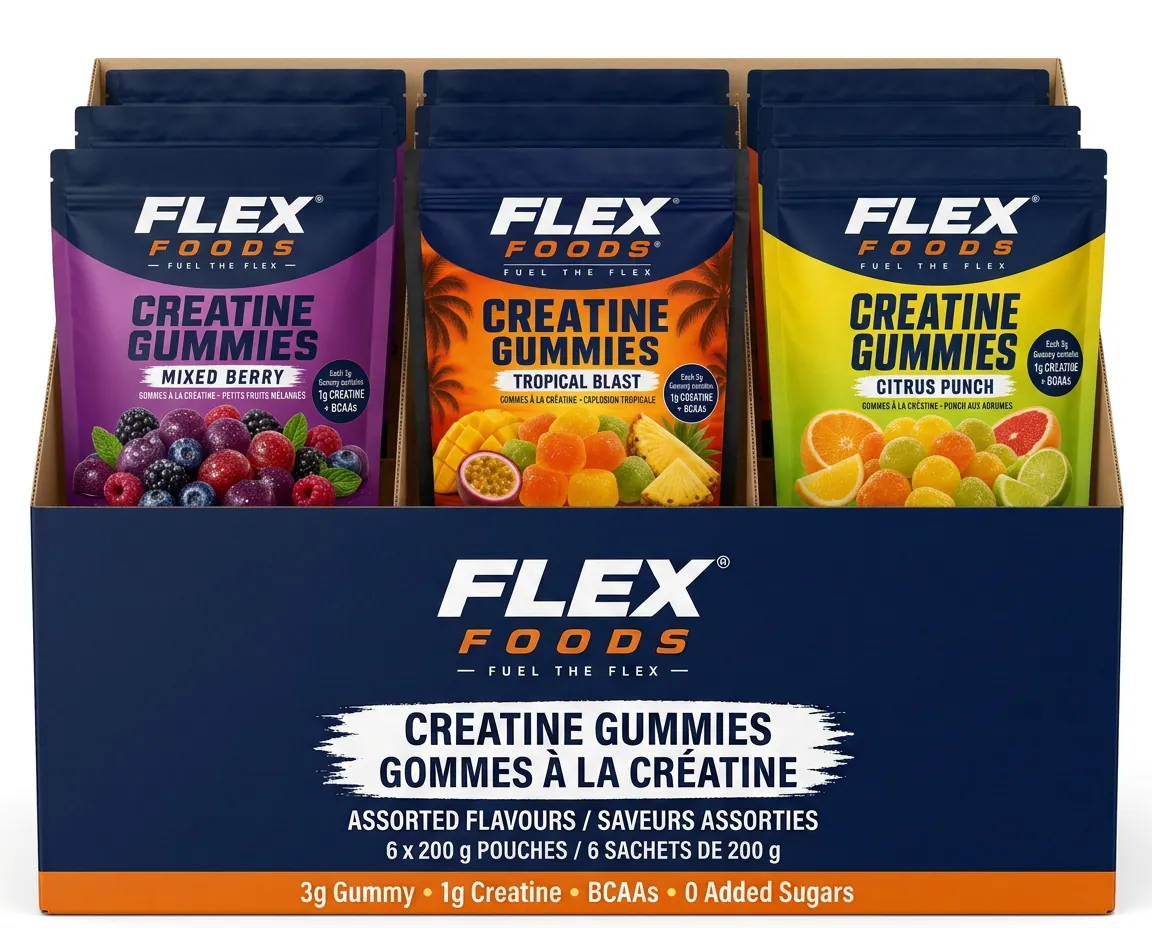
Pick up almost any conventional gummy and it has a fine sugar coating — sanding sugar, applied after demoulding. It's so standard that its absence is one of the first things people notice about a sugar-free gummy.
Worth explaining what that coating does, and what we used instead.
What sanding sugar is for
Four jobs, and only one of them is taste.
Anti-stick. The main one. A freshly demoulded gummy has a tacky surface. Without a coating, they adhere to each other and fuse into a mass in the bag.
Moisture management. A dry coating provides a slight barrier, reducing surface moisture exchange with the environment.
Sensory contrast. The crystalline crunch against a soft interior is a big part of what makes a sour or sanded gummy satisfying. It's a texture effect more than a flavour one.
Flavour delivery. Acid carried on the surface — citric or malic — hits the tongue immediately, producing the sharp initial hit before the softer interior flavour.
Remove sugar and all four jobs need solving differently.
What we use instead
Organic sunflower oil, applied as a light coating after demoulding.
It handles the anti-stick problem well, which is the most functionally important of the four. The quantity is small enough that our panel declares 0 g fat.
What it doesn't do is provide the crystalline texture or the acid hit. Which produces the honest consequences below.
What you'll notice
Three differences, stated plainly rather than talked around.
The surface is smoother, not crunchy. No crystalline coating means no textural contrast on the outside. Some people find this less satisfying, particularly if their reference point is a sanded sour gummy.
They can stick together, especially when warm. An oil coating is less effective than sugar at preventing adhesion, and heat makes it worse. If your pouch has been somewhere warm you may find them fused — still fine to eat, and a reasonable sign they've been hot. See how to store creatine gummies.
The flavour arrives slightly slower. No surface acid means less of an immediate hit; the flavour develops as you chew rather than landing instantly.
Whether that's worse is genuinely a matter of preference. It's different, and we'd rather say so than pretend the trade-off doesn't exist.
Could we have used a sugar-free coating?
Options exist and each has drawbacks.
Erythritol sanding. Crystallises well and would provide the texture. It also has a pronounced cooling sensation, which is difficult to work with in fruit profiles, and it adds to the polyol load — already at 9 g per serving from maltitol. See the maltitol post.
Isomalt or maltitol powder. Would work texturally and increase the sugar alcohol content further.
Citric acid sanding without a bulk carrier. Too harsh, and acid on the surface is a problem for a different reason — acidity accelerates creatine's conversion to inert creatinine. Concentrating acid on the exterior of a creatine product works against the active. See why creatine degrades in water.
That last point is the interesting one, and it's specific to this product rather than to sugar-free gummies generally. A conventional sour coating would be a stability liability here in a way it wouldn't be on a vitamin gummy.
The wider pattern
This is a small example of something that runs through the whole formulation: the decisions that make a good gummy and the decisions that protect creatine frequently point in opposite directions.
Acid makes flavour bright and pectin set — and degrades the active. Heat makes the process work — and degrades the active. Water is structural — and degrades the active. Sugar would improve texture and masking — and would undo the 0 added sugars position.
Every one of those is a compromise, and the finished product is where they settled. See how a creatine gummy is made.
The one-line version
No sanding sugar means a smoother surface, a slower flavour arrival, and gummies that stick together if they get warm. We took that over adding sugar to a product positioned on not having any.
General information about a natural health product, not medical advice.