Brand & Values
Proprietary Blends: The Label Trick to Watch For
A blend total without individual amounts tells you almost nothing. Canada handles this better than most markets.
If a supplement label lists several ingredients under a single total — "Anabolic Matrix 3,200 mg" — you've encountered a proprietary blend, and you've lost the ability to evaluate the product.
How they work
A proprietary blend groups multiple ingredients and discloses only the combined weight. Individual quantities aren't stated.
The one thing you can infer: ingredients within a blend are generally listed in descending order by weight, so the first is present in the largest amount.
What you can't determine is the actual amount of anything — whether the evidenced ingredient sits at an effective dose or at a token one.
The justification, and the problem with it
The stated rationale is trade secret protection: disclosing exact ratios would let competitors copy the formulation.
Two problems with that.
The ingredient list is already public. A competitor knows exactly what's in the product; only the ratios are hidden. Reverse-engineering a formulation from a known ingredient list is not difficult for anyone with a lab.
The information asymmetry lands on the consumer. You can't evaluate what you're buying, which is precisely the situation the disclosure is meant to prevent.
Some blends do reflect genuine formulation work. Many are cover for underdosing.
"Fairy dusting"
The industry's own term for the practice a blend enables.
Include an ingredient with real evidence — at a dose far below what was studied — so the label can name it and the marketing can cite the research.
Worked example. A blend totalling 3,000 mg listing citrulline malate, beta-alanine, taurine, tyrosine and a herbal extract.
Citrulline malate has evidence generally at 6–8 g. Beta-alanine at 3.2–6.4 g daily. Either one at an effective dose would exceed the entire blend total. So neither can be adequately dosed, and the label still names both.
That arithmetic check — does the blend total even permit an effective dose of the ingredients named? — frequently answers the question on its own.
The Canadian difference
A genuine structural advantage worth knowing about.
Natural Health Products in Canada are regulated under the Natural Health Products Regulations, which require medicinal ingredients to be declared with their quantity per dosage unit.
That materially constrains proprietary blends for actives. A Canadian-licensed NHP has to tell you how much of the medicinal ingredient is in a dose.
Non-medicinal ingredients are listed without quantities, and class names like "natural flavour" cover multiple components — so it isn't total transparency. But on the ingredients that do the work, Canadian labels tell you more than US supplement labels typically do.
Under the US DSHEA framework, proprietary blends with undisclosed individual amounts are permitted and common. See what an NPN means.
How to read a label with a blend
- Check the blend total. Then check the studied dose of the headline ingredient. If one effective dose would exceed the total, nothing in there is adequately dosed.
- Note position. First listed is the largest component. If the cheap bulk ingredient is first, that's most of the blend.
- Count the ingredients. Twenty ingredients in 3 g means an average of 150 mg each. Very few things do anything at 150 mg.
- Look for full disclosure elsewhere. Brands willing to disclose usually do so prominently, because it's a selling point.
Where blends are most common
Pre-workouts, "test boosters," fat burners, mass gainers, and anything with a proprietary-sounding name ending in Matrix, Complex, Blend or Formula.
Where they're rare: single-ingredient products. Creatine monohydrate, whey protein, caffeine, vitamin D — categories where there's nothing to hide because there's one thing in the bottle.
That's a reasonable heuristic on its own: single-ingredient products from established manufacturers carry less risk of both underdosing and contamination. See banned substances and contamination.
Our own label
Applying the standard to ourselves.
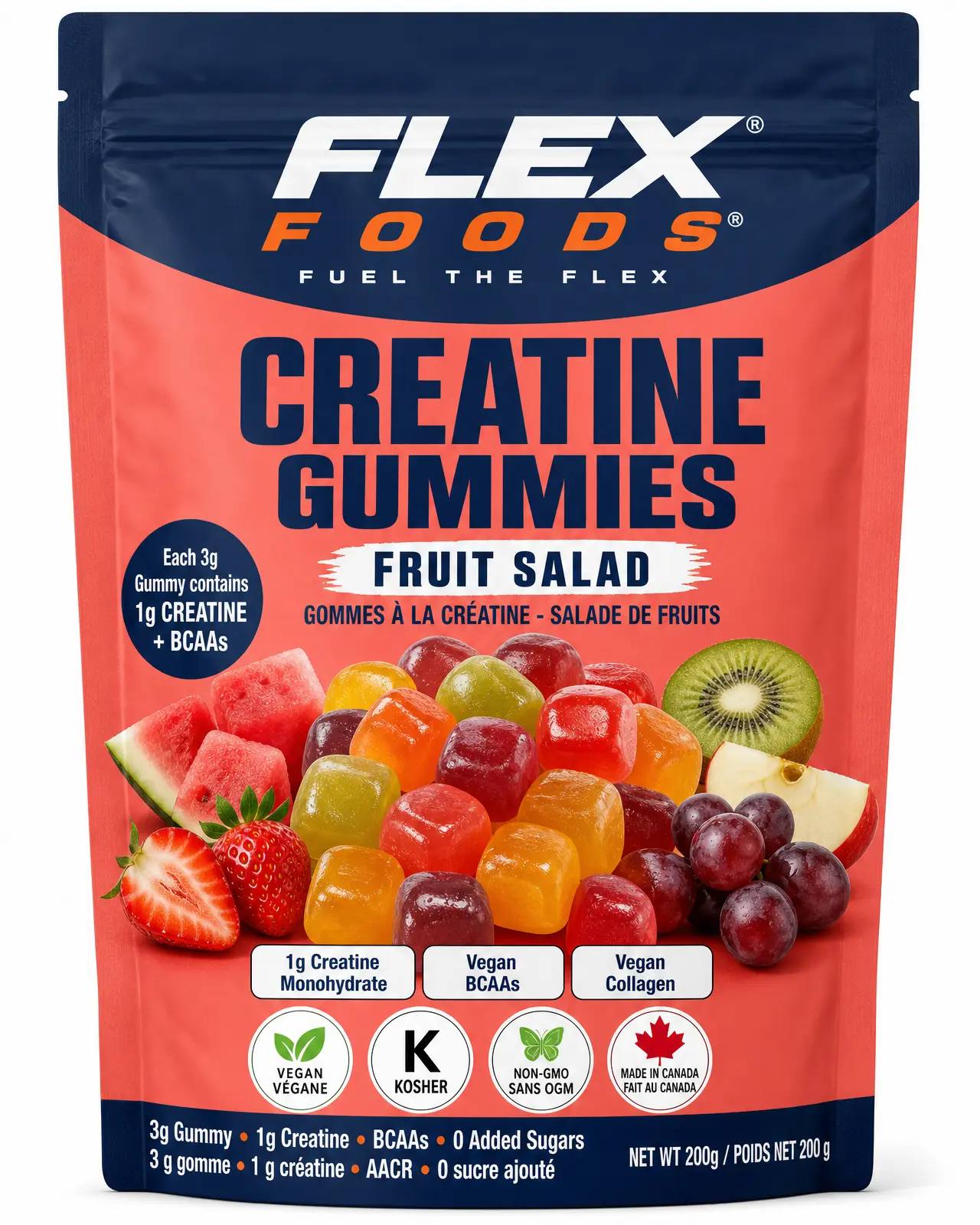
One medicinal ingredient: creatine monohydrate, 1 g per gummy. Quantified, not blended, not hidden behind a proprietary name.
Eleven non-medicinal ingredients listed without quantities, as permitted — including two class names, "natural flavour" and the flavour system it covers. That's a real limitation of our label and it's shared with essentially every flavoured product. See the non-medicinal ingredients explained.
The question worth pressing on our product isn't dose disclosure — it's whether the declared creatine survives to the end of shelf life. See how to check a creatine gummy.
General information about a natural health product, not medical advice.