Brand & Values
What 'Clean Ingredients' Should Mean on a Chip Bag
Six ingredients versus twenty-six. A defensible definition of clean label, and where the term gets abused.
"Clean" is on a great deal of food packaging and regulated by nobody. It has no legal definition in Canada, no threshold, no audit. Any company can print it, and most do.
Which puts us in an awkward position, because we think there's something real underneath the marketing. So here's an attempt at a definition we'd be willing to be held to — plus the honest criticism of the whole concept.
First, the criticism
The strongest argument against "clean label" is that it implies everything else is dirty. That framing is unfair and often simply wrong.
Preservatives prevent food spoilage, which prevents food waste and food-borne illness. Emulsifiers make products stable enough to be affordable and shelf-stable. Fortification with folic acid, vitamin D and iodine has prevented an enormous amount of disease. Additives approved for use in Canada go through safety review; "chemical-sounding" is not a hazard assessment.
There's also a real cost to clean-label positioning: it can push consumers toward products that are nutritionally worse but have shorter ingredient lists. An "all-natural" cookie made from six ingredients is still a cookie. Ingredient count is not a nutrition metric.
So anyone using the term — us included — should be specific about what they mean, or stop using it.
A definition worth defending
Four criteria. Each is checkable by a shopper in the aisle, which is the point.
1. Every ingredient has a functional reason you could explain
Not "no additives." Rather: each ingredient does structural, nutritional or sensory work, and a manufacturer should be able to say what.
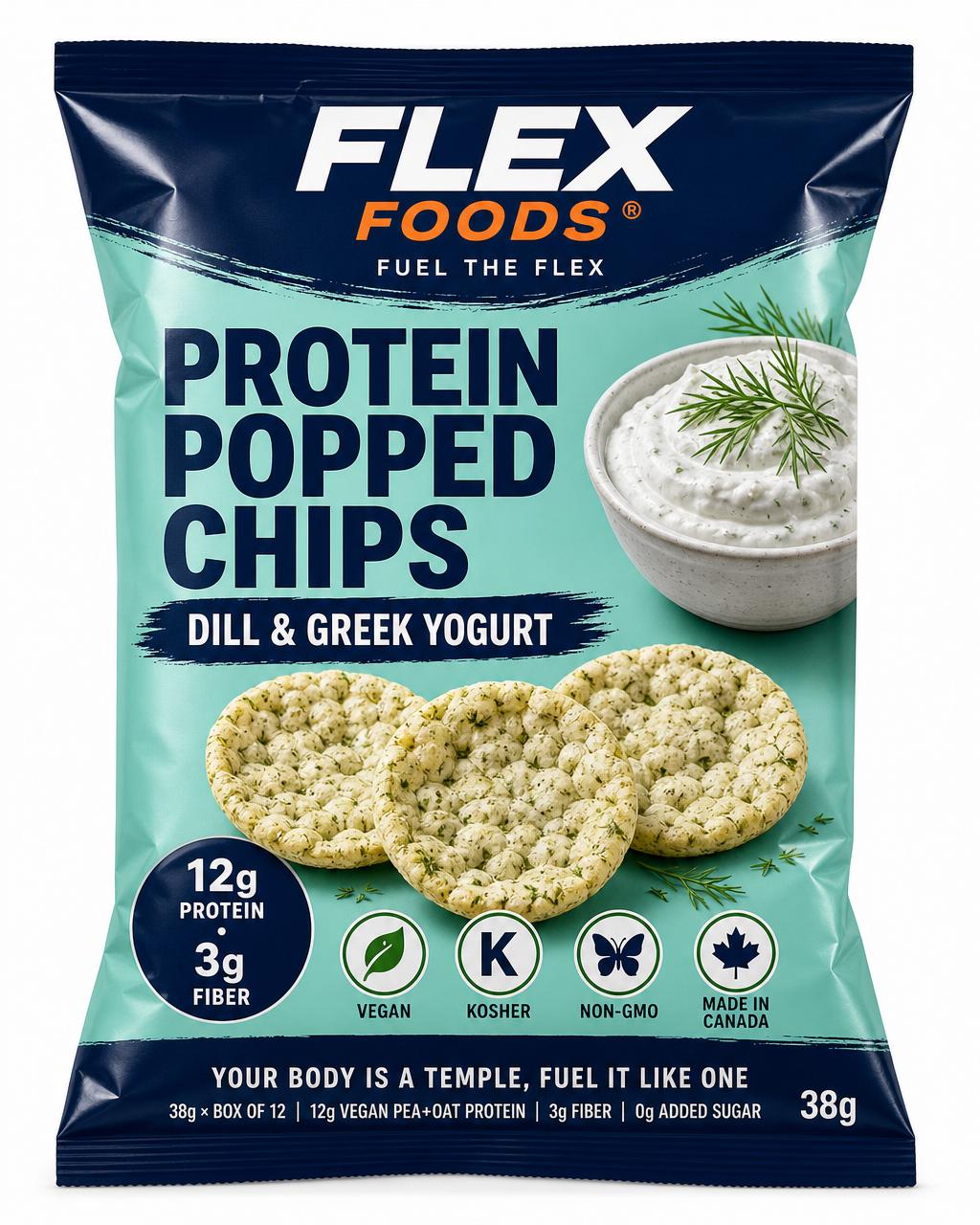
Our seven: pea protein isolate (protein load, leucine), oat protein (closes the methionine gap), brown rice (the starch matrix that makes popping physically possible, plus most of the fibre), sunflower oil (a thin post-pop coating so seasoning adheres), natural seasoning, sea salt and spices (flavour).
Nothing is there purely for appearance or to replace a more expensive ingredient. That's the test — and it's a test a twenty-six ingredient list can also pass, if each line is doing a job.
2. The protein source is named specifically
This is the most underrated check on any protein product. "Pea protein isolate" is specific: roughly 82% protein, wet-processed, with the gas-producing oligosaccharides washed out. "Pea protein" unqualified usually means concentrate at 50–60%. "Chickpea flour" is a flour at roughly 20% protein.
Vagueness here is almost always cheaper. Detail in isolate vs concentrate.
3. Nothing is doing hidden nutritional work
The most common version: added sugar in a savoury product, where nobody's looking for it. Sugar in a barbecue or dill pickle seasoning is there to round off harsh edges in salt and acid, and it's genuinely effective — which is why it's nearly universal.
Our seasonings are 0 g added sugar, built from acidity, aromatic layering and umami instead. That was harder and it cost us two flavours that didn't work without it. The reasoning is in building bold flavour with 0 g added sugar.
4. The claims made are the claims that can be substantiated
This is where most clean-label positioning falls apart, and it's a discipline rather than a formulation question.
Concretely: we don't claim "low in sodium," because at roughly 263 mg per 50 g reference amount we're above Canada's 140 mg threshold. We say "12g Protein" rather than "high in protein," because that's a regulated claim tied to Canada's Protein Rating system rather than to grams. Both in how Canada defines high protein and low-sodium snacking.
Where clean label gets abused
Four patterns worth recognising:
- Class names carrying weight. "Natural seasoning" and "spices" are permitted class names covering many components. Our own label uses two of them. That's a real limitation and we'd rather name it — see reading natural flavour.
- Splitting sugars. Cane sugar, fruit juice concentrate, brown rice syrup and dextrose in one product means each appears lower in a descending-weight list than total sugar would.
- Absence claims for things never present. "No cholesterol" on a plant food. "Gluten-free" on rice. Technically true, informationally empty.
- Short lists that are nutritionally poor. Three ingredients: sugar, palm oil, cocoa. Impeccably short.
What to check instead
If you only use one heuristic, use this: ignore the front of the package entirely and read the ingredient list and the panel.
Then in order: is the protein source named specifically and in the first two positions? Is added sugar 0 g in a savoury product? Is fibre 3 g or more? Is sodium reasonable per 100 g? Does each ingredient have an obvious job?
Those five questions do more work than any adjective on the front, and they apply equally to us. Our take on the wider term is in what clean label really means.