Nutrition 101
Reading 'Natural Flavour' on an Ingredient List
One of the least transparent phrases in food labelling, explained without conspiracy or hand-waving. Including on our own label.
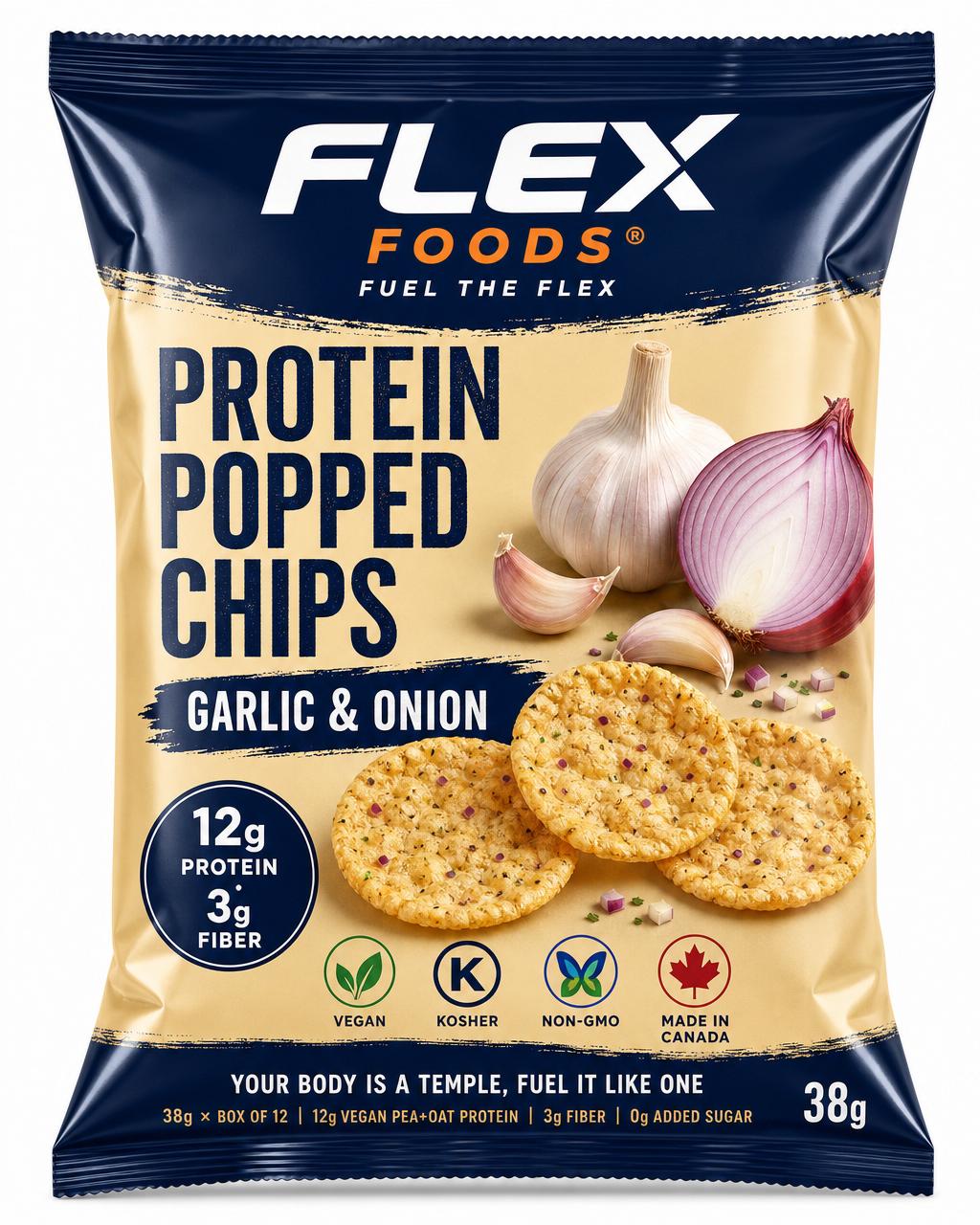
"Natural flavour" appears on our bags. It appears on an enormous share of packaged food. And it is genuinely one of the least informative declarations permitted on an ingredient list.
We'd rather explain how it works than let it sit there unexamined.
Why one phrase can cover many substances
Canadian food labelling permits certain groups of ingredients to be declared under a class name rather than listing each component individually. "Flavour," "natural flavour," "spices," "colour" and several others work this way.
The reasoning is partly practical and partly commercial. A single flavour system may contain dozens of individual compounds, extracts and carriers, present in tiny quantities. Listing all of them would produce an ingredient list longer than the package and less useful to a shopper. It also protects proprietary formulations — flavour houses treat their blends as trade secrets, and a full disclosure requirement would publish them.
Whether that trade-off is set correctly is a legitimate policy argument. What's not in dispute is the effect: a shopper cannot determine from the label what's in a natural flavour.
What 'natural' actually constrains
Less than people assume, and more than nothing.
Broadly, a natural flavour must be derived from a natural source — plant or animal material, or fermentation — rather than synthesised from petrochemical or other non-food precursors. The source has to be natural.
The processing does not have to be gentle. Natural flavours are routinely produced through solvent extraction, distillation, enzymatic treatment, heating and fermentation. A compound extracted from a plant with hexane and purified through several industrial steps is still a natural flavour.
And here's the part that surprises people: a natural flavour and its artificial counterpart are often the identical molecule. Vanillin is vanillin whether extracted from a vanilla pod or synthesised from lignin. The molecule is the same; the origin differs. "Natural" is a sourcing claim, not a chemistry claim and not a safety claim.
What the class name does not hide
Three important protections remain in place, and they're the reason this isn't as alarming as it sounds.
Priority allergens must be declared. If a flavour system contains any of Canada's priority allergens — peanuts, tree nuts, milk, eggs, fish, crustaceans and shellfish, sesame, soy, wheat and triticale, mustard — or sulphites, that allergen must be named, either in the ingredient list or in a "Contains" statement. The class name cannot conceal an allergen. This is the single most important thing to know.
Gluten sources must be declared. Same principle.
Additives are separately regulated. Preservatives, colours and other additives have their own declaration rules and permitted-use lists. "Natural flavour" isn't a loophole for them.
What's behind ours
The full ingredient list on a bag of Protein Popped Chips is: pea protein isolate, oat protein, brown rice, sunflower oil, natural seasoning, sea salt, spices.
Three of those seven lines are flavour-related — natural seasoning, sea salt, spices — and two of them are class names.
What we can tell you plainly: there's no dairy, no soy, no egg, no nuts and no added sugar in the formulation, and the only precautionary allergen statement is "may contain oats." The seasonings are built from spices, acidity and umami sources rather than sugar, which is the formulation approach described in building bold flavour with 0 g added sugar.
What we won't do is claim the class name is more informative than it is. If you have an allergy, a religious dietary requirement, or a specific ingredient you avoid, email hello@flexfoods.ca and ask. We'd rather answer a specific question with a specific answer than have you rely on a paragraph in a blog post.
That's a genuine limitation of our own label, and it's shared with essentially every seasoned snack on the shelf.
How to handle it as a shopper
If you have an allergy: the mandatory allergen declaration and the "Contains" statement are your legally binding information. Class names cannot hide priority allergens. Then read the precautionary statement, which covers cross-contact risk — full detail in the may contain decoder.
If you avoid specific ingredients for other reasons — MSG, particular extracts, alcohol-based carriers, anything not covered by allergen rules — the label won't tell you. Contacting the manufacturer is the only route, and most food companies will answer.
If you want to avoid class names entirely: that's a coherent position and it narrows your options considerably. Products flavoured only with named whole ingredients — "paprika, garlic powder, onion powder, black pepper" — exist but are a minority, and often more expensive.
What not to conclude: that "natural flavour" indicates something sinister. It usually indicates a spice and extract blend a flavour house won't publish. The more useful signals for judging a product are ingredient count, whether the protein source is named specifically, added sugar, and sodium. Our take on the broader term in what clean label really means.