Brand & Values
Reading Our Own Label Critically: What We'd Improve
Five things on our own packaging we'd improve, written as a customer would read it.
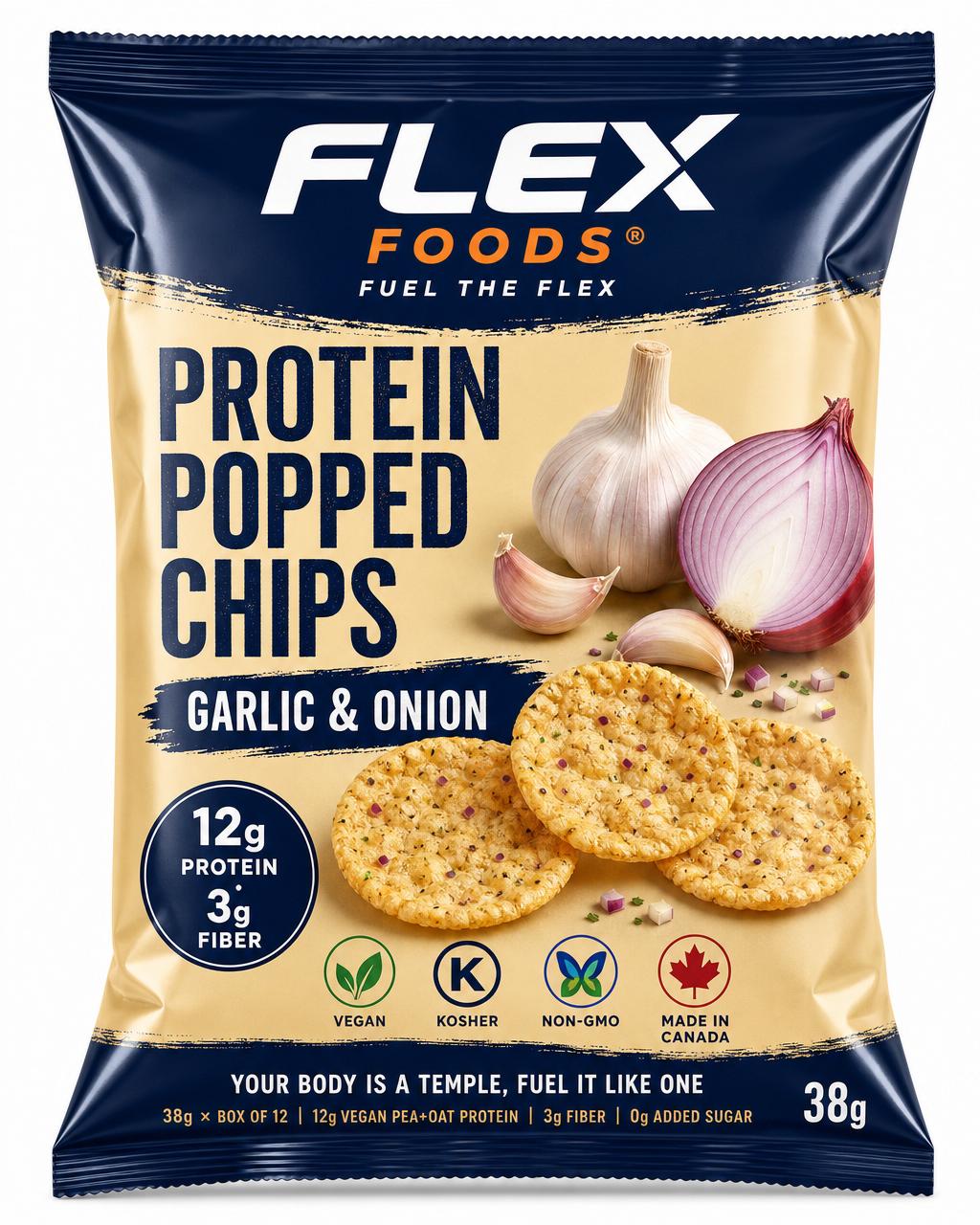
Most brand blogs explain why their label is good. This one goes the other way.
Not as a rhetorical move — the useful version of label literacy is applying the same scrutiny to the product in your hand as to the competitor's. So here are five real limitations on our own packaging, and what we'd tell you to do about each.
1. Two of our seven ingredients are class names
Our list reads: pea protein isolate, oat protein, brown rice, sunflower oil, natural seasoning, sea salt, spices.
Those last two bolded entries are permitted class names. Canadian labelling allows certain ingredient groups to be declared collectively rather than component by component, and "natural flavour," "seasoning," "spices" and "colour" all work this way. A single declaration can cover many individual compounds and extracts.
Why it's like that: flavour systems contain dozens of components in tiny quantities, and flavour houses treat their blends as trade secrets. Listing everything would produce a label longer than the bag.
Why it's still a limitation: you can't determine from our label what's in there. That's a genuine gap, and it's shared with essentially every seasoned snack on the shelf — which makes it typical rather than acceptable.
What to do: priority allergens must be declared regardless of class names, so allergen information isn't hidden. For anything else — a specific extract, MSG, an alcohol-based carrier — email hello@flexfoods.ca. Full explanation in reading natural flavour.
2. Our kosher mark is a bare 'K'
Worth stating plainly, because it's the item on this list we'd most want a customer to know.
A single letter can't be trademarked. Which means a bare K carries less evidentiary weight than a registered agency mark — COR (Kashruth Council of Canada), OU, BCK, MK, Kof-K, OK or Star-K — each of which can only be used under licence after actual certification.
If you keep kosher strictly, don't treat our K as sufficient. Email us for the certifying authority and certificate for the lot you're holding, and if we can't produce one, that's information you're entitled to have and to act on. Detail in kosher certification explained.
3. We carry a gluten-free claim and a 'may contain oats' statement
Both are accurate and they need reading together.
Oat protein is an intentional ingredient — it closes the methionine gap in pea protein. Oats don't naturally contain gluten, but conventional oat supply chains share equipment and transport with wheat, so Health Canada permits gluten-free claims only where specially produced uncontaminated oats are used.
If you have coeliac disease, that combination is exactly the detail to scrutinise rather than take on trust. Contact us for current certification documentation on the oat supply. A blog paragraph is not the right basis for that decision. More in the gluten-free and soy-free guide.
4. Protein isolation strips micronutrients
A trade-off inherent to the product rather than a labelling issue.
Pea protein isolate is made by wet processing that removes most of what isn't protein — fibre, starch, and a meaningful share of the minerals. Whole peas carry considerably more iron, magnesium and potassium per gram of protein than isolate does.
We use isolate because 12 g of protein in a 38 g bag isn't achievable otherwise; concentrate would need roughly 22 g of ingredient and leave no room for the starch matrix the chip requires. It's a deliberate choice with a real cost.
What it means: whole legumes are nutritionally superior to any isolate-based snack on almost every measure except convenience. Lentils and chickpeas beat us on fibre, micronutrients and cost. We're competing with the vending machine, not with a bowl of beans. Detail in isolate vs concentrate.
5. We're not low in sodium, and we don't say 'high in protein'
Two claims we deliberately don't make, and it's worth knowing why.
Sodium. 200 mg per 38 g bag — 9% of the daily value, roughly 263 mg per 50 g reference amount. A "low in sodium" claim in Canada requires 140 mg or less per reference amount. We're well above it. Nine percent is moderate, better than much of the protein-snack shelf, and not low. See low-sodium snacking.
Protein. Our packaging says "12g Protein," a statement of quantity, rather than "high in protein," which is a regulated content claim tied to Canada's Protein Rating system — a measure derived from a rat growth assay that systematically disadvantages legume proteins. We state the number instead of the superlative. Detail in how Canada defines high protein.
Why publish this
Two reasons.
The first is practical: the customers most affected by these limitations — someone managing coeliac disease, keeping kosher, or tracking sodium for blood pressure — will find them anyway, and would rather find them from us than after a purchase.
The second is that a brand that only ever explains why its own label is excellent has taught you nothing transferable. The five checks in this post work on any package: are class names carrying weight, is the certification mark a real agency mark, do the absence claims and precautionary statements sit in tension, does processing cost nutrients, and are the claims regulated or merely adjectives.
Apply them to us. Then apply them to whatever's next to us on the shelf.