
Brand & Values
Why Most Supplements Don't Work
Underdosing, mechanism-to-outcome gaps, and studies that never replicated. The failure modes are predictable.
Most supplements on a shelf do nothing measurable. That's a strong claim and it's the mainstream position among researchers who study them.
The reasons are structural rather than conspiratorial, and once you know them you can spot the pattern on a label.
1. Mechanism doesn't equal outcome
The most common failure, and the most persuasive-sounding.
Marketing copy frequently describes a mechanism: this compound activates that pathway, inhibits that enzyme, increases that marker. The mechanism is often real, demonstrated in cell culture or in rodents.
The gap is that affecting a pathway isn't the same as changing an outcome in a person. Human physiology is redundant and heavily regulated. Nudging one node frequently produces nothing measurable at the level of strength, endurance or body composition.
The reliable tell: a product explaining how it works in detail while saying little about what happened when people took it.
2. Underdosing
The most common and most cynical.
A product contains an ingredient with genuine evidence — at 5 g. The product provides 500 mg. The ingredient appears on the label, the studies can be cited, and the dose does nothing.
Citrulline malate is a standard example: evidence generally at 6–8 g, frequently present at under a gram in blends.
Creatine is often underdosed this way too. A pre-workout containing 1 g of creatine, taken only on training days, will never saturate anything. See creatine vs pre-workout.
3. Proprietary blends
Underdosing's enabling mechanism.
A blend total is disclosed without individual amounts — "Performance Matrix 4,500 mg." You can infer the first-listed ingredient dominates, and nothing more. The cheap bulk ingredient is usually most of it.
Canada's Natural Health Product framework is stricter here than the US, requiring quantities for medicinal ingredients. Detail in proprietary blends.
4. The evidence never replicated
A promising early study is a hypothesis, not a finding.
Small trials with small samples produce a lot of positive results that don't survive larger replication. Publication bias compounds it — positive findings get published, null findings often don't, so the visible literature looks more favourable than the whole.
Several supplement categories rest almost entirely on one or two early studies that were never successfully reproduced. Meanwhile the claim circulates indefinitely.
This is also how myths persist in the other direction — the creatine and hair loss claim traces to a single 2009 study measuring a hormone, not hair, which replication attempts have generally not confirmed. See does creatine cause hair loss.
5. Surrogate endpoints
A study finds a supplement increased a blood marker, changed an enzyme level, or altered a gene expression measure.
Interesting. But the endpoint people care about is performance, strength or body composition, and the link between a marker and an outcome is frequently weaker than assumed.
Look for outcome measures you'd actually notice.
6. There was nothing to correct
Many supplements work by fixing a deficiency. If you aren't deficient, there's nothing to fix.
Vitamin D supplementation helps people who are deficient. In replete people, effects are minimal. The same logic applies across most micronutrients — which is why testing before supplementing is better advice than supplementing broadly.
This applies to creatine too: roughly 20–30% of people are non-responders, usually because their baseline muscle stores were already near capacity. See non-responders.
7. Placebo, expectation and regression to the mean
Personal experience is a poor guide here.
People start supplements when motivated — frequently alongside better training, better sleep and better eating. Improvement follows and gets attributed to the supplement.
Add expectancy effects, which are substantial for perceived exertion and energy, and add regression to the mean — people often start something new at a low point, and things tend to improve from low points anyway.
This is why controlled trials exist, and why "it worked for me" is weak evidence even when sincerely reported.
How to evaluate anything
Five questions, in order:
- Is the dose disclosed, and does it match the studied dose? If it's inside a blend, assume not.
- Is there human evidence with outcomes you care about? Not cell culture, not rodents, not blood markers.
- Has it replicated? One study is a hypothesis.
- Would it help you specifically? Deficiency correction only works if you're deficient.
- Is there a cheaper or more direct way? Frequently food, sleep, or a single ingredient rather than a blend.
Applying it to us
We'd be inconsistent not to.
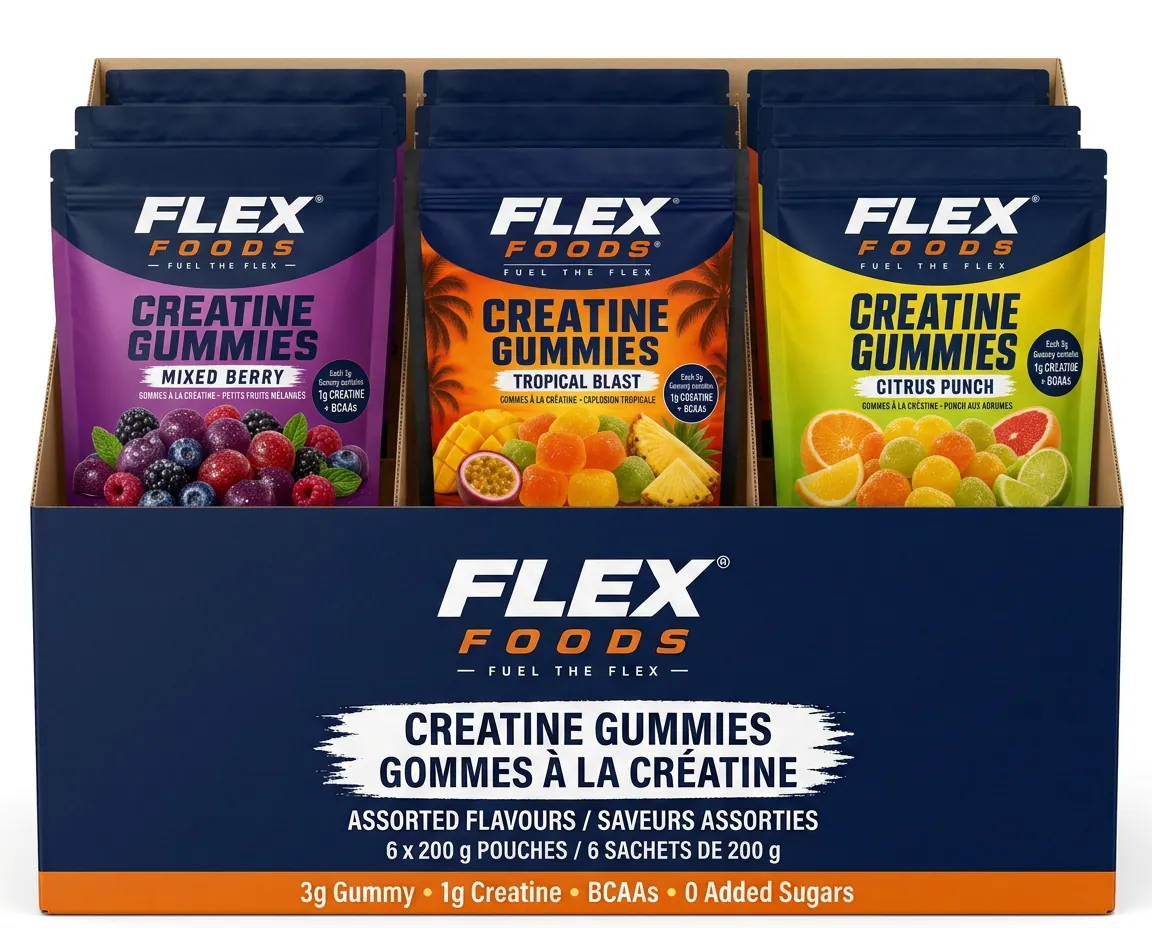
Creatine monohydrate clears these tests: hundreds of human trials, outcomes people care about, replicated extensively, dose disclosed at 1 g per gummy, and a modest honestly-stated effect.
Where our product needs scrutiny is different — not whether creatine works, but whether it's still creatine when you open the pouch, given that it degrades to inert creatinine in water, acid and heat. That's the question to press us on. See how to check a creatine gummy.
General information about a natural health product, not medical advice.