Snacking
Protein Chips vs Beef Jerky: A Plant vs Animal Comparison
Protein density, sodium, cost and digestibility — compared without tribalism about plants and animals.
Jerky is the original protein snack. Dried meat has been portable, shelf-stable, high-protein food for as long as people have needed to carry food, and it remains genuinely good at that job.
This comparison is going to be less flattering to us than most. Worth doing properly anyway.
The numbers
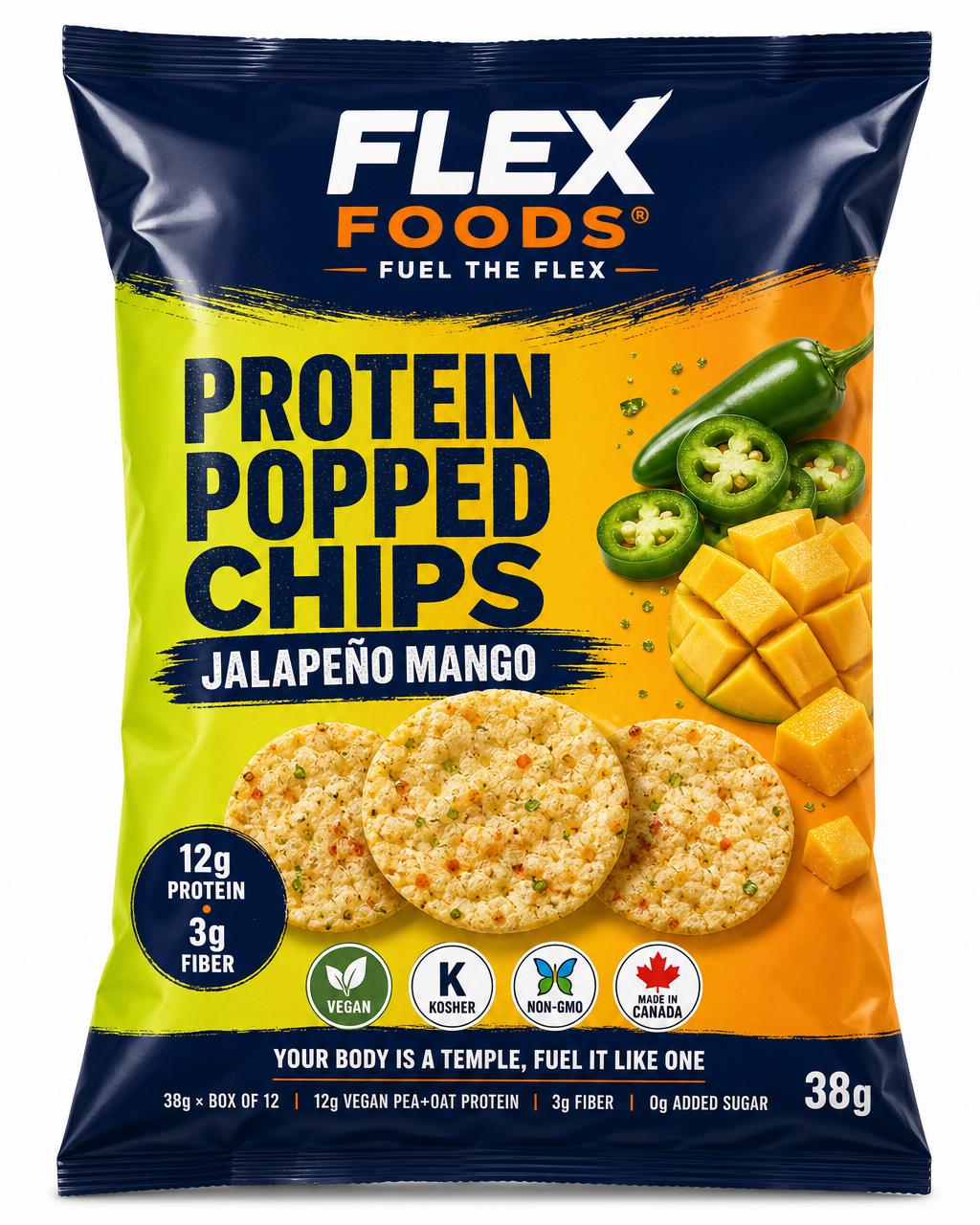
| Beef jerky (28 g) | Protein Popped Chips (38 g) | |
|---|---|---|
| Calories | ~116 | 150 |
| Protein | 9–11 g | 12 g |
| Fibre | 0 g | 3 g |
| Fat | ~7 g | 4 g |
| Sodium | 400–600 mg | 200 mg |
| Sugars | 3–8 g | 0 g |
| Protein per 100 cal | ~8.6 g | 8.0 g |
Jerky edges us on protein per calorie. It's also more protein-dense by weight, which matters when volume or pack space is the constraint.
Where jerky wins
Protein quality. Beef protein scores at the top on digestibility measures like DIAAS and contains a full essential amino acid profile with high leucine density in a single source. Our pea-and-oat pairing closes the amino acid gap but doesn't quite match animal protein on digestibility. That's an honest difference — detail in the pea-plus-oat amino acid story.
Protein per gram carried. Roughly 0.35 g per gram against our 0.32, and jerky is far denser per unit of volume. For backpacking, where a bear canister is often the binding constraint, jerky wins clearly. Ranking in hiking snacks by weight.
Durability. Jerky is essentially indestructible. Ours crushes.
B12, heme iron and zinc. Beef is a meaningful source of all three, and B12 in particular is not available from plants. Anyone eating fully plant-based needs a supplement or fortified foods for it.
Where we win
Sodium, and it's not close. Jerky typically runs 400–600 mg per small serving, because salt is a preservative here rather than a seasoning — it's part of how the meat is made shelf-stable. That can be 17–26% of a daily value in a 28 g portion. Ours is 200 mg, 9%. We're moderate rather than low, and jerky is genuinely high. See sodium and snack frequency.
Added sugar. Most jerky contains it — brown sugar, honey, teriyaki glaze — often 3–8 g per serving, used to balance the salt. Ours is 0 g.
Fibre. Jerky has none. Meat has none. Three grams isn't remarkable in absolute terms but it's three more than zero, and fibre extends fullness on a longer timescale than protein alone. See the 3 g fibre detail.
Cost. Jerky is among the more expensive snacks per gram of protein, often exceeding 40 cents. Ours is roughly 31 cents at single-bag pricing, dropping toward the low 20s by the case.
The processed meat question
Worth addressing directly rather than leaving as an implication.
The International Agency for Research on Cancer classifies processed meat as Group 1 — carcinogenic to humans — based on evidence linking consumption to colorectal cancer. "Processed" means preserved by salting, curing, fermentation or smoking, which describes most commercial jerky.
Two things need saying about that classification, because it's routinely misreported.
Group 1 describes strength of evidence, not size of risk. It means the evidence that it causes cancer is strong. It says nothing about how much the risk increases, and the absolute risk increase associated with typical processed meat consumption is modest.
Dose matters. The associations come from regular consumption, and occasional jerky is a different exposure from daily processed meat. Cancer Council and similar bodies generally advise limiting processed meat rather than eliminating it.
We sell a plant-based product, so treat that framing with appropriate suspicion. The classification is real; overstating what it implies would be the easy move here and we'd rather not.
Plant-based jerky avoids this entirely, and is worth noting as a third option — though it's frequently just as high in sodium.
The verdict
Jerky is a better pure protein snack. More protein per gram, better protein quality, more durable, and it beats us on protein per calorie.
It's worse on sodium by a factor of two or three, usually contains added sugar, has no fibre, costs more, and carries the processed meat consideration.
For a backpacking trip, take jerky. For daily snacking, the sodium arithmetic is the deciding factor — 500 mg a day from a snack adds up in a way 200 mg doesn't.