Fuel Science
Complete Protein From Chips? The Pea-Plus-Oat Amino Acid Story
Pea protein is short on methionine. Oat protein isn't. The arithmetic of covering both in one snack.
"Plant proteins are incomplete" is one of those claims that's technically grounded and practically misleading. The biology behind it is real. The conclusion people draw from it usually isn't.
Here's the actual arithmetic, using the two proteins in our chips as the worked example.
What 'complete' means, precisely
There are nine essential amino acids — histidine, isoleucine, leucine, lysine, methionine, phenylalanine, threonine, tryptophan and valine. Essential means your body can't synthesise them, so they have to arrive in food.
A "complete" protein contains all nine in proportions adequate to meet human requirements. Nearly every whole food protein contains all nine in some quantity — the question is whether any one falls short relative to what your body needs.
The one that falls shortest is called the limiting amino acid, and it caps how much of the total protein your body can actually use for building tissue. This is the useful concept, and it's more precise than the complete/incomplete binary.
Pea protein's profile
Pea protein is a legume protein, and legumes share a characteristic pattern: strong in lysine, weaker in the sulfur-containing amino acids methionine and cysteine.
What pea does well:
- Lysine — notably high, roughly 7% of total amino acids. Lysine is the limiting amino acid in most grain-based diets, so this is genuinely valuable.
- Leucine — around 8%, which matters because leucine is the amino acid most directly implicated in triggering muscle protein synthesis. Pea sits reasonably close to whey here.
- Arginine — very high, higher than most animal proteins.
Where it falls short: methionine, at roughly 1% of total amino acids against a requirement pattern that wants closer to 1.6% for methionine plus cysteine combined. That gap is pea's limiting factor.
Oat protein's profile
Oats are a cereal grain, and cereals show the inverse pattern — better sulfur amino acids, weaker lysine.
Oat protein runs roughly 1.8–2% methionine plus cysteine, comfortably meeting the requirement pattern. Its own limiting amino acid is lysine, at around 3.7% — low enough that oat protein alone would be capped there.
Put the two profiles side by side and the complementarity is almost tidy:
| Amino acid | Pea protein | Oat protein | Combined |
|---|---|---|---|
| Lysine | Strong | Limiting | Adequate |
| Methionine + cysteine | Limiting | Strong | Adequate |
| Leucine | Strong | Adequate | Strong |
| Threonine | Adequate | Adequate | Adequate |
| Tryptophan | Adequate | Strong | Adequate |
Each protein's weakness is the other's strength. This is why the pairing exists in our formulation, and it isn't a novel idea — it's the same principle behind rice and beans, hummus and pita, dal and roti. Food cultures arrived at complementary protein pairing centuries before anyone could measure an amino acid.
The part that undercuts the whole worry
Here's the honest framing, and it deserves emphasis because a lot of plant-protein marketing overstates the problem in order to sell the solution.
You don't need every meal to be complete. Your body maintains a circulating pool of free amino acids and continuously turns over its own tissue proteins, which buffers intake across hours. The older advice about carefully combining proteins at the same meal has been substantially walked back — what matters is the overall amino acid profile of the day.
Anyone eating a varied plant-based diet with legumes, grains, nuts and seeds is getting a complete amino acid profile without thinking about it. The "incomplete protein" concern is largely a solved problem at the level of a whole diet.
So why bother pairing within one snack? Two reasons, both modest:
- Protein quality scoring. Digestibility-corrected scores like PDCAAS and DIAAS are calculated per protein source. A pairing scores higher than either component, which matters for regulatory protein claims — see how Canada defines high protein.
- It costs nothing. If you can get a better profile for the same protein content, there's no reason not to.
It's an improvement, not a rescue. We'd rather say that than imply single-source plant protein is a problem you need us to fix.
Digestibility, the variable people skip
Amino acid content is only half of protein quality. The other half is how much of it you absorb.
Plant proteins generally score somewhat lower on digestibility than animal proteins, largely because of fibre, phytates and other compounds that interfere with absorption. Processing helps considerably — protein isolates have most of that interfering material removed, which is one reason we use pea protein isolate rather than pea flour. More on that distinction in isolate vs concentrate.
The practical implication: for the same measured grams, plant protein does slightly less work than whey. The usual adjustment is to eat somewhat more of it, which is unglamorous and effective.
What this means for a bag of chips
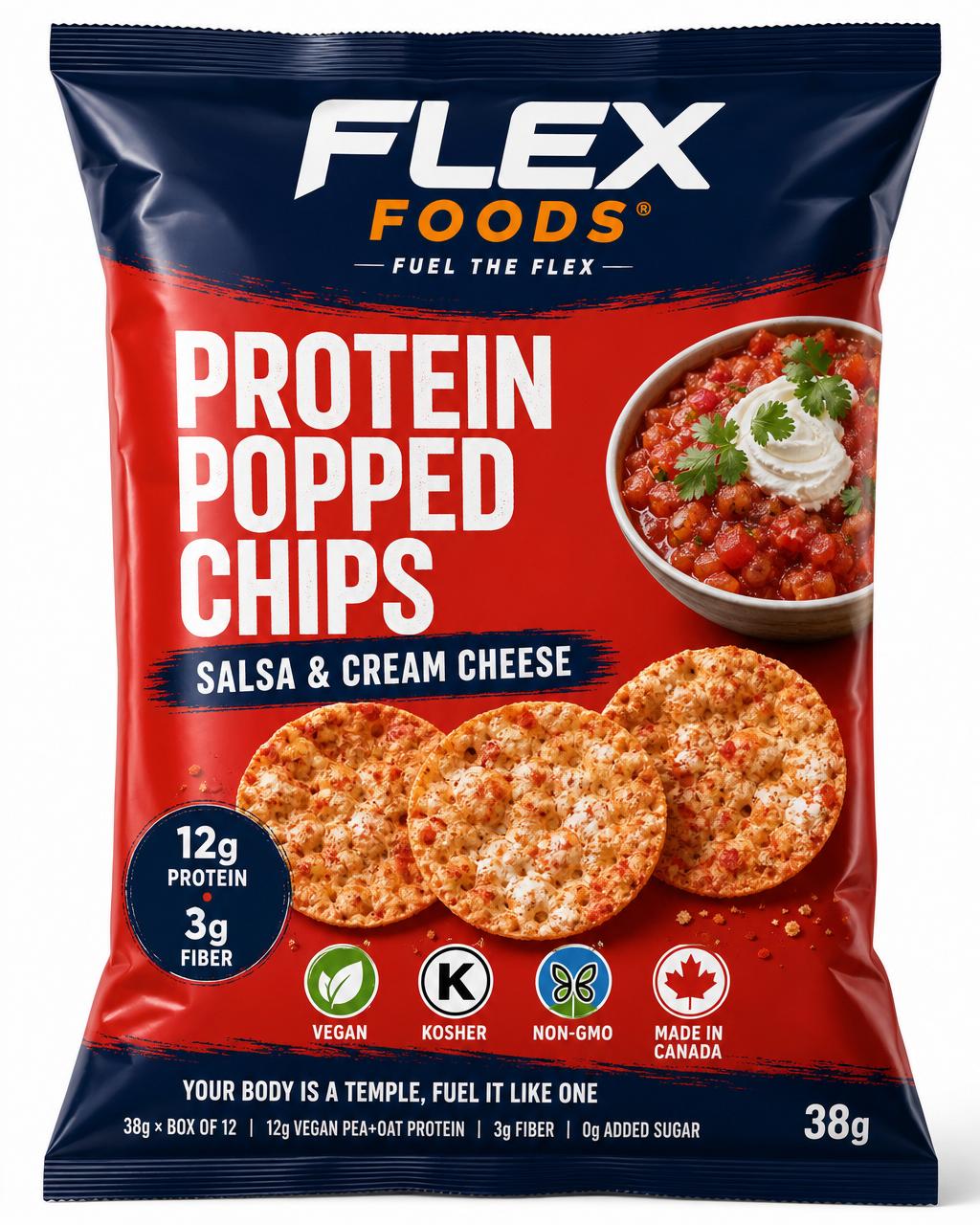
Twelve grams of protein from a pea-and-oat pairing gives you a full essential amino acid complement in a single 150-calorie snack. That's a genuinely good deal for a chip.
It's not a substitute for lentils, tofu or tempeh, which do this work at a fraction of the cost. It's a substitute for whatever you'd otherwise eat at 3pm.