
Nutrition 101
Sodium, Blood Pressure and Snack Frequency
How to budget sodium across a day when several of your snacks are savoury. Including our own numbers.
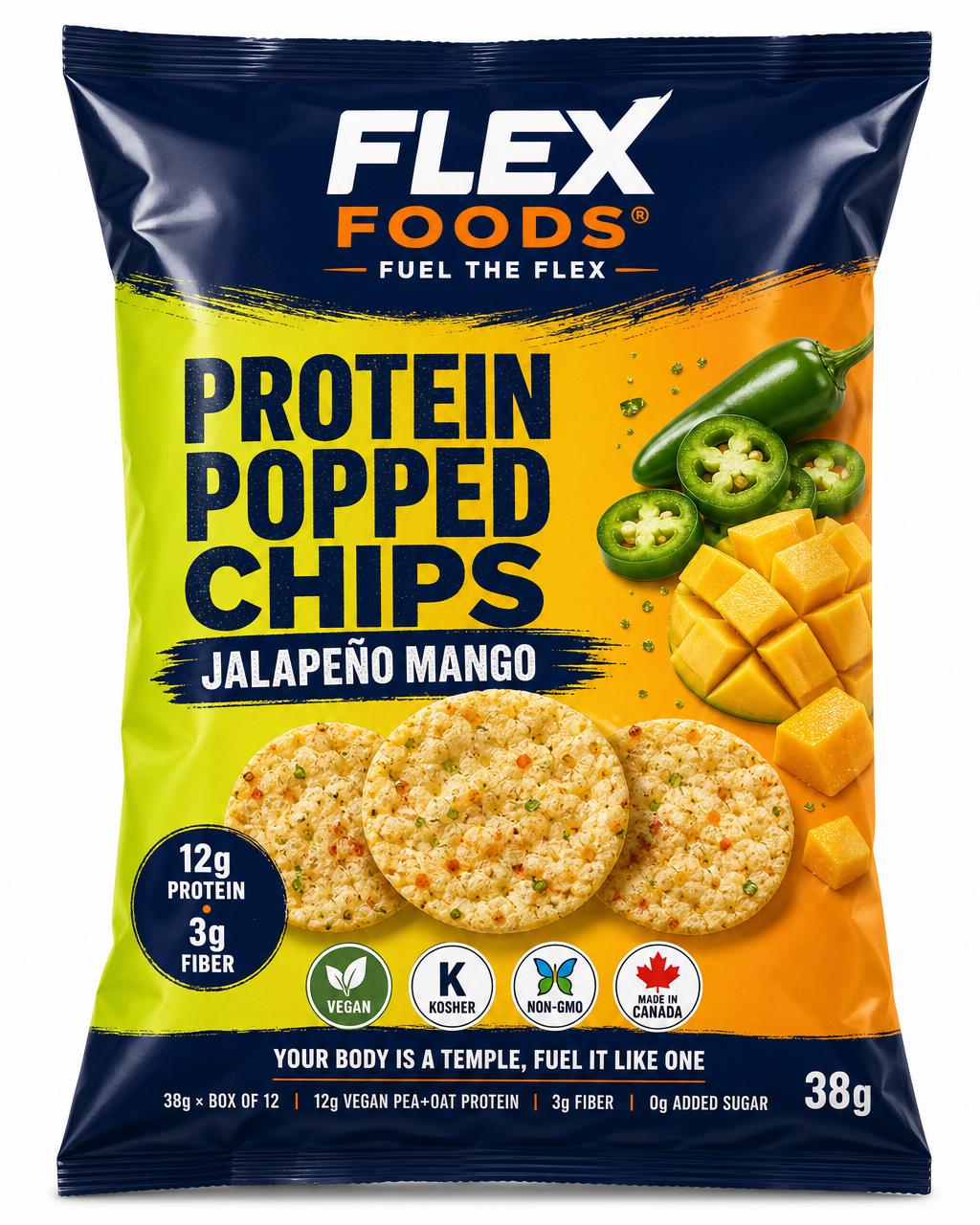
Sodium is the nutrient where savoury snacking accumulates most invisibly. Nobody accounts for the salt in a bag of chips, which is precisely why it's an efficient place to put it.
We make savoury snacks, so treat this as an interested party's accounting — including where our own numbers sit and where they don't qualify for the claim you might expect.
The Canadian picture
Health Canada's daily value for sodium is 2,300 mg. Actual average adult intake runs meaningfully above that, with most national survey estimates landing somewhere in the 2,700–3,000 mg range and higher for adult men.
The key structural fact: the large majority of that sodium is already in food before it reaches you. Processed and prepared foods, restaurant meals, bread, cheese, deli meat, soups and sauces. The salt shaker is a small share of the total. You can salt your own cooking generously and still sit under the daily value if the rest of your day is built from whole ingredients.
What sodium does to blood pressure, with appropriate nuance
The population-level relationship is well established: reducing sodium intake lowers average blood pressure, and lower population blood pressure means fewer strokes and cardiovascular events. This is the basis of public health guidance worldwide and it's not seriously disputed.
The individual picture is more variable. Salt sensitivity differs considerably between people — some individuals show marked blood pressure responses to sodium changes and others show very little. Salt sensitivity tends to be higher in older adults, in people who already have hypertension, in people with chronic kidney disease, and on average in Black populations.
So "reduce sodium" is sound population advice and a variable prescription for any given individual. If you have hypertension, kidney disease, or heart failure, your clinician's target is the one to follow, and it may be considerably lower than 2,300 mg.
The potassium half of the equation
Frequently ignored, and arguably as important.
Sodium and potassium work in opposition in blood pressure regulation. Higher potassium intake is associated with lower blood pressure, and the DASH dietary pattern — which achieves substantial blood pressure reductions — works partly through raising potassium, calcium and magnesium alongside reducing sodium.
Most Canadians fall well short of recommended potassium intake. Good sources: potatoes, beans and lentils, leafy greens, bananas, tomatoes, avocado, yogurt, dried fruit.
This matters practically. Adding a potato or a tin of beans to your day may do as much for your blood pressure as removing a bag of chips — and it's a considerably easier instruction to follow.
One caution: potassium restriction is medically necessary in some kidney conditions and with certain medications, including ACE inhibitors and potassium-sparing diuretics. If that applies to you, follow your clinician's guidance rather than general advice.
Our numbers, stated plainly
A 38 g bag of Protein Popped Chips contains 200 mg of sodium — 9% of the daily value. Scaled to the 50 g Canadian reference amount for snack chips that's roughly 263 mg; per 100 g it's about 525 mg.
What that means:
- We do not qualify as "low in sodium", which in Canada requires 140 mg or less per reference amount. We don't make the claim.
- 9% per serving is moderate. Better than much of the protein-snack shelf, where 800–900 mg per 100 g is common — protein-based chips often need aggressive seasoning to compensate for a less indulgent base.
- It compounds. Two bags is 400 mg, or 18%. Add bread, cheese, soup or a restaurant meal and you're closer to the ceiling than one panel suggests.
Budgeting across a day
Three moves, in order of impact.
1. Fix the big contributors first. A restaurant entrée can carry 1,200–2,000 mg. A sandwich with deli meat and cheese, 1,000 mg. Against those, a 200 mg snack is a rounding error. Optimising snacks while eating out four times a week is solving the wrong problem.
2. Compare per 100 g, not per serving. Serving sizes aren't standardised between brands, and a small declared serving flatters the sodium line. Detail in reading the panel.
3. Raise potassium alongside. The easier half of the instruction, and it does real work.
If you snack savoury daily
A practical framing. One savoury packaged snack a day at around 200 mg is about 9% of your budget — unremarkable. Three savoury snacks a day at 300–400 mg each is 1,000 mg before meals, which is a genuine constraint on the rest of the day.
The fix isn't necessarily eating fewer snacks. It's varying what kind. Fruit, unsalted nuts, plain yogurt and raw vegetables all carry negligible sodium, and rotating them against savoury options keeps the total manageable while avoiding the flavour fatigue that ends most snacking habits.
More on the flavour side in low-sodium snacking without losing flavour.