
Training
Creatine Plus BCAAs: Does Combining Them Help?
Two supplements in one product. Whether the combination does anything beyond saving you a purchase.
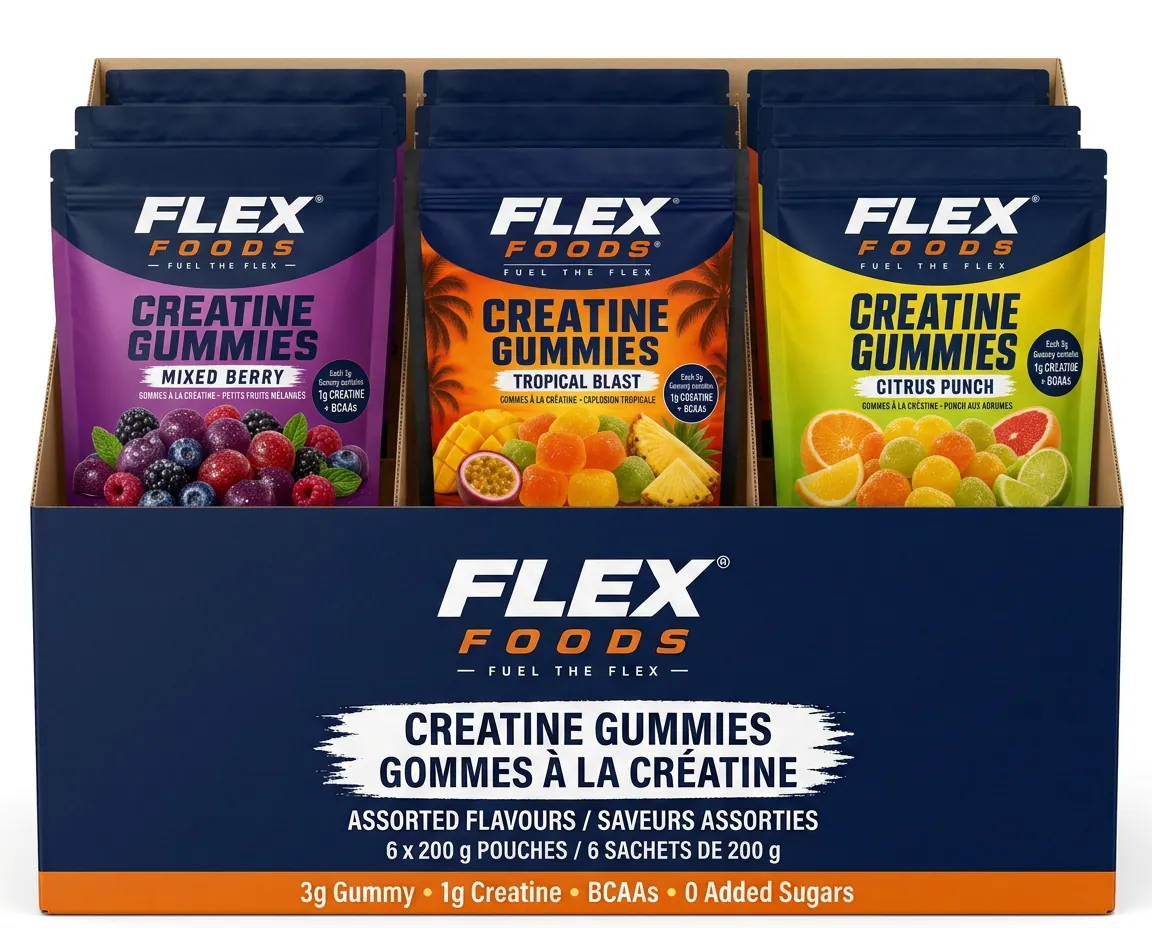
Combination products are common, and the implication is usually synergy. Worth checking whether there's any here.
The short answer
No known interaction, positive or negative. They work through unrelated mechanisms and don't interfere with each other.
Which means a combination product offers convenience, not synergy. That's a legitimate thing to sell — just not the same thing as the ingredients enhancing each other.
Why there's no interaction
Creatine is an amino acid derivative stored in muscle as phosphocreatine, where it regenerates ATP during the first seconds of maximal effort. It's an energy buffer. It contributes nothing to building material — our nutrition panel declares 0 g protein, which is accurate for creatine.
BCAAs are three of the nine essential amino acids. Leucine activates mTORC1 signalling, which initiates muscle protein synthesis.
Energy availability versus building signal. Different systems, different timescales, no shared pathway to interact on.
Nor do they compete for absorption — creatine uses a dedicated transporter, amino acids use amino acid transporters.
The multi-ingredient research problem
Studies do exist on multi-ingredient performance supplements containing creatine plus amino acids plus other ingredients, and many report favourable outcomes.
The problem is attribution. When a product contains six ingredients and the group improves, you can't determine which ingredient did it — and given creatine's individual evidence base is far stronger than the others, the reasonable default assumption is that creatine accounts for most of the effect.
This is a general weakness of combination-product research and a reason to be sceptical of "clinically studied blend" claims. See why most supplements don't work.
The dosing problem with combinations
The practical reason combination products often disappoint.
Effective doses differ substantially:
| Ingredient | Effective daily dose |
|---|---|
| Creatine monohydrate | 3–5 g |
| BCAAs | ~5–10 g |
| Beta-alanine | 3.2–6.4 g |
| Citrulline malate | 6–8 g |
Combining several at full dose produces a large serving. So combination products routinely underdose one or more ingredients — naming them on the label while providing a fraction of what the research used.
Creatine is a frequent casualty. A product with 1 g of creatine, taken only on training days, never saturates anything. See creatine vs pre-workout.
Proprietary blends make this invisible. Canada's requirement that medicinal ingredients be declared with quantity per dose helps — see proprietary blends.
The frequency mismatch
An underappreciated argument against combining these two specifically.
Creatine requires daily intake including rest days. Muscle stores turn over at roughly 1.5–2% per day regardless of whether you trained, and saturation is the mechanism. See why daily consistency matters.
BCAAs, to the limited extent they do anything, are taken around training. There's no saturation model and no reason for daily intake.
A combined product forces one schedule on both. Take it daily and you're consuming BCAAs on rest days for no reason. Take it on training days only and your creatine never saturates.
Neither is a disaster. It's just a mismatch that a combined format can't resolve.
Is the combination worth buying?
Two questions, in order.
Do you want BCAAs at all? The evidence is weak if your protein intake is adequate — BCAAs supply three of nine essential amino acids and produce a submaximal muscle protein synthesis response compared with whole protein. See do BCAAs work if you eat enough protein.
If yes, is the combination properly dosed? Check both quantities against the table above. If either is a fraction of an effective dose, the combination is naming ingredients rather than delivering them.
About this blog
Our medicinal ingredient is creatine monohydrate, 1 g per gummy, with a label serving of three gummies for 3 g daily. Our nutrition panel declares 0 g protein.
How to verify what's actually in any product is in amino acids on a label.
General information about a natural health product, not medical advice.