Nutrition 101
Amino Acids on a Label: Reading the Fine Print
Two checks that tell you whether an amino acid claim is backed by an ingredient. Both take about thirty seconds.
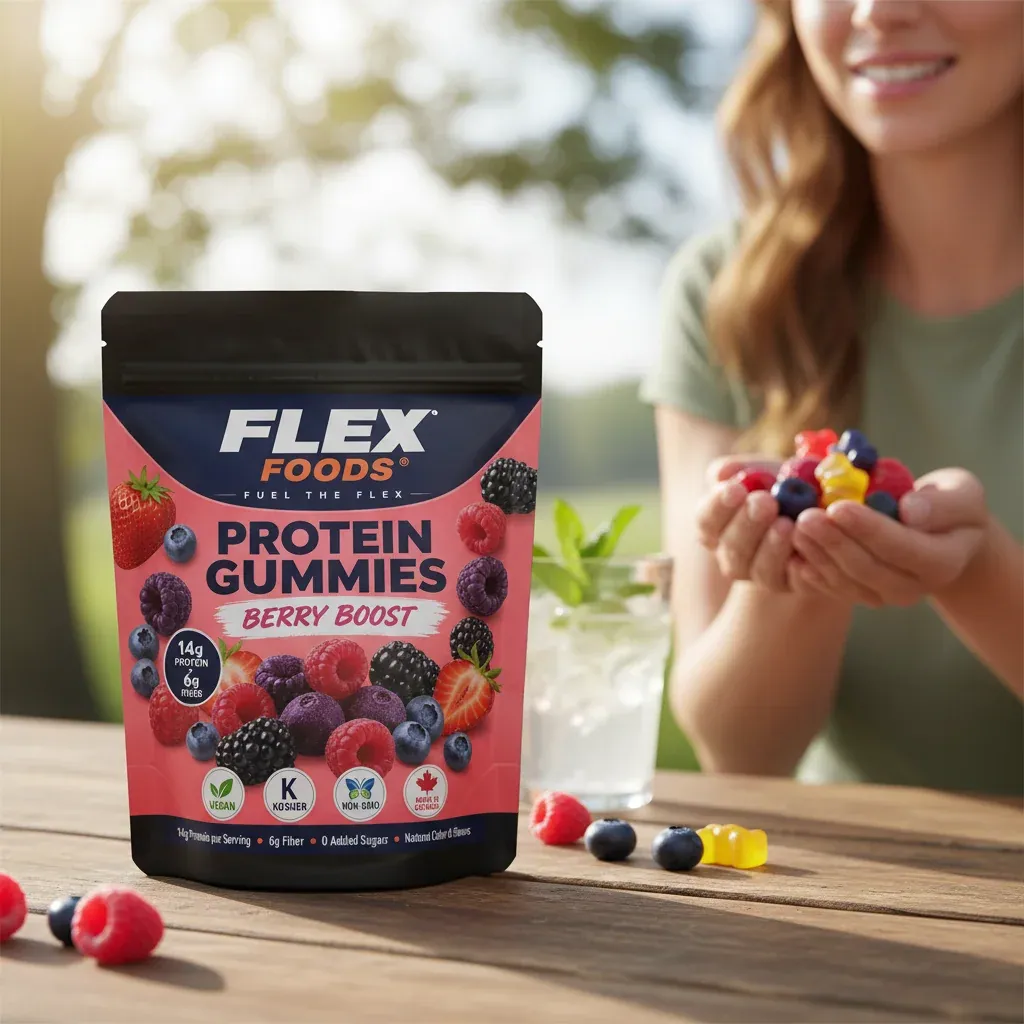
Front-of-pack claims and ingredient declarations are different documents with different rules. When they disagree, the ingredient declaration is the one that tells you what you bought.
Here's how to check any amino acid or protein claim.
Check one: is it declared as an ingredient?
The primary test, and it's regulatory rather than analytical.
On a Canadian Natural Health Product, every ingredient must appear in one of two places:
Medicinal ingredients — the actives, each declared with quantity per dosage unit. This requirement is stricter than the US framework, where proprietary blends can obscure individual amounts. See proprietary blends.
Non-medicinal ingredients — everything else, listed without quantities.
So: if an ingredient appears in neither list, it isn't in the product.
That sounds obvious and it's the check people skip. A word on the front of a package is a marketing claim. A line in the ingredient declaration is a regulatory statement. If "collagen" or "BCAAs" appears only on the front, the front is the only place it exists.
Check two: the protein line
A useful cross-check, because it's arithmetic rather than trust.
Amino acids are protein. Protein content on a nutrition panel is determined from nitrogen content, and amino acids contain nitrogen. Collagen is a protein outright.
Which means a meaningful quantity of any amino acid or protein-based ingredient registers on the protein line.
The inference:
A product declaring 0 g protein cannot contain a meaningful amount of any amino acid or protein-based ingredient.
Not "probably doesn't." Cannot — the arithmetic doesn't permit it. Five grams of BCAAs is five grams of amino acids, and that isn't invisible to a protein determination.
Small amounts can round to zero. But the doses these ingredients are marketed at — grams, not milligrams — are not small amounts.
Where creatine sits
Worth explaining, because creatine is the exception that proves the rule.
Creatine is an amino acid derivative, not an amino acid or protein. It's synthesised from arginine, glycine and methionine but isn't itself incorporated into protein.
Our panel declares 0 g protein and that's accurate — creatine at 3 g daily doesn't contribute meaningfully to protein intake. Which is also why a creatine product doesn't substitute for protein in any way. See creatine and protein.
Running both checks
Worked example on our own label.
| Check | Our label |
|---|---|
| Medicinal ingredients | Creatine monohydrate, 1 g per gummy |
| Non-medicinal | Maltitol, water, glycerin, pectin, citric acid, natural flavour, sodium citrate, organic rice flour, organic sunflower oil, anthocyanins, organic stevia leaf extract |
| Protein declaration | 0 g |
| Fibre declaration | 0 g |
Both checks agree: one active, quantified, and no protein or fibre contribution. Run the same two checks on whatever's next to us.
Three limitations of these checks
Being fair about what they don't catch.
Class names. "Natural flavour" covers multiple components without listing them. Priority allergens must still be declared, but you can't see everything. Ours carries this limitation too. See the non-medicinal ingredients explained.
Quantities for non-medicinal ingredients aren't required. You know what's present, not how much.
Neither check verifies what survived. A declaration states intended composition. For an active that degrades across shelf life — as creatine does in a gummy — content at the point of consumption is a separate question that only testing answers. See how to check a creatine gummy.
What to do if the checks disagree with the front
Ask. A specific question to a manufacturer:
"Your front label references [ingredient]. I don't see it in the medicinal or non-medicinal ingredient declaration, and the panel declares 0 g protein. Can you tell me the quantity per serving and where it's declared?"
That question is answerable if the ingredient is there. If the answer is vague, you've learned something.
You can also verify what a product was licensed to contain and claim through Health Canada's Licensed Natural Health Products Database, using the NPN. See what an NPN means.
General information about a natural health product, not medical advice.