
Training
Creatine for Women: What the Research Actually Shows
Lower baseline stores, a growing research literature, and a bloating fear that's largely misplaced.
Creatine research has historically been done overwhelmingly on men, which has left women with less specific evidence and a lot of inherited assumptions. That's changing, and the picture that's emerging is favourable.
Lower baseline stores
Studies measuring muscle creatine content have generally found lower resting creatine stores in women than men — commonly cited as roughly 70–80% of male levels.
Several factors likely contribute: differences in total muscle mass, and dietary intake patterns, since average meat consumption tends to be lower.
Lower baseline means more headroom, which generally means a larger proportional response to supplementation. It's the same logic that applies to vegetarians — see creatine for vegans and vegetarians.
Does it work the same?
Broadly yes, on the outcomes that have been studied.
Trials in women have found improvements in strength and in high-intensity exercise performance consistent with the effects seen in men. Reviews of creatine in female populations have generally concluded that it's effective, with the caveat that the literature remains smaller.
Some work suggests women may show smaller absolute increases in lean mass, which is unsurprising given differences in muscle mass and hormonal environment. Relative performance benefits appear comparable.
The bloating concern
This is the most common reason women avoid creatine, and it rests on a misunderstanding worth correcting.
Creatine draws water into muscle cells, not into the subcutaneous space between skin and muscle. Subcutaneous retention is what produces a soft, puffy appearance. Intracellular water increases cell volume, which makes muscle look slightly fuller if anything.
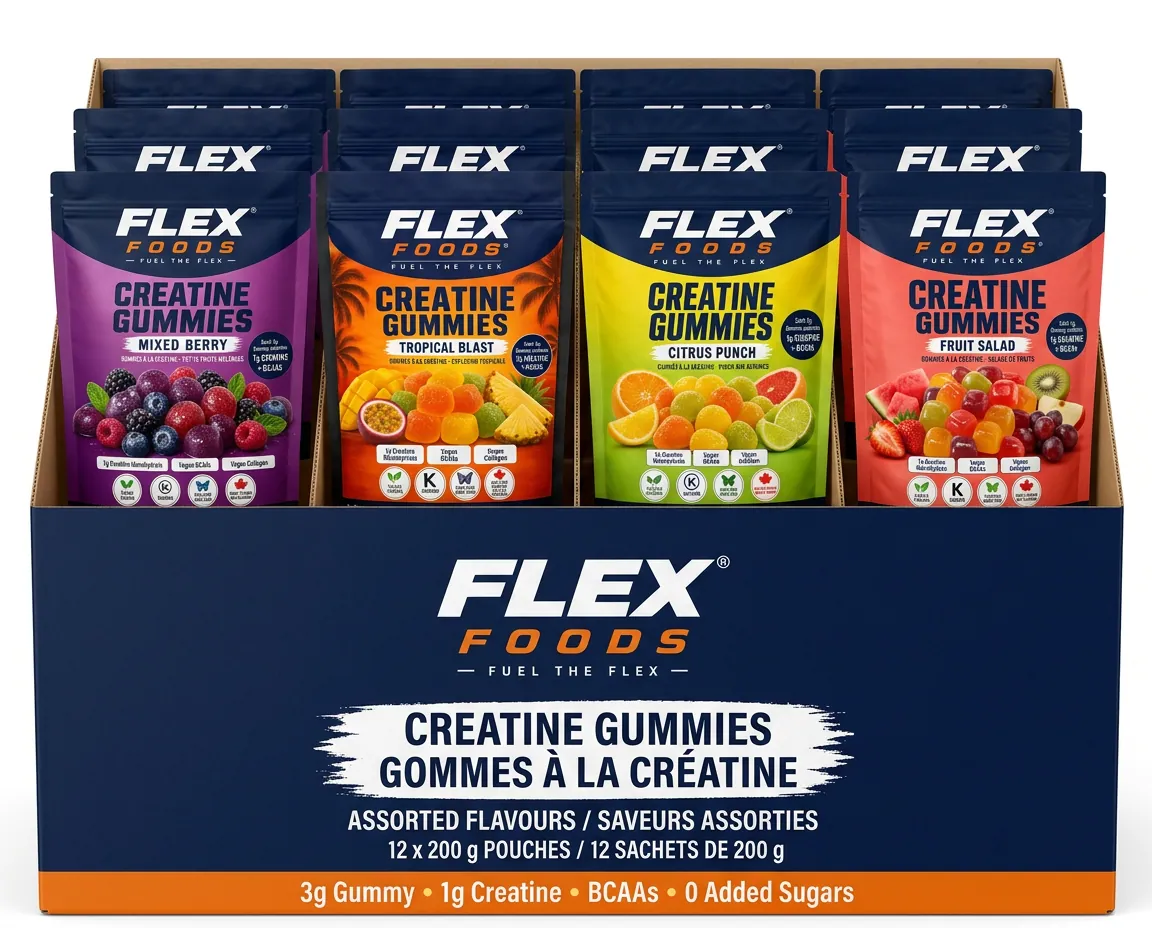
The typical gain is 1–2 kg, arriving over days with a loading protocol or gradually over weeks on maintenance. Our gummies deliver a 3 g maintenance dose at the label serving, so any change arrives gradually. Full detail in creatine and water retention.
Being fair to the concern: the scale does move, and if that's distressing, it's a real consideration. But what it represents is not what most people assume.
The menstrual cycle and hormonal transitions
An area of active research where it's important not to overstate.
Some research suggests creatine metabolism and stores may vary across the menstrual cycle, with hormonal fluctuations influencing creatine kinase activity and possibly creatine transport. Reviews have raised the possibility that supplementation may be particularly relevant during phases when endogenous creatine availability is lower.
There's also emerging interest in creatine around perimenopause and post-menopause, where declining oestrogen is associated with losses in muscle and bone. Trials combining creatine with resistance training in post-menopausal women have shown benefits for lean mass, strength and in some studies bone measures.
How to weigh this honestly: the post-menopausal resistance training evidence is the more developed of the two and is genuinely encouraging. The menstrual cycle work is earlier-stage and doesn't yet support specific dosing recommendations tied to cycle phase. Anyone telling you to time creatine to your cycle is ahead of the data.
More on the older-adult side in creatine after 50.
Pregnancy and breastfeeding
Straightforwardly: there is limited human data, and creatine product labels in Canada generally advise consulting a healthcare practitioner.
There is early research interest in creatine in pregnancy in a clinical context, but that's investigational and does not translate into a recommendation for supplementation. If you're pregnant, trying to conceive, or breastfeeding, this is a conversation with your physician or midwife. See creatine, pregnancy and breastfeeding.
Dosing
The standard 3–5 g maintenance range applies. Weight-adjusted figures — around 0.03 g per kilogram — mean smaller individuals sit comfortably at the lower end.
Our gummies deliver 1 g of creatine monohydrate per 3 g gummy, with a label serving of three gummies daily for 3 g. For many women that's a well-matched maintenance dose. Detail in how much creatine per day.
What creatine won't do
Worth stating clearly, because this category attracts overclaiming aimed at women specifically.
- It won't make you bulky. Muscle growth is slow, requires progressive resistance training, and is limited by hormonal environment. Creatine allows slightly more training volume; it doesn't change what your body does with it.
- It isn't a fat loss supplement. No mechanism, no evidence.
- It isn't a hormone. See is creatine a steroid.
- It won't work without training. The research base is built on supplementation alongside a training programme.
General information about a natural health product, not medical advice. If you're pregnant, breastfeeding, have a medical condition or take prescription medication, speak with your doctor or pharmacist first.