
Brand & Values
Why We Made a Gummy Instead of a Powder
Powder is cheaper, more stable and more flexible. We made a gummy anyway, for one reason.
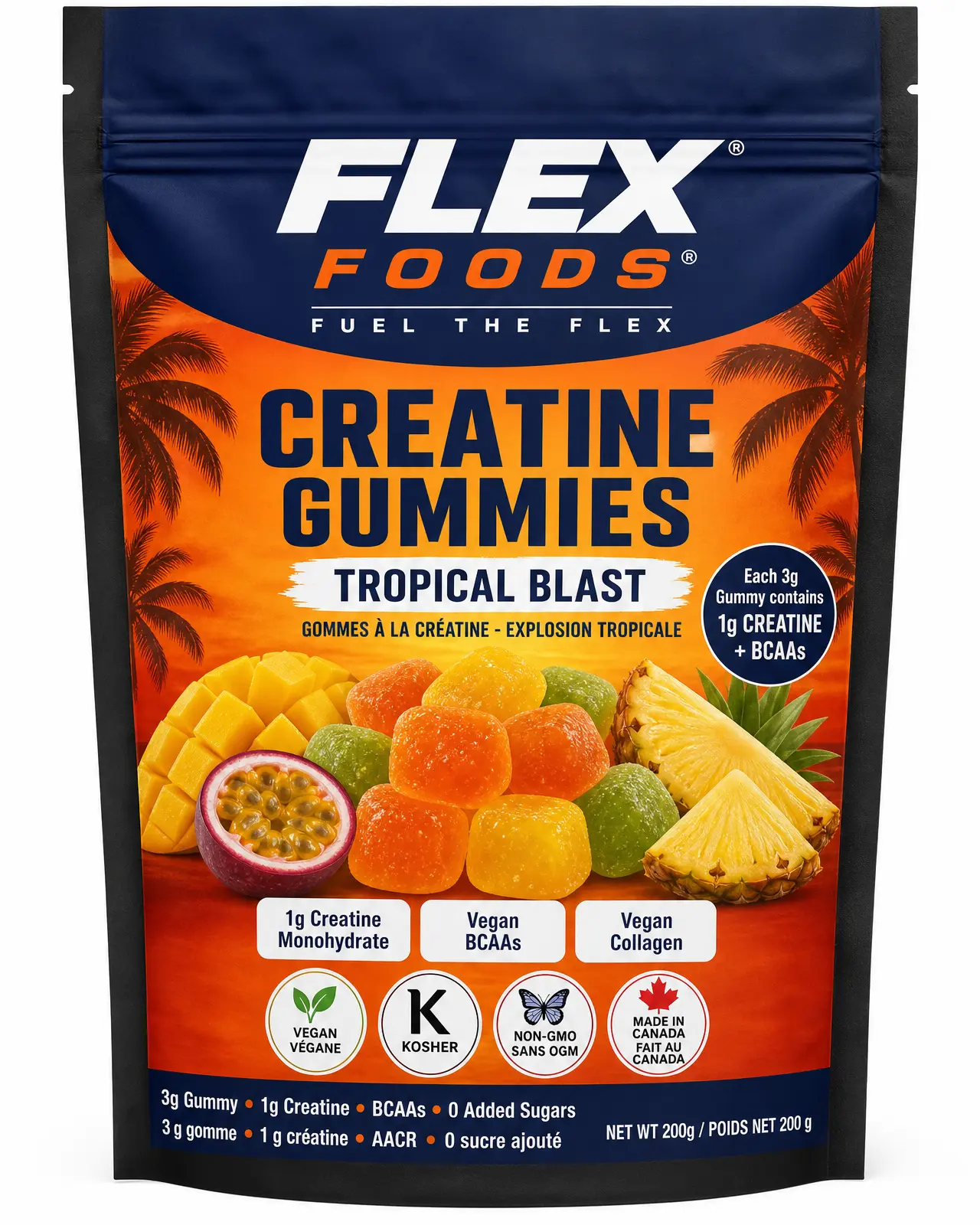
The obvious question about a creatine gummy is why it should exist. Monohydrate powder is cheaper by an order of magnitude, chemically stable for years, and lets you dose exactly.
Here's the reasoning, including the parts that don't favour us.
What powder does better
Three things, and they're not small.
Cost. Bulk monohydrate is among the cheapest useful supplements available. Any gummy costs multiples per gram of creatine — ours is roughly a third creatine by weight, so a 200 g pouch contains about 66 g. See creatine cost per gram.
Stability. Dry powder holds potency for years. A gummy contains water and acid and is manufactured with heat — all three accelerate creatine's conversion to inert creatinine. See why creatine degrades in water.
Dose flexibility. Want 5 g? Scoop it. Want to load at 20 g? Straightforward with powder, impractical with gummies — twenty gummies would mean roughly 60 g of sugar alcohols daily.
The one thing gummies do better
They get taken.
Creatine is unusual among supplements in how much it punishes inconsistency. It works by saturation — stores build over three to four weeks and decline over four to six weeks without daily intake. There's no acute effect, so nothing reminds you it's working, and no immediate consequence when you skip.
Which means the entire benefit depends on a daily action sustained for months.
Powder requires: find tub, find scoop, find shaker, add water, mix, drink, rinse. Seven steps. Fine for people who don't mind. For people who do, that friction is exactly what ends the habit somewhere around month three — and a half-full tub delivers nothing regardless of how cheap it was.
A chewable removes six of those steps.
Is that a good enough reason?
Honestly: it depends who you are.
If you already use powder consistently, no. You've solved the problem the gummy exists to solve, and you'd be paying a large premium for nothing. Keep using powder — we'd rather say that than sell you something you don't need.
If you've bought creatine before and stopped, possibly yes. Supplement adherence outside a clinical trial is poor, and format friction is a large part of why. A more expensive product taken for a year beats a cheaper one abandoned in March.
That's the whole argument. It's a behavioural one, not a chemical one, and we're not going to dress it up as anything else.
What the format obligates us to
The adherence argument only holds if the creatine is actually there. That's a genuine obligation the format creates, and it's harder than making powder.
The variables that matter during manufacture — adding the active as late and as cool as the process allows, buffering pH as high as the pectin and flavour tolerate, optimising rather than defaulting the curing step, and calculating overage from real stability data. See how a creatine gummy is made.
All of that is invisible to you. Only one thing is checkable: finished-product testing near end of shelf life, with creatinine quantified alongside creatine.
Ask us for it. Ask anyone selling creatine gummies for it. Independent testing has found products in this category well below label claim, and the packaging looks identical from the outside. See how to check a creatine gummy.
What we didn't do
Three decisions worth naming, because each was a temptation.
We didn't put creatine in a pre-workout at a token dose. A gram of creatine taken only on training days never saturates anything, and it's a common way to name the ingredient without delivering it.
We didn't use a proprietary blend. One medicinal ingredient, quantified: creatine monohydrate, 1 g per gummy. See proprietary blends.
We didn't use gelatin. Conventional gummies set with animal collagen. Pectin costs more formulation effort and produces a different texture. See pectin vs gelatin.
The honest positioning
We're not claiming a gummy is a better way to take creatine. It's a more expensive, less stable, more convenient way.
Whether that trade is worth it depends entirely on whether convenience is what's standing between you and taking it every day. For some people it is, and for those people the arithmetic works. For everyone else, buy powder.
General information about a natural health product, not medical advice.