Nutrition 101
Creatine on a Budget: Cost Per Gram Compared
Powder is dramatically cheaper. Here's the arithmetic, and an honest account of what the premium buys.
Creatine monohydrate powder is among the cheapest supplements per effective dose in existence. Every other format costs multiples of it.
Rather than quote prices that go stale, here's the method so you can run it on whatever's in front of you.
The calculation
The number that matters is cost per gram of creatine, not cost per pouch or per serving.
Step one: total creatine in the container.
- Powder: the container weight is essentially all creatine. A 1 kg tub is about 1,000 g of creatine.
- Capsules: creatine per capsule × number of capsules. 120 capsules at 750 mg is 90 g.
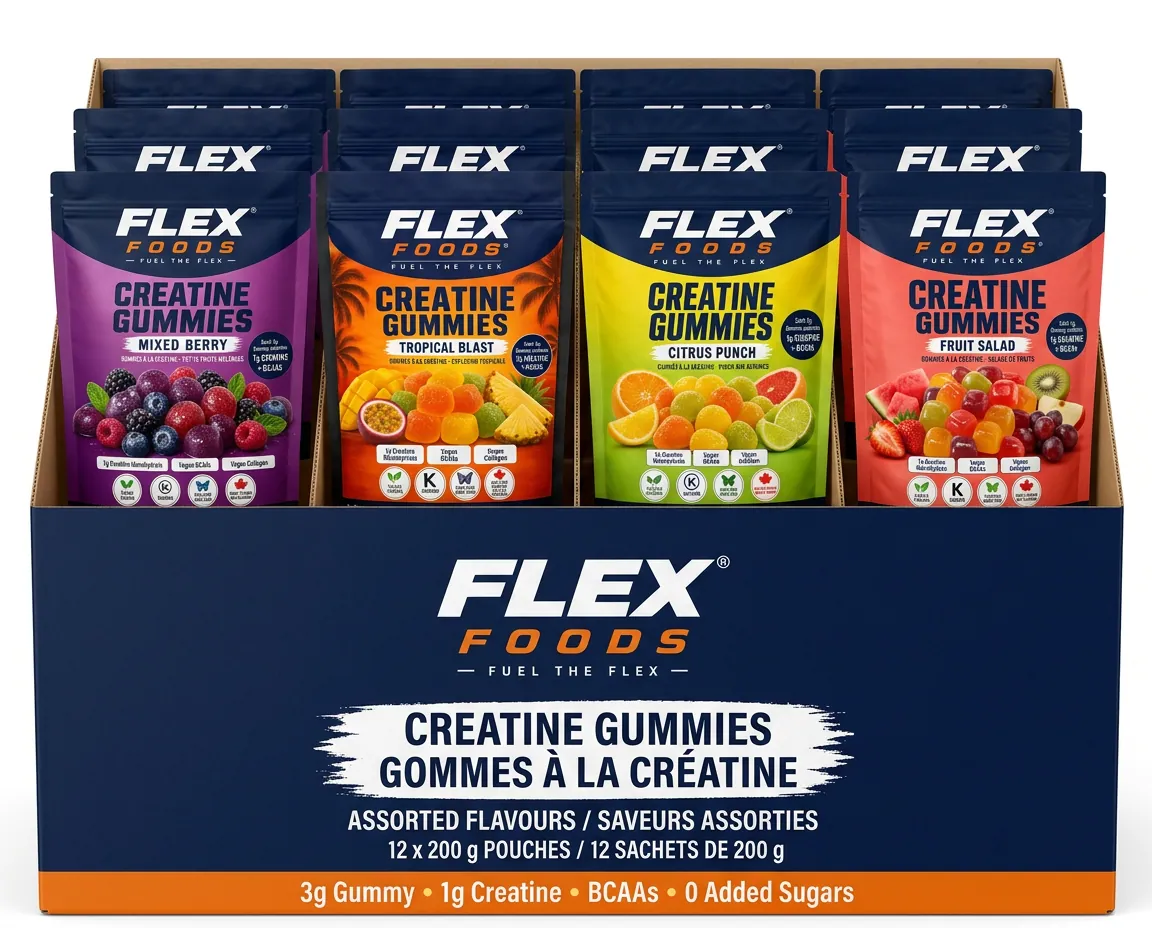
- Gummies: creatine per gummy × number of gummies. Ours are 1 g per 3 g gummy, so a 200 g pouch contains roughly 66 gummies and therefore about 66 g of creatine.
Step two: divide the price by that number.
Note the gummy arithmetic, because it's the crux: a 200 g pouch is only about a third creatine by weight. The other two thirds is the sweetener, gelling agent and water that make it a gummy.
The order of magnitude
Approximate ranges rather than prices, since these vary by retailer, brand and week:
| Format | Relative cost per gram of creatine |
|---|---|
| Bulk monohydrate powder | Baseline — lowest |
| Branded flavoured powder | 2–4× baseline |
| Capsules | 3–6× baseline |
| Chews / tablets | 5–10× baseline |
| Gummies | 10–20× baseline |
We're not going to dress that up. If cost per gram is your criterion, buy monohydrate powder. It's the reference standard, it's more stable, and nothing else comes close on price.
What the premium actually buys
Four things, worth naming honestly so you can decide whether they're worth it to you.
Adherence. The real one. Creatine only works through saturation maintained over months, and format friction is a major reason people stop. A tub that's three-quarters full six months later delivers nothing regardless of how cheap it was. See building a creatine habit.
No preparation. No shaker, water, scoop or rinse. Matters most at work, while travelling, and on days you're in a hurry.
Palatability. Monohydrate powder is gritty and neutral-to-unpleasant. Some people genuinely don't mind; others quietly stop.
Fixed dosing. Three gummies is 3 g, without measuring.
Whether that's worth ten to twenty times the price is a personal calculation, and for plenty of people the answer is no. We'd rather you buy powder and take it than buy gummies and feel the cost.
The hidden cost nobody mentions
A consideration specific to this category.
Cost per gram assumes the label figure is accurate. For gummies that's exactly the assumption in question — creatine degrades to inert creatinine in water, acid and heat, and independent testing has found gummy products well below label claim.
A product at 40 cents per gram that contains 60% of its claim is really costing 67 cents per gram of actual creatine. A cheap gummy with poor stability control isn't cheap; it's expensive per gram of what you're buying it for.
Which makes the testing question a cost question as well as a quality one. See how to check a creatine gummy.
Ways to spend less
Use powder as the base and gummies for convenience. Powder at home, gummies for travel, work and days when the shaker isn't happening. Captures most of the cost advantage and most of the adherence advantage. Slightly inelegant, entirely sensible.
Buy powder in bulk. Cost per gram drops substantially with container size, and monohydrate is stable for years dry — there's no spoilage risk in buying large.
Don't overdose. Once muscle stores are saturated, additional creatine becomes creatinine and is excreted. Taking 10 g daily costs double and does nothing extra. See how much creatine per day.
Skip loading. A loading protocol front-loads cost for faster saturation you may not need. Not practical with gummies anyway. See do you need to load creatine.
Buy monohydrate, not exotic forms. HCl, buffered and ethyl ester cost more with less evidence. See monohydrate vs other forms.
The honest summary
Creatine is cheap. Creatine gummies are not.
The premium buys a format you'll actually use daily, which for some people is the difference between a supplement working and sitting in a cupboard. For others it's an unnecessary cost on top of something that already works.
Run the arithmetic and decide. Either answer is defensible.
General information about a natural health product, not medical advice.