Brand & Values
Why Our Bags Are 38g and Not 50g
A portion decision made on satiety and shelf-life data, not on cost engineering. Three constraints landed on the same number.
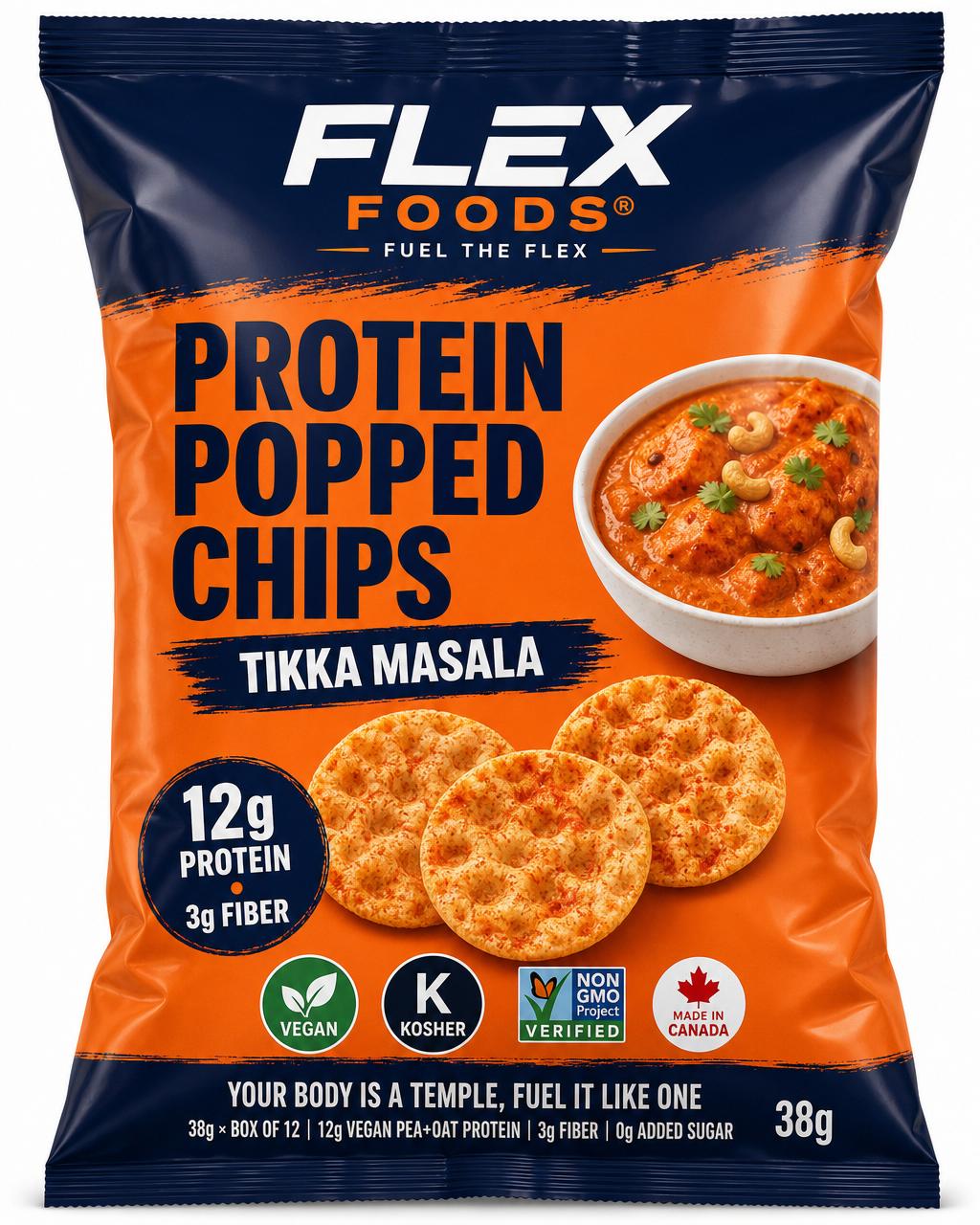
Thirty-eight grams is an odd number. Snack bags are usually 28 g, 40 g, 50 g or something ending in zero, because round numbers are easier to print and easier to compare.
Ours isn't round because it's the output of three constraints intersecting rather than a marketing choice.
Constraint one: 12 g of protein
The protein number came first. Twelve grams was the target because it's a meaningful contribution to a daily total — roughly the protein in two large eggs, or 350 ml of cow's milk.
Work backwards from there. Pea protein isolate is roughly 82% protein by weight, so 12 g of protein requires about 15 g of protein ingredient once you account for the oat contribution. That protein needs a starch matrix around it to pop into a crisp disc at all, plus oil and seasoning.
The arithmetic lands at 38 g. At 28 g you get about 9 g of protein, which is meaningfully less useful. At 50 g you'd have 16 g of protein and 200 calories, which starts competing with a meal rather than bridging to one.
Why protein forces the size: isolate vs concentrate covers the density arithmetic.
Constraint two: staying under 200 calories
A snack that clears 200 calories stops being a snack. It starts displacing the next meal, and the point of a bridge snack is to get you to dinner in reasonable shape, not to substitute for it.
At 38 g the bag is 150 calories. That sits in the range where a snack holds you two to three hours without changing what you eat afterwards.
Worth noting the interaction with protein: because protein and fibre are doing the satiety work, we don't need volume to make the snack feel like something. A 220-calorie bag of standard chips with 2 g of protein is a larger snack that holds you less well. Mechanism in the satiety science.
Constraint three: the aeration bonus
This is the one that made 38 g workable rather than mean.
Popped chips are aerated — the popping process flash-expands the dough with steam, so the finished chip is mostly structured air. Which means 38 g of popped chip is physically far more chip than 38 g of a dense fried crisp would be.
You get more pieces and a longer eating duration for the same mass. And eating duration matters: a snack eaten over eight minutes registers as more of a snack than the same calories eaten in ninety seconds. It's a large part of why a bag of chips satisfies differently from a protein bar. Comparison in chips vs bars.
What we gave up
Two things, honestly.
Comparability. Canada publishes Reference Amounts used to standardise nutrition claims, and for snack chips it's 50 g. A 38 g bag means anyone comparing us to a 50 g competitor has to do arithmetic. That's a genuine disadvantage on shelf, and we accepted it.
The appearance of value. A bigger bag looks like more food for the money. Ours is $3.72, which is not cheap for 38 g, and the honest defence is the protein rather than the volume — roughly 31 cents per gram of protein at single-bag pricing, dropping toward the low 20s by the case. That's more than eggs or lentils and less than most protein bars. Full ranking in cost per gram of protein.
Why we declare the whole bag as one serving
Worth flagging, because it's a place brands frequently make themselves look better.
Canadian rules permit declaring a single-serve package as one serving, and we do. So the panel describes what you'll actually eat: 150 calories, 12 g protein, 3 g fibre, 200 mg sodium.
The alternative — common on larger bags — is declaring a fractional serving. A 200 g bag declaring 28 g servings produces a panel describing one-seventh of the bag, which is compliant and misleading, because nobody eats one-seventh of a bag.
If you're comparing two products and one looks dramatically better, check the serving line first. Detail in the nutrition facts explained.
The portion-control argument for single-serve
The strongest case for a small sealed bag isn't nutritional. It's structural.
Portion decisions get made once per package, not once per mouthful. An open large bag is a continuous negotiation with no natural endpoint, and most people lose it — pleasure per chip declines more slowly than the bag empties. A sealed 38 g bag makes finishing it a complete act, and a second one requires standing up and choosing.
That's friction applied at exactly the right moment, and it does more for most people than any nutritional property of what's inside.
The environmental cost is real — more film per gram of food. We weigh that in packaging trade-offs.