
Brand & Values
Packaging Trade-Offs: Freshness vs Recyclability
The honest tension between a film that prevents food waste and one that recycles easily. We picked one.
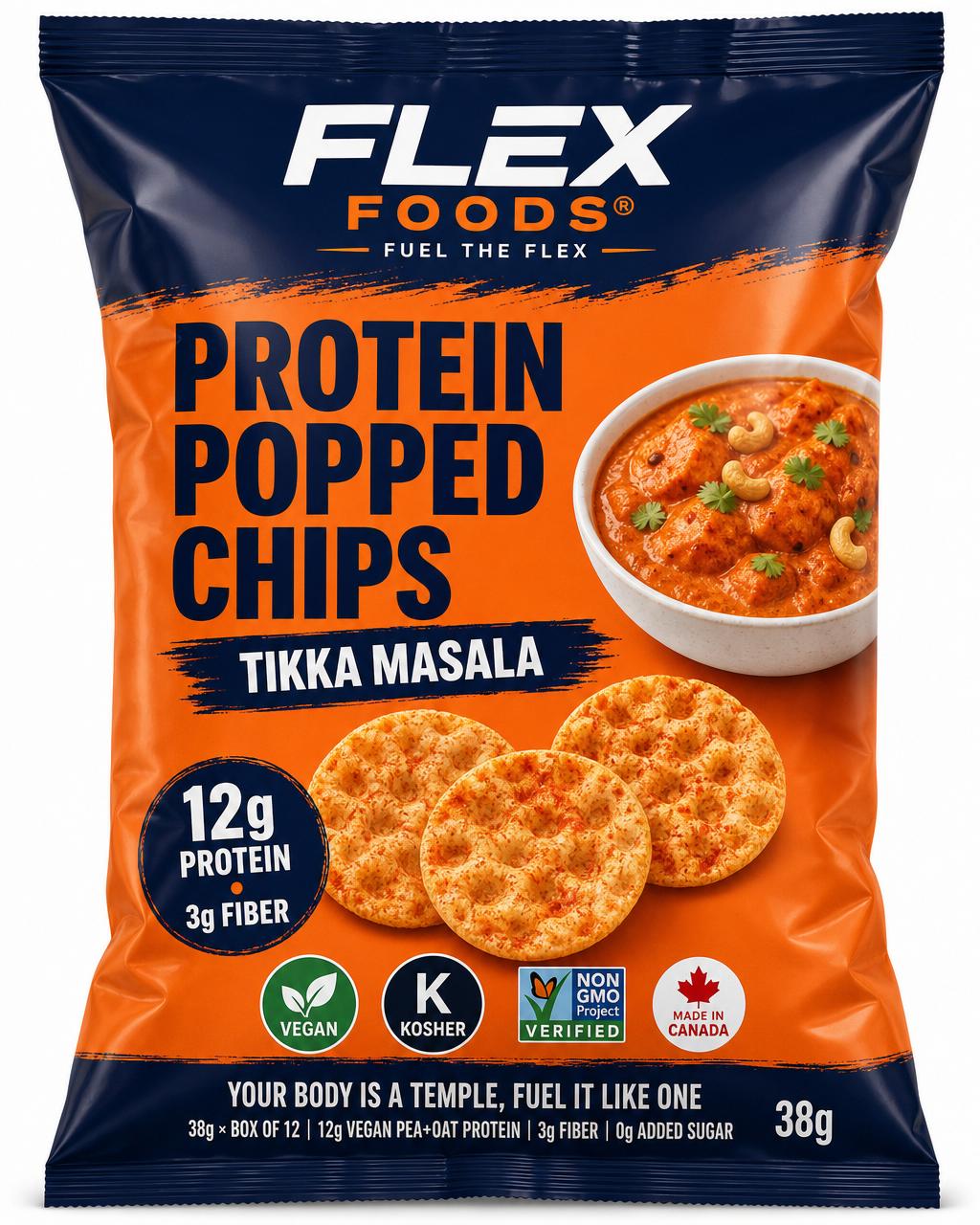
Our bags are a multilayer flexible film, and multilayer flexible film is among the harder packaging formats to recycle. We'd rather explain that decision than let a maple leaf and a green claim do the work.
What the bag actually has to do
Four jobs, and they're more demanding than they look.
Block oxygen. The limiting factor on our shelf life isn't microbial growth — the popping process drives water activity too low for that. It's lipid oxidation: the sunflower oil coating and the fats in the oat and pea protein react with oxygen over time, producing the paint-like, cardboard note of rancidity. An oxygen barrier is what buys months instead of weeks.
Block moisture. Crispness in an aerated snack depends on staying below a certain water activity. Above roughly 0.5 the structure plasticises and the chip goes from brittle to leathery. A humid environment — a lakeside cabin, a Vancouver autumn — will do that through a poor barrier.
Block light. Light accelerates oxidation, which is why so many snack films are metallised or opaque rather than clear.
Survive handling. Puncture and seal integrity through distribution, a warehouse, a delivery van, a backpack.
No single material does all four well. Polyethylene seals nicely and has a decent moisture barrier and a poor oxygen barrier. Metallised layers block light and oxygen and don't seal. So you laminate them — and a laminate of dissimilar polymers is exactly what mechanical recycling struggles to separate.
Why 'just use paper' doesn't work
Paper is permeable to both oxygen and moisture. A paper bag of popped chips would go soft in days and rancid in weeks.
Paper packaging that does work for snacks is generally paper laminated to a plastic or metallised barrier layer — which recycles worse than either material alone, while looking considerably more sustainable. That's a real pattern in the category and worth being sceptical of.
Compostable films exist and are improving. The current honest assessment: barrier performance is generally below conventional multilayer, they typically require industrial composting facilities rather than home compost, and Canadian industrial composting access is uneven and many facilities won't accept them. A compostable bag that ends up in landfill has achieved nothing while costing more.
The trade-off nobody frames properly
Here's the part that changes the calculation.
For most food products, the packaging is a small share of total environmental impact and the food is the large share. Growing, processing and distributing food carries far more embedded energy, water and emissions than the film around it.
Which means packaging that fails and causes the food to spoil is almost always worse, environmentally, than packaging that works and is hard to recycle. Food waste is the bigger lever by a wide margin — and food waste in Canada is enormous, with a substantial share occurring at the consumer end.
So: a barrier film that keeps a snack good for months prevents more impact than it creates. That's our reasoning. It is also, conveniently, the cheaper option, and we'd be suspicious of us too — so weigh it accordingly.
What we do and don't do
Single-serve. Genuinely two-sided. More film per gram of food than a large bag — that's a real cost. Against it: single-serve packaging is a considerably better portion-control tool than a large bag, because portion decisions get made once per package rather than once per mouthful. And a resealed large bag goes stale, which produces waste. Detail in portion sizes.
The club pack. Twenty-four bags in a corrugated box. Corrugated cardboard is one of the most reliably recycled materials in Canada, with genuinely high recovery rates. Buying by the case reduces shipping impact per unit meaningfully — see why the 24-pack wins.
Nitrogen flush. Displacing oxygen at sealing rather than adding a chemical antioxidant. This is how a seven-ingredient list stays shelf-stable without a preservative — see shelf life without preservatives.
What we don't do: claim the bag is recyclable in your curbside bin, or print a compostable logo it hasn't earned.
What to actually do with the bag
In British Columbia, Recycle BC operates the residential packaging programme, and flexible plastic packaging is generally handled through depot drop-off rather than curbside collection. Categories and accepted materials change, so check Recycle BC's current list for your area rather than guessing — wish-cycling contaminates streams and makes the system work worse.
Outside BC, provincial programmes differ substantially. Some grocery chains run flexible-film take-back bins.
The corrugated club-pack box goes in curbside recycling essentially everywhere.
Where we'd like to get to
Mono-material films — recyclable polyethylene structures with barrier coatings rather than laminated dissimilar layers — are the most promising direction, and they're improving fast. The current constraints are barrier performance at the level a high-fat aerated snack needs, cost, and whether recycling infrastructure actually accepts them once labelled.
We're watching it. We're not going to announce a transition we haven't made. More on the broader picture on our sustainability page.