Nutrition 101
Is a 38g Bag Enough? Portion Sizes for High-Protein Snacking
Why single-serve beats the big bag, and how 38 grams fits into a real day of eating.
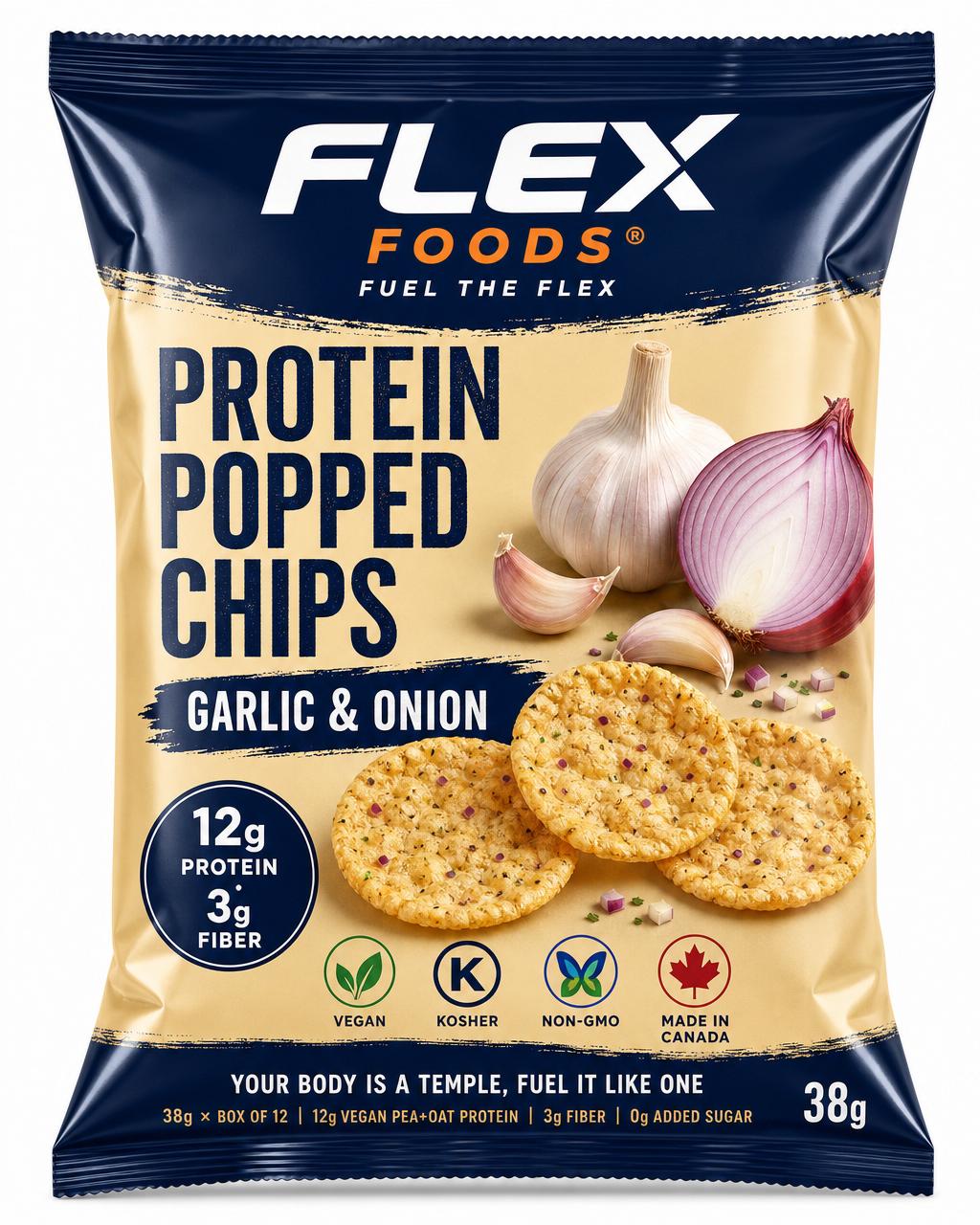
Thirty-eight grams looks small when you tip it into a bowl. It looks entirely reasonable when you eat it out of the bag over eight minutes at your desk.
That gap is the whole subject of this post, because portion satisfaction has surprisingly little to do with mass and quite a lot to do with packaging, duration and what else is on the label.
Where 38 g sits in the snack landscape
| Format | Weight | Typical calories |
|---|---|---|
| Vending single-serve chips | 28–35 g | 150–190 |
| Protein Popped Chips | 38 g | 150 |
| Canadian Reference Amount for snack chips | 50 g | — |
| "Sharing" bag | 150–200 g | 800–1,100 |
| Family bag | 250–300 g | 1,300–1,600 |
That third row is worth explaining. Health Canada publishes Reference Amounts — standardised portions used to calculate nutrition claims and, in many cases, declared serving sizes. For snack chips it's 50 g. Our bag is 38 g and we declare the whole bag as the serving, which is permitted for single-serve packages and means the panel describes what you'll actually eat.
Be alert to the alternative. A 200 g bag declaring a 28 g serving is compliant, and the panel it produces describes roughly one-seventh of the bag. Nobody eats one-seventh of a bag.
The reason single-serve works, and it isn't willpower
Portion decisions get made once per package, not once per mouthful.
Open a large bag and you enter a continuous negotiation. There's no natural endpoint until it's empty or you make an active decision to stop — and active decisions get harder as you eat, because the pleasure of each chip declines more slowly than the bag empties. Researchers call the declining-pleasure part sensory-specific satiety, and it's real, but it usually runs out of road well after the calories have added up.
A sealed 38 g bag converts that negotiation into a single structural decision. Finishing it is a complete act. Having a second one means standing up, choosing, and opening something new. That's a small friction, applied at exactly the moment it does the most good.
This is the same logic as decanting nuts into jars rather than eating from the bulk bag. It's not about restraint. It's about where the stopping cue sits.
Why 38 rather than 28 or 50
Three constraints landed on the same number.
Protein. Twelve grams is the figure we wanted, and at our protein density that requires roughly 38 g of product. Going to 28 g would have meant 9 g of protein, which is meaningfully less useful.
Calories. A snack that clears 200 calories starts competing with a meal rather than bridging to one. 150 sits in the range where it holds you without displacing lunch.
Volume. Popped chips are aerated, so 38 g is physically more chip than 38 g of a dense fried crisp would be. You get more pieces and a longer eating duration for the same mass, and eating duration is a real contributor to feeling like you've had a snack.
Is 12 g of protein enough?
Depends what you're asking it to do.
For stimulating muscle protein synthesis in a single sitting, most research points to roughly 20–25 g of high-quality protein as the dose where the response plateaus in younger adults, with older adults likely needing more. Twelve grams is about half that. A single bag is not a post-workout meal.
For contributing to a daily total, which is the variable that actually predicts outcomes, 12 g is a solid brick. Someone targeting 1.6 g per kilogram at 70 kg needs about 112 g a day. Two bags is 21% of that, from snacks they'd have eaten regardless. Snacks are where most people leak protein, and closing that leak is unglamorous and effective. Our guide to daily protein needs works through finding your own number.
For satiety, 12 g plus 3 g of fibre is enough to hold most people two to three hours, which is what a snack is for.
How to make one bag do more
If 38 g genuinely isn't enough for the slot you're filling, add volume rather than adding a second bag.
- A dip. Half a cup of a bean or plant-yogurt dip adds 6–9 g of protein and a lot of volume for around 100 calories. Nine options in what to dip them in.
- Something watery and crunchy. Cucumber, celery, cherry tomatoes. Almost no calories, considerable stomach volume.
- Water or tea alongside. Genuinely helps, partly through gastric distension and partly because mild thirst is frequently misread as hunger.
Two bags is also fine — 300 calories and 24 g of protein is a reasonable snack by any measure. Just make it a decision rather than a drift.
The one-line answer
Thirty-eight grams is enough for a snack and not enough for a meal, which is precisely what it's designed to be. If you're reaching for a third bag, the problem isn't the portion size — it's that you needed lunch.