
Snacking
Protein Chips vs Protein Bars: Which Actually Fits Your Day?
Same protein target, very different eating experience. Which one actually fits the slot you're filling?
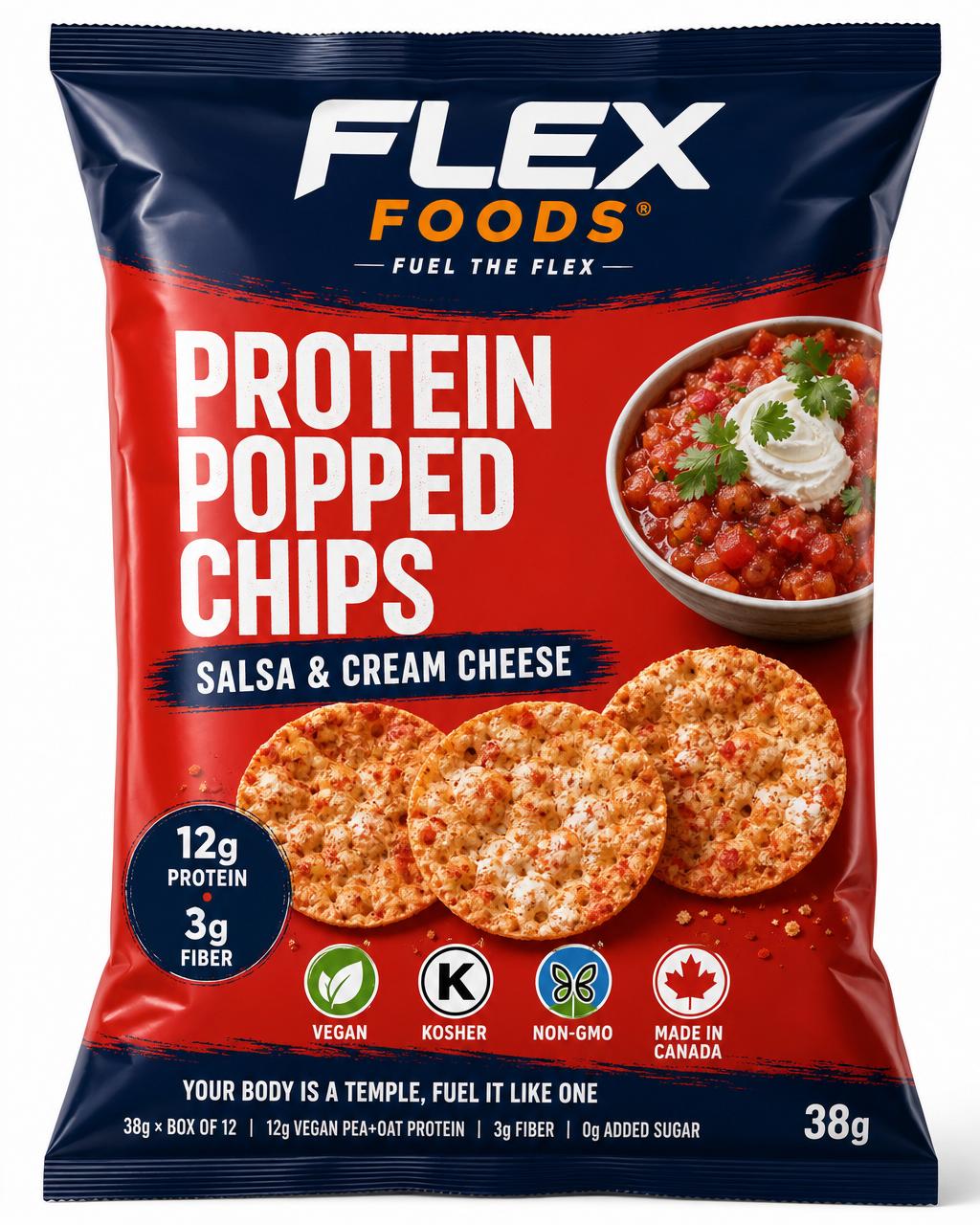
Protein bars and protein chips are competing for the same moment in your day — the gap between meals where you need something portable that isn't a vending machine decision. They solve it differently enough that picking the wrong one is a real cause of abandoned habits.
We make chips. Here's the honest comparison anyway, including where bars win.
The numbers side by side
| Typical protein bar | Protein Popped Chips | |
|---|---|---|
| Serving | 50–60 g | 38 g |
| Calories | 200–250 | 150 |
| Protein | 15–20 g | 12 g |
| Fibre | 3–10 g | 3 g |
| Added sugars | 0–15 g | 0 g |
| Ingredient count | 15–25 | 7 |
| Sodium | 100–250 mg | 200 mg |
Bars win on absolute protein. A 20 g bar gets closer to the per-meal dose associated with maximally stimulating muscle protein synthesis than a 12 g bag does. If you need one item to function as a meal replacement, that's a real advantage.
Chips win on protein per calorie — 8.0 g per 100 calories against roughly 7.5–8.0 for a good bar, and considerably better than the many bars that are essentially candy with protein powder in them. They also win decisively on ingredient simplicity and on added sugar, where bars vary enormously.
The variable the panel doesn't show: eating duration
This is the difference that actually determines which one you keep buying, and nobody mentions it.
A protein bar is four to six bites of dense, chewy, high-calorie food. It's over in ninety seconds. Physiologically it delivers, but the eating experience is compressed, and compressed eating tends to leave you feeling like you haven't had a snack.
A 38 g bag of aerated chips is a lot of individual pieces spread over several minutes. Eating rate and duration both influence perceived satisfaction independently of calories — the sensory experience of a snack is part of what makes it register as one.
Put plainly: bars feed you efficiently. Chips feel like snacking. If what you want is to have eaten something, the bar works. If what you want is the experience of a break, the bar often leaves you looking for something else — which is how a 200-calorie snack becomes a 350-calorie one.
Texture fatigue, and why bar habits die
Almost every protein bar has the same fundamental texture: dense, slightly tacky, chewy. Flavours vary; the mouthfeel is nearly constant across the category, because it's a consequence of binding protein into a shelf-stable block.
Sensory-specific satiety means repeated exposure to a specific sensory profile reduces appetite for it faster than for food generally. Texture is part of that profile. This is the mechanism behind the very common pattern of buying a case of bars, eating them enthusiastically for two weeks, then finding half the box still there in March.
Savoury and crisp is a different sensory register, and it's one most people rotate through more sustainably — partly because savoury snacking is a longer-established habit than sweet supplementation, and partly because crisp textures don't fatigue the way chewy ones do. Our post on beating flavour fatigue goes further into this.
Where bars are genuinely the better choice
Four situations, and we mean these:
- You need a meal replacement. 250 calories and 20 g of protein in a pocket is a bridge across a missed lunch. 150 calories isn't.
- You want something sweet. A savoury snack does not satisfy a sweet craving, and pretending otherwise leads to eating both.
- Space is genuinely tight. A bar survives a jacket pocket, a jersey and a hydration vest. A bag of chips does not survive being sat on.
- You need calorie density. If you're trying to gain weight or fuelling long endurance work, bars deliver more energy per unit of volume and per unit of chewing.
Where chips win
- Afternoon slump, desk-based. Lower calories, longer eating duration, savoury. Better fit for a break than for a refuel. See beating the 3pm slump.
- Sharing or social eating. Chips are a communal food. Bars are not.
- Two-snack days. Two bags is 300 calories and 24 g protein. Two bars is 450 calories and often 20 g of sugar.
- Sugar avoidance. Reliably 0 g added sugar versus a category where you must read every label.
- Meal accompaniment. Chips go with a sandwich, a salad or a dip. A bar goes with nothing.
The recommendation, honestly
Keep both, for different slots.
Bars belong where the failure mode is missing a meal entirely — the car, the bag you take to appointments, the drawer at work you raid when a meeting eats your lunch hour. Their job is calories and protein under adverse conditions.
Chips belong where the failure mode is boredom eating and the 4pm vending machine — the desk, the kitchen cupboard, the lunchbox. Their job is to be a satisfying savoury snack that happens to carry 12 g of protein.
Trying to make one item cover both slots is why people end up with a cupboard of half-finished boxes. Different problems, different tools. You can look at the chip side and decide where it fits.