Snacking
Protein Chips vs Cheese and Crackers
A childhood classic run through a modern macro lens, plus a plant-based rebuild that holds up.
Cheese and crackers is one of the most durable snack formats there is — a fat-and-salt-rich soft food against a crisp starch vehicle. Nearly every food culture has a version of the same structure.
It also carries more saturated fat and sodium than most people account for, largely because nobody weighs cheese.
The numbers
Assuming 30 g of cheddar — roughly a matchbox — and about eight crackers.
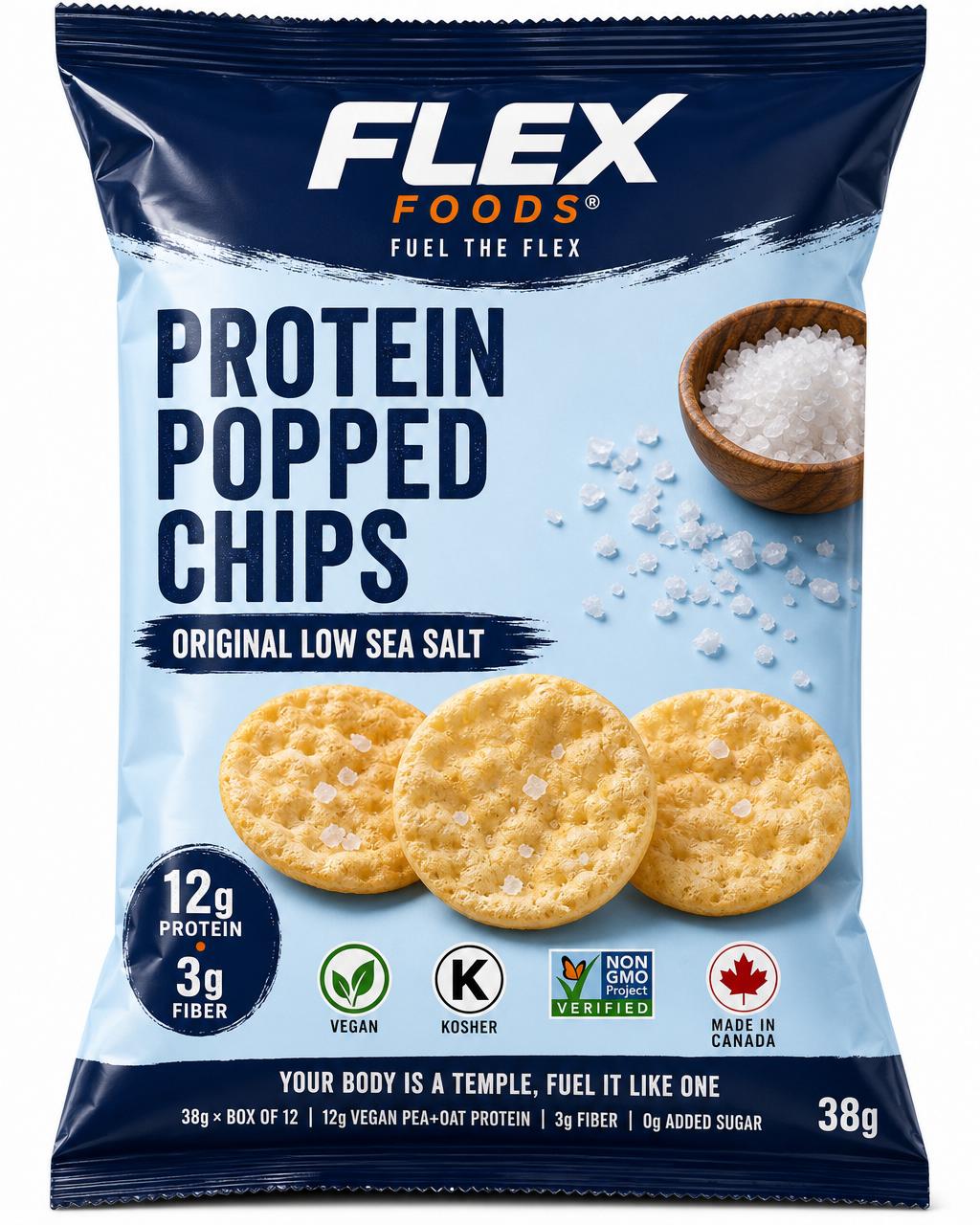
| Cheddar + crackers | Protein Popped Chips | |
|---|---|---|
| Calories | ~250 | 150 |
| Protein | ~10 g | 12 g |
| Fat | ~16 g | 4 g |
| Saturated fat | ~8 g | 0.5 g |
| Fibre | ~1 g | 3 g |
| Sodium | ~400 mg | 200 mg |
| Protein per 100 cal | ~4.0 g | 8.0 g |
The saturated fat line is the striking one. Eight grams is around 40% of a daily value from a snack, and it comes almost entirely from the cheese.
Two honest points about saturated fat
Worth being careful here, because this is an area where the science has genuinely moved and confident claims in either direction are overreaching.
The mainstream position holds. Replacing saturated fat with polyunsaturated fat reliably lowers LDL cholesterol, and major cardiology and dietetic bodies continue to recommend limiting saturated fat intake. That's a well-supported position, not an outdated one.
The food matrix appears to matter. A body of research suggests saturated fat from fermented dairy — cheese and yogurt specifically — behaves differently from saturated fat in other forms, with cohort studies generally not finding the cardiovascular associations you'd predict from the LDL effect alone. Proposed explanations include calcium binding fatty acids, the effects of fermentation, and the physical structure of the cheese matrix.
This is an active area rather than a settled one. The reasonable reading is that cheese is not the villain it was once framed as, and also not a food to eat in unlimited quantity.
What's less contested: 400 mg of sodium is a lot for a snack, and cheese is a major sodium contributor in most Western diets.
Where cheese and crackers genuinely wins
Satisfaction. Fat carries flavour and creates mouthfeel in a way nothing else does. A 4-gram-of-fat baked snack cannot replicate that, and pretending otherwise would be the kind of claim we argue against in snacks that taste like punishment.
Calcium. 30 g of cheddar carries roughly 200 mg — a meaningful contribution to a daily requirement of about 1,000 mg, and relevant for bone health. See vegan protein and bone health.
Vitamin B12. Present in dairy, absent from plants. Anyone eating fully plant-based needs fortified foods or a supplement.
It's a genuinely good pairing. Crisp against soft, salt against fat, with something acidic alongside. That structure works.
The plant-based rebuild
The obvious substitution — plant cheese on crackers — mostly fails, and it's worth saying why.
Most plant-based cheeses are built from coconut oil and potato or tapioca starch. They melt and slice acceptably and carry 1–2 g of protein per 50 g, plus saturated fat from the coconut oil. So you lose the protein and the calcium while keeping the saturated fat. Cashew-based versions do better at 4–6 g, and cost more.
A version that actually works replaces the cheese with a legume component rather than a cheese analogue:
- Protein chips + whipped white bean dip with lemon and rosemary — around 20 g of protein, 280 calories, 2 g saturated fat
- Protein chips + hummus + olives + cornichons — 18 g of protein and the acid element that makes the format work
- Protein chips + cashew-based cheese + roasted chickpeas — closest to the original experience, with the chickpeas doing the protein work
Pairings in three savoury pairings, and a fuller version in building a plant-based board.
If you'd rather just improve the original
Three changes that keep the format:
- Weigh the cheese once. 30 g is smaller than most people's instinct, and knowing what it looks like recalibrates the estimate permanently.
- Change the cracker. A wholegrain or seeded cracker adds fibre; most standard crackers are refined flour with 1 g.
- Add something acidic and something raw. Cornichons, pickled onion, apple, tomato, cucumber. It's what the format has always wanted, and it adds volume for almost no calories.
The verdict
Cheese and crackers carries 100 more calories, four times the fat, sixteen times the saturated fat and double the sodium, for slightly less protein.
It's also more satisfying, and it brings calcium and B12. Not a snack to eliminate — a snack to weigh.