Fuel Science
Vegan Protein and Bone Health: What the Research Says
The old claim that protein leaches calcium didn't hold up. But there's a real finding about vegan bone health worth knowing.
Two separate claims get tangled together in conversations about plant protein and bones. One has been substantially refuted. The other is a real, replicated finding that deserves attention rather than dismissal.
Worth separating them properly.
Claim one: high protein leaches calcium from bone
This was the acid-ash hypothesis, and it dominated thinking for decades.
The reasoning: metabolising protein — particularly sulfur-containing amino acids from animal sources — produces acid. The body buffers acid partly by mobilising alkaline mineral salts from bone. Higher protein intake does increase urinary calcium excretion, which was read as evidence of bone being dissolved to buffer the load.
The observation was correct. The interpretation was wrong.
Better-designed studies using isotope tracers showed that the additional urinary calcium comes largely from increased intestinal calcium absorption, not from bone. Higher protein intake improves how much dietary calcium you take up; more absorbed means more excreted. Bone isn't the source.
Subsequent work has generally found higher protein intake to be neutral or modestly beneficial for bone mineral density — provided calcium intake is adequate. Protein is a structural component of bone matrix, and it supports the muscle mass that loads bone through movement. Major osteoporosis bodies now generally treat adequate protein as protective rather than risky.
So: eating plenty of protein, plant or animal, is not a bone risk. Our post on protein myths covers the related kidney claim.
Claim two: vegans have higher fracture risk
Here's the part a plant-based brand would prefer to skip. We won't.
Large prospective cohort studies, most notably EPIC-Oxford, have found higher fracture risk in vegans compared with meat eaters — with hip fracture showing the largest difference. The finding has been broadly reproduced in other cohorts.
That's a real signal. What matters is the explanation, because it points at what to do.
The most consistently identified contributors are:
- Lower calcium intake. The strongest single factor. In EPIC-Oxford, the elevated risk was substantially attenuated among vegans meeting calcium recommendations. Dairy is the dominant calcium source in Western diets, and removing it without deliberate replacement leaves a gap.
- Lower protein intake. Many vegans in these cohorts ate less total protein, not more.
- Lower BMI. Vegans in these studies were on average leaner, and lower body weight is an independent risk factor for fracture — less mechanical loading of bone, less soft-tissue padding in a fall.
- Vitamin B12 and vitamin D status. Both relevant to bone and both commonly low in unsupplemented plant-based diets.
The reasonable reading: this is not evidence that plant-based eating damages bone. It's evidence that plant-based eating done without attention to calcium, protein and vitamin D carries a real cost. Which is a solvable problem, and worth solving deliberately.
What to actually do
Calcium — the priority
Adult requirements are commonly cited around 1,000 mg daily, rising to 1,200 mg for women over 50 and men over 70. Plant sources that genuinely deliver:
- Fortified plant milks — the most reliable option, typically matched to dairy at around 300 mg per cup. Shake the carton; calcium settles.
- Calcium-set tofu — check for calcium sulfate in the ingredients. Can exceed 350 mg per 100 g.
- Low-oxalate greens — kale, bok choy, broccoli, collards. Well absorbed.
- Fortified orange juice, tahini, almonds, white beans, dried figs
The spinach trap: spinach is high in calcium and also high in oxalate, which binds it. Absorption is poor — around 5%, against roughly 50% from low-oxalate greens. Spinach is excellent food and a bad calcium source.
Vitamin D
Needed for calcium absorption, and difficult to get from food. At Canadian latitudes, skin synthesis is negligible for much of the year. Supplementation is standard advice for most Canadians over winter, plant-based or not — worth discussing dose with your doctor rather than guessing.
Protein
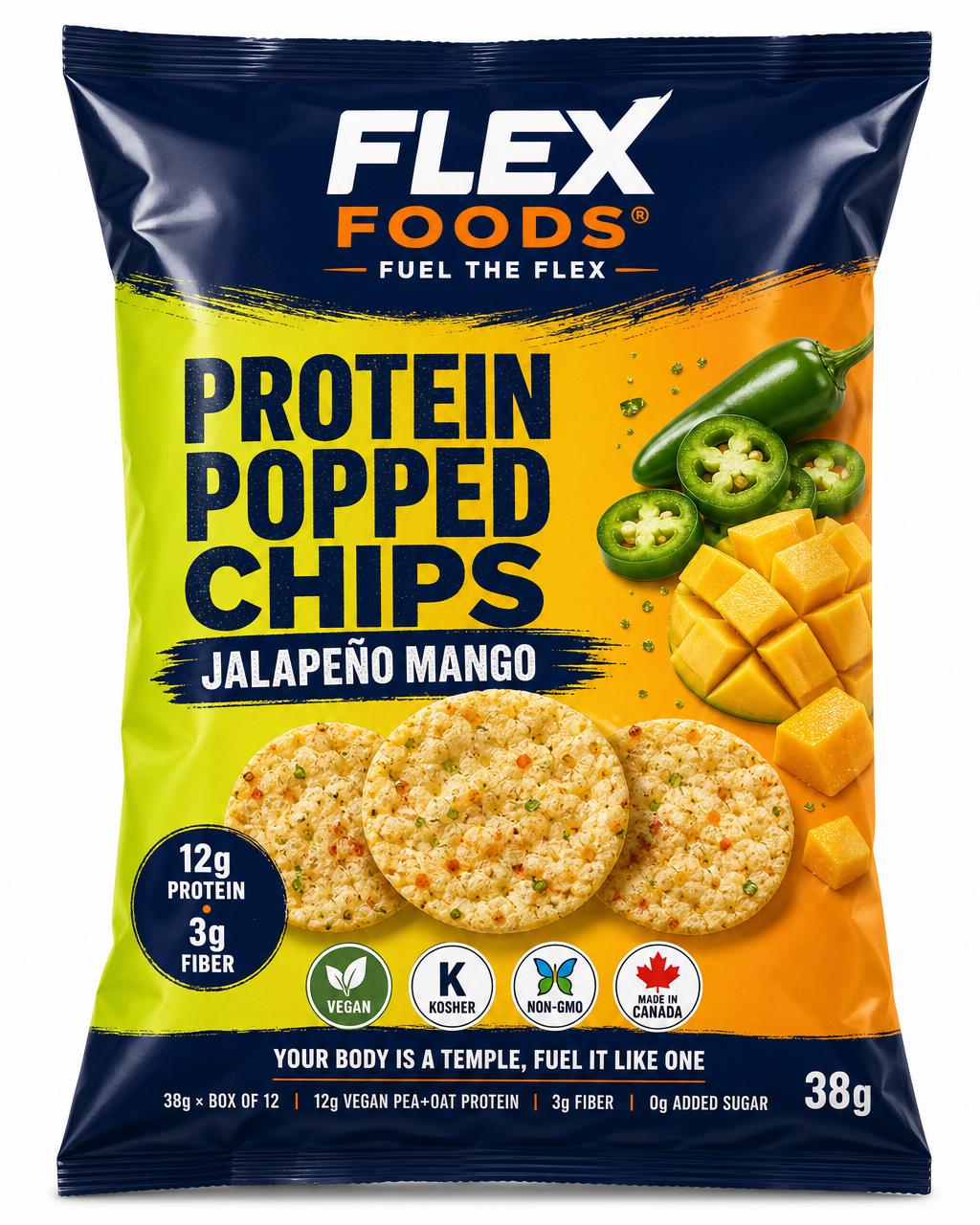
Adequate rather than minimal. This is where snacks can contribute — a 38 g bag of Protein Popped Chips is 12 g, and closing the snack gap is a low-effort way to raise a daily total. Our guide to finding your number covers the target.
Resistance training
The lever people skip. Bone responds to mechanical loading, and resistance training and impact activity both increase or preserve bone mineral density. No dietary strategy substitutes for loading the skeleton.
The summary
Protein doesn't harm bone. Plant-based eating can come with elevated fracture risk, and the identified causes are calcium, protein, vitamin D and low body weight — all addressable.
General information, not individual advice. If you have osteoporosis, a fracture history or specific risk factors, this is a conversation for your doctor, who can assess bone density and your actual intakes rather than population averages.