Brand & Values
The Case Against Protein Snacks That Taste Like Punishment
Compliance is a nutrition variable. A snack you dread is a snack that delivers nothing.
There's a category of food that exists to be endured. Chalky bars, dense crisps with a bean aftertaste, shakes that need to be drunk fast. All nutritionally defensible, all built on an implicit premise: that health food is supposed to be a bit unpleasant, and enjoying your food is a compromise.
We think that premise is both wrong and self-defeating, and there's a reasonable case for why.
Adherence is the variable that dominates
Look at how nutrition interventions actually perform over time and a consistent pattern emerges: the differences between reasonable dietary approaches are small compared with the difference between following one and abandoning it.
Diet comparison trials tend to find modest differences between plausible approaches at twelve months, with adherence explaining much more of the variance in outcomes than the specific composition does. The same logic applies at the level of a single food. A snack that scores 20% better nutritionally and gets eaten a third as often delivers less.
Which makes palatability a nutrition property, not a luxury. It's the thing that determines whether any of the other properties get delivered.
Why 'health food' ends up unpleasant
Not through malice. Three technical reasons.
Protein fights texture. Under heat, protein molecules denature and cross-link into elastic networks. Elastic is the enemy of brittle and crisp. Load a snack with protein and the default outcome is dense, tough and slightly leathery. Making it light and snappy takes real work — see the crunch problem.
Plant proteins have a flavour. Legume proteins carry earthy, green and sometimes bitter notes, largely from the non-protein fraction. Isolation removes much of it; there's still something to cover.
Removing sugar and fat removes the tools. Sugar rounds off harsh edges; fat carries flavour and creates mouthfeel. Take both down and you've removed the two most effective palatability levers a formulator has. That's the trade-off described in building bold flavour with 0 g added sugar.
Each of those is a real obstacle. The failure isn't hitting them — it's shipping anyway and calling the result a virtue.
The moralising problem
Beyond the practical argument, there's a framing one worth naming.
A lot of health-food marketing implies that food should be earned, that pleasure in eating is a lapse, and that discomfort is evidence of virtue. That framing does real harm — it's the same logic behind "compensating" for a meal with exercise, or treating a biscuit as a moral failure requiring correction.
The practical consequence is all-or-nothing thinking, where a lapse becomes an ending rather than a blip. It's the single most common reason people abandon otherwise sensible habits, and it lands hardest on people for whom food is already a difficult subject.
Food that tastes good doesn't require justification. Our take on the January version of this is in a reset without a restrictive diet.
Where we'd apply the same scepticism to ourselves
Three honest points.
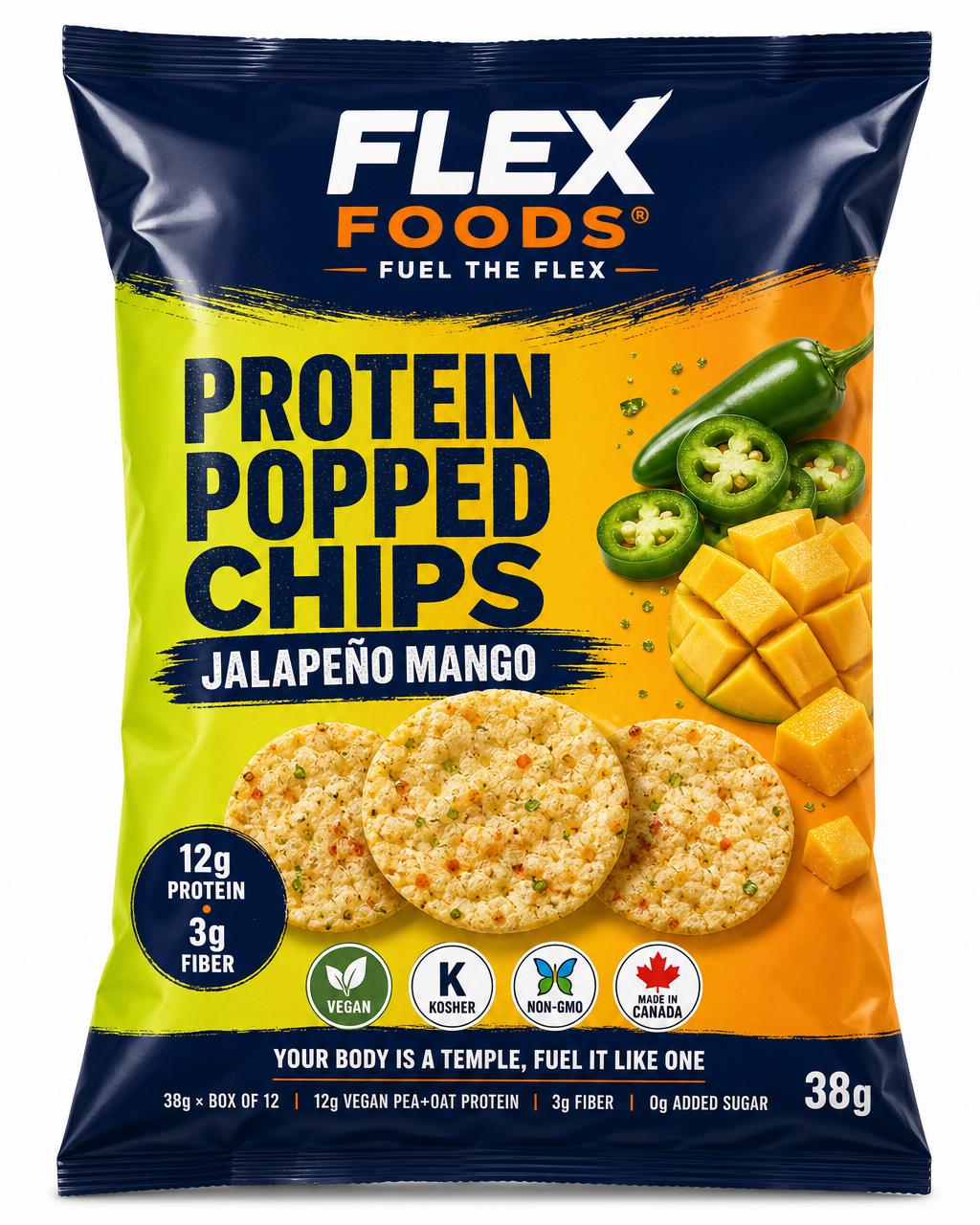
Our seasonings are more assertive than mass-market equivalents. Without sugar to round the edges, Tikka Masala and Garlic & Onion read sharper than what most people grew up with. Some people find the first bag more intense than expected. That's a real difference in eating experience, not just a nutritional one, and whether it's better is a matter of taste.
A popped chip is not a fried chip. It's lighter, drier and less indulgent. Fried potato chips carry 13–15 g of fat per serving and fat is what produces that specific rich, greasy-brittle mouthfeel. We can't match that, and claiming we do would be the kind of thing this post is arguing against.
Enjoyable is not the same as craveable. The snack industry is very good at engineering food that overrides satiety signalling. We're aiming at something more modest: a snack you're glad to eat and can stop eating.
What we optimise for instead of pure novelty
Two things, both learned from repeat-purchase behaviour rather than first-taste reaction.
Holding up across a whole bag. Assertive, complex flavours often win a first bite and lose by chip twenty. Sensory-specific satiety means appetite for a specific flavour declines as you eat it, and busier flavours decline faster. A snack that's still good at the end is worth more than one that's spectacular at the start.
Rotation instead of a single perfect flavour. Six options means the sensory experience changes daily while the nutrition doesn't. That's the structural fix for flavour fatigue, and it's why the variety pack exists. See beating flavour fatigue.
The test we'd offer
Buy one bag before you buy a case. Of anything, including ours.
Flavour isn't predictable from a nutrition panel, and a case of something you don't enjoy is 24 units of waste and one more reason to distrust the whole category. If you don't like it, the nutritional properties are irrelevant — which is the entire argument here.