
Fuel Science
How We Test for Texture: The Crunch Problem
Protein makes things dense and tough. Getting a light, brittle snap out of pea protein is the hardest part of the product.
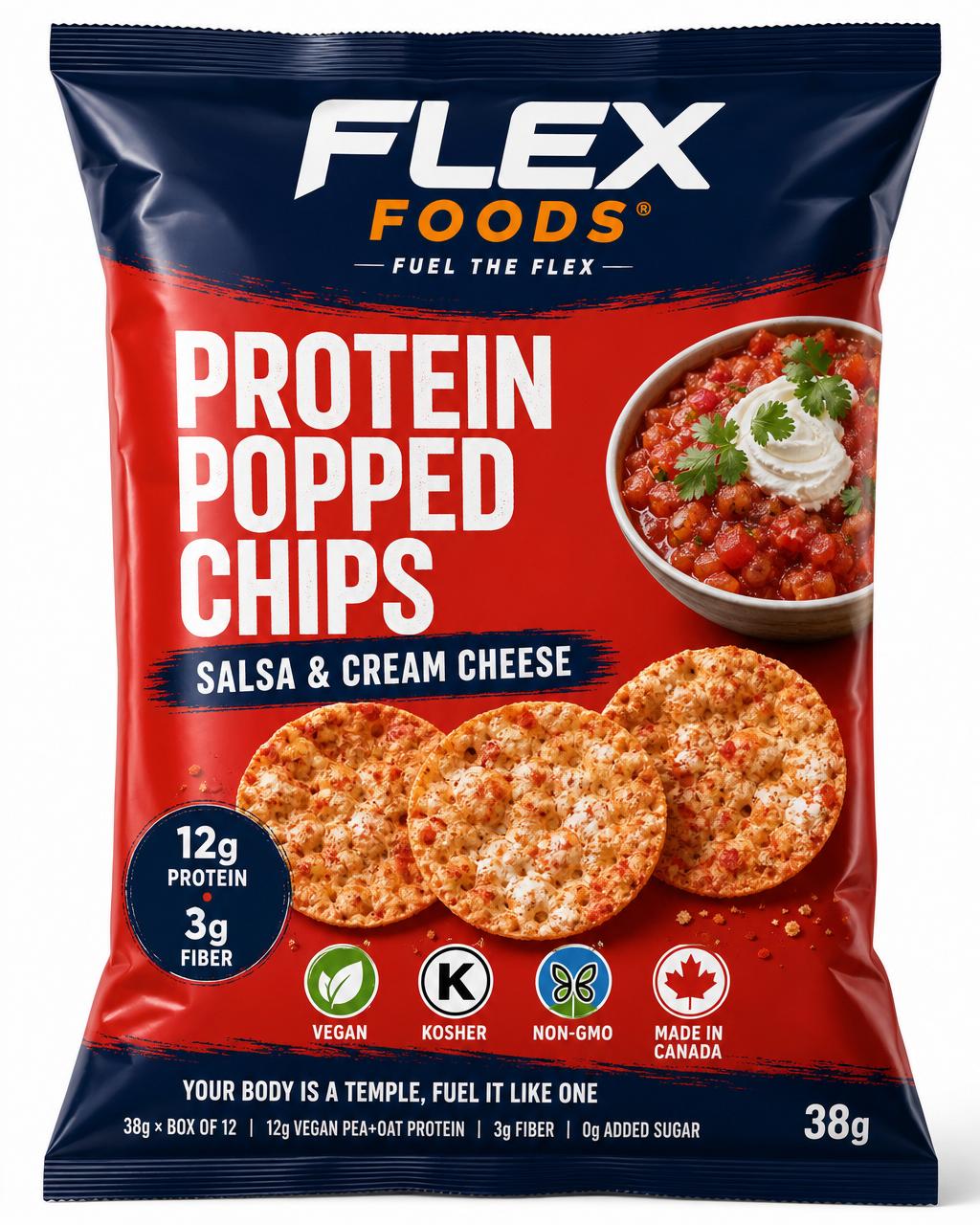
Ask what was hardest about developing a protein chip and the answer isn't the protein content, the flavour or the shelf life. It's the snap.
Crispness is a narrow physical window, and protein pushes you out of it. Here's the physics and how it gets measured.
What crispness actually is
Crispness isn't a flavour or a nutrient — it's a mechanical property, and a fairly specific one.
A crisp food is brittle: it fails suddenly under load rather than deforming. Bite into it and the structure fractures, propagating cracks through thin rigid walls around air pockets. The fracture releases energy as sound, which is why crispness is partly an auditory experience — the sound is genuine information about the structure, not a bonus.
Two conditions have to hold:
The material must be in its glassy state. Amorphous food solids exist either as a rigid glass or as a soft, rubbery material, and the boundary is the glass transition temperature. Above it, the material deforms rather than fracturing — leathery instead of crisp. Water is a powerful plasticiser: it lowers the glass transition temperature, which is why absorbing moisture makes a crisp food go soft. Practically, crispness in an aerated snack is generally lost somewhere above a water activity of about 0.5.
The structure must be aerated with thin walls. Solid glassy material is hard, not crisp — a boiled sweet is glassy and not crisp at all. You need many small air cells with thin, rigid walls so that cracks propagate easily and the whole thing shatters at low force.
Why protein wrecks both conditions
It interferes with the cell structure. Popping works by flash-expansion: steam forms inside a heated dough and forces the matrix outward. Starch gelatinises into a viscoelastic film that can stretch and then set rigid — good scaffolding. Protein, under heat, denatures and cross-links into elastic networks. Elastic material stretches with the expanding steam and then relaxes back rather than setting brittle. You get fewer, larger, thicker-walled cells.
It raises the force needed to fracture. Thicker walls and a more elastic matrix means more force to break, and force is experienced as hardness rather than crispness. That's the leathery, dense mouthfeel of a badly formulated protein snack.
Which is why brown rice is in the recipe. It supplies the starch matrix that pea and oat protein can't form alone — the mechanism in the brown rice question.
The variables that get adjusted
Four, and they interact rather than acting independently.
- Moisture content of the dough. The narrowest window. Too dry and there isn't enough steam to expand the structure. Too wet and it over-expands then collapses before it sets, giving a chip that's fragile and hollow.
- Protein-to-starch ratio. The central trade. More protein is the whole point of the product and directly degrades the texture.
- Mould temperature and dwell time. Adjusted in fractions of a second at the margins. Too little and expansion is incomplete; too much and the surface scorches while the seasoning burns.
- Particle size of the protein. Coarse isolate leaves gritty inclusions that act as fracture initiation points in the wrong places. Too fine and the dough turns gummy.
How it gets measured
Three methods, used together, because none is sufficient alone.
Instrumental — a texture analyser. A probe compresses the chip at a controlled rate while force is recorded against distance. A crisp product produces a sharp initial peak followed by an abrupt drop and a jagged, multi-peak profile — each peak a cell wall failing. A tough product gives a rounded curve with a gradual rise. The shape of the curve carries more information than the peak force.
Acoustic. Recording the fracture sound alongside the force curve. The number and amplitude of sound events correlate reasonably well with perceived crispness, and it's a genuinely useful supplement — crispness is substantially an auditory percept.
Sensory panels. The one that decides. Trained panellists rate specific attributes — hardness, crispness, denseness, residual mouthfeel — on defined scales. Instruments measure mechanics; only people report the experience, and the correlation between the two is good rather than perfect.
The moisture problem after manufacturing
Getting texture right at the machine is half the job. Keeping it is the other half.
Because crispness depends on staying below a water activity threshold, the package is a functional component of the product rather than a wrapper. A film with a poor moisture barrier means a chip that's correct on day one and leathery by month two — and in a humid environment, considerably faster.
This is also why the water activity that keeps the product microbiologically stable is the same property that keeps it crisp. One physical parameter doing two jobs. Detail in shelf life without preservatives, and the packaging consequences in packaging trade-offs.
What we couldn't fix
Two honest limits.
They crush. An aerated thin-walled structure is brittle by design, and brittle means it breaks under load. A bag in a backpack or under a laptop will produce crumbs. That's the direct cost of the property that makes the chip good — and the crumb is at least useful, as using the bottom of the bag covers.
They're not a fried chip. Absorbed oil contributes its own mouthfeel — a rich, greasy-brittle quality that a 4 g-of-fat baked product can't reproduce. Different texture, honestly assessed rather than claimed as equivalent.