
Recipes & Swaps
Protein Chip Crumb: Use the Bottom of the Bag
The crumbs at the bottom are a high-protein coating, crust and topping. Four uses and the reason they work better than breadcrumbs.
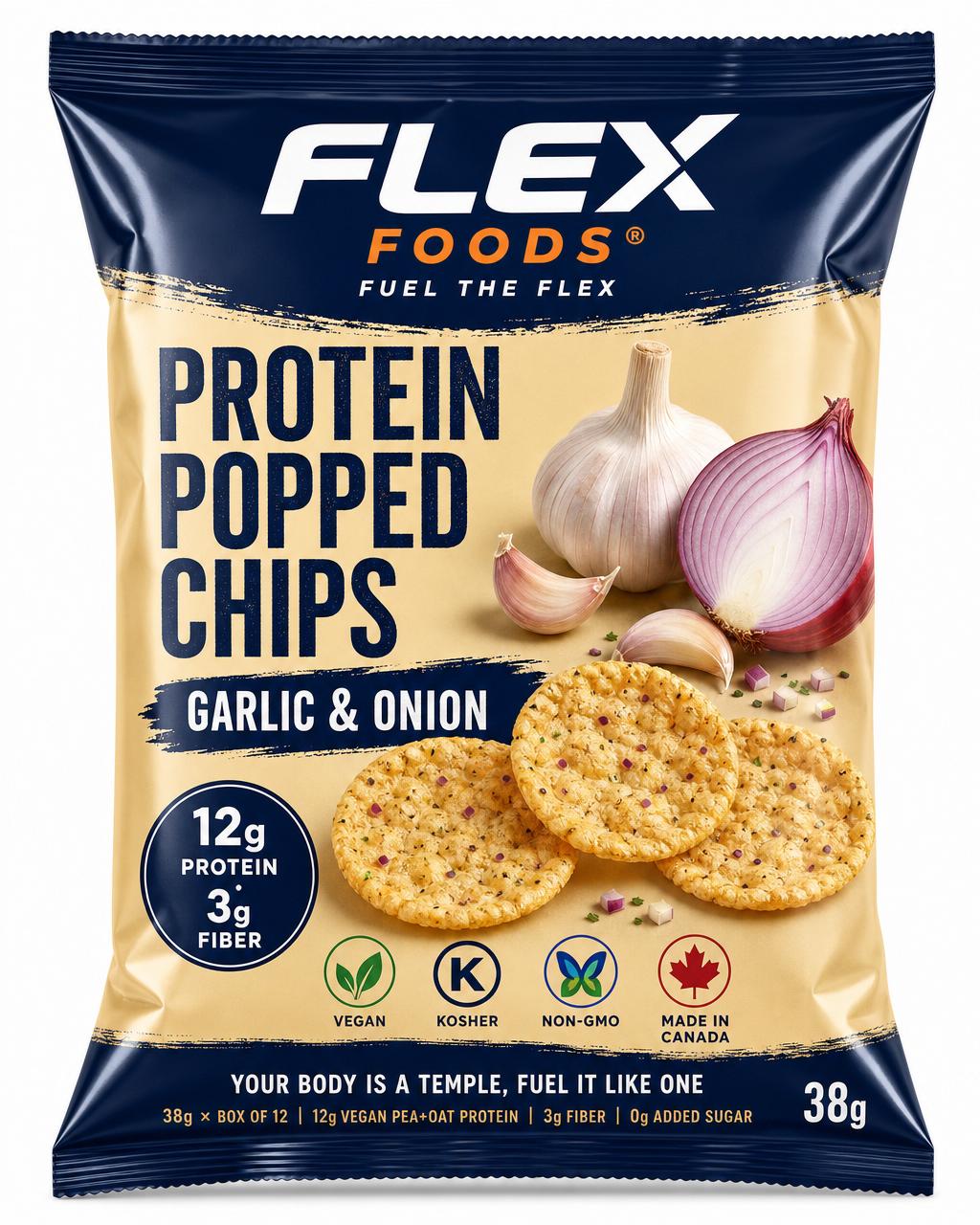
Every bag ends the same way — a tablespoon of seasoned crumb too fine to pick up. Most of it gets thrown out, which is a small waste of the most protein-dense part of the bag.
Protein chip crumb is a genuinely useful ingredient, and it outperforms breadcrumbs on two measures that matter.
Why it beats a breadcrumb
Compare 30 g of each:
| Per 30 g | Dry breadcrumbs | Protein chip crumb |
|---|---|---|
| Calories | ~110 | ~118 |
| Protein | 3.5 g | 9.5 g |
| Fibre | 1 g | 2.4 g |
| Gluten | Yes | No |
| Seasoning | None | Already seasoned |
Nearly three times the protein at similar calories, gluten-free, and pre-seasoned — which means you skip a step rather than adding one.
The texture difference matters too. Breadcrumbs brown by absorbing fat and drying out. Popped chip crumb is already aerated and rigid, so it crisps rather than softens, and it holds a crunch under sauce for longer.
Making crumb deliberately
Don't wait for the bottom of the bag. Take a full 38 g bag of Protein Popped Chips, leave it sealed, and crush it with the flat of your hand or a rolling pin. You want coarse sand with some larger flakes — uniform powder loses the textural interest.
A whole bag yields roughly a heaped half cup of crumb carrying 12 g of protein.
Flavour matching matters here more than in most applications:
- Original Sea Salt — the neutral all-purpose crumb. Use this if you're seasoning the dish yourself.
- Garlic & Onion — the best crust for savoury baked things. Alliums brown well.
- Tikka Masala — a spiced coating that does the work of a marinade.
- California Limón — for anything you'd finish with lime. Fish, if you eat it; cauliflower if you don't.
- Dill & Greek Yogurt — good on potatoes and anything you'd serve with a yogurt sauce.
Four uses
1. A crust for baked vegetables or tofu
The strongest application. Press firm tofu, slice it into slabs, dip in a slurry of plant milk and cornflour, then press into Garlic & Onion crumb. Bake at 200 °C for 20–25 minutes, turning once.
Works identically on cauliflower florets, thick courgette rounds, or halloumi if you eat dairy. The crumb crisps into an actual crust rather than going pale and soft the way a low-protein breadcrumb does.
Protein arithmetic: 200 g of firm tofu is around 32 g of protein, plus 6 g from half a bag of crumb. A 38 g of protein main course.
2. A topping for baked pasta or gratin
Scatter over a macaroni bake, a gratin or a casserole in the last ten minutes of cooking. You get the browned-crumb top without the flour, and it adds protein to a dish that's usually short on it.
Ten minutes is the limit. Longer and the seasoning scorches.
3. A salad finisher, in place of croutons
Croutons are fried bread — a lot of calories for no protein. A tablespoon of crumb over a salad delivers crunch, seasoning and about 2 g of protein for around 25 calories.
Add it at the table, not in the bowl. It softens within a few minutes of hitting dressing.
4. A binder in patties and fritters
Bean burgers, falafel mix, courgette fritters, veggie patties — all need something to absorb moisture and hold structure. Crumb does that job while contributing protein instead of just starch.
Rough ratio: two tablespoons of crumb per 400 g tin of mashed beans. Let the mix sit ten minutes before shaping so the crumb hydrates and the patties hold.
Two things that don't work
Being honest about the limits.
Deep frying. The crumb is already aerated and lightly oiled, and it absorbs frying oil unevenly and browns very fast. It burns before the inside of anything cooks. Bake or pan-fry instead.
Anything liquid for a long time. Crumb in a soup or a stew dissolves into thickener within minutes. It's a finishing ingredient, not a simmering one.
Storage
Crush what you need. Crumb has far more surface area than a whole chip, so it stales and picks up moisture much faster — an airtight jar buys you a week or so, where a sealed bag keeps for months. The low water activity that makes the whole chip shelf-stable stops helping once you've broken the seal and multiplied the surface area.
Which is a long way of saying: don't batch-prep it. It takes eight seconds.