
Recipes & Swaps
Dill & Greek Yogurt Chips vs the Classic Dill Pickle Chip
Two takes on dill, compared on flavour construction, acidity and what each does to your sodium for the day.
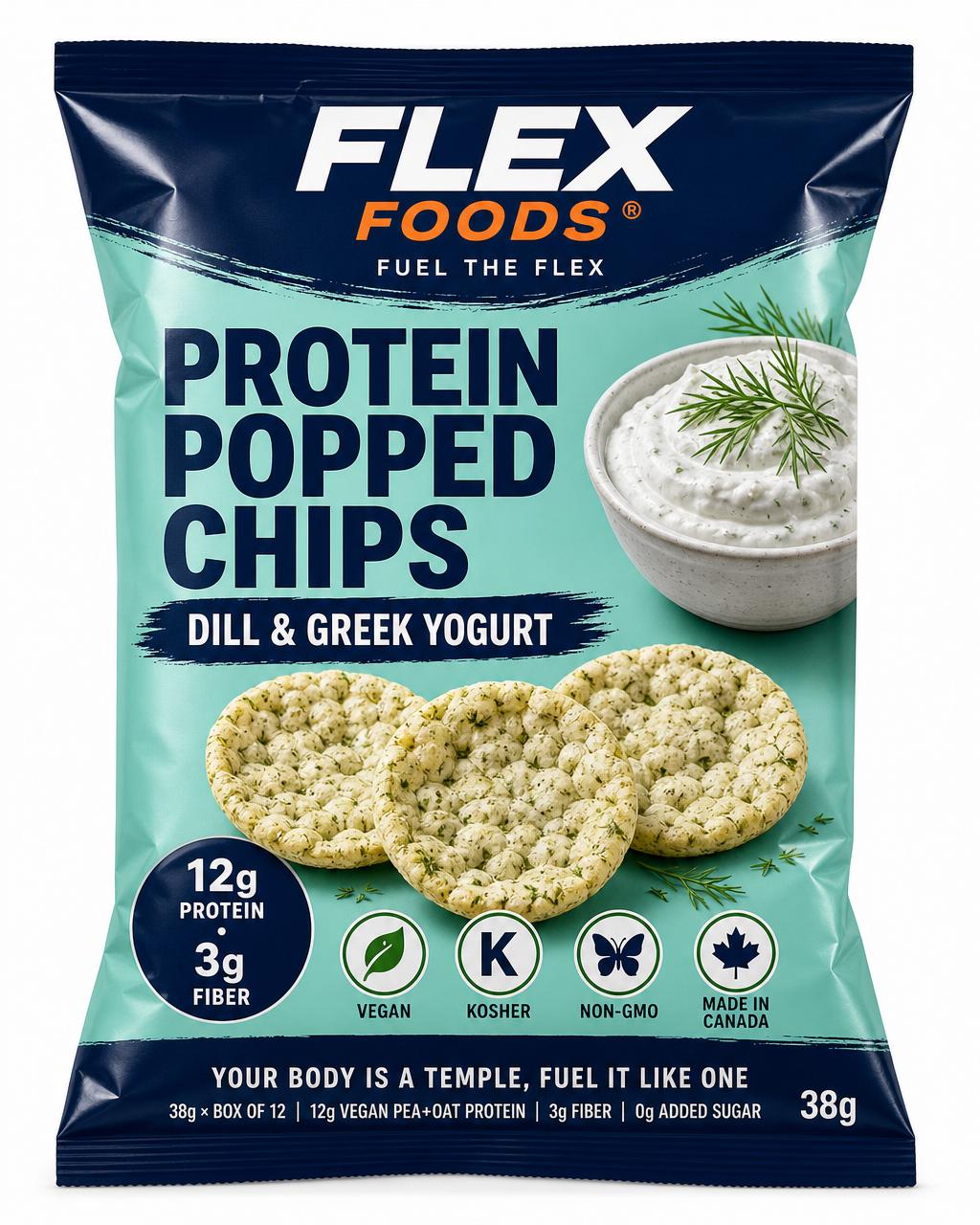
Dill pickle is one of the most successful chip flavours in Canada — arguably more distinctly Canadian than ketchup, and reliably in the top few flavours by sales. Dill and Greek yogurt is a different proposition built from the same herb.
Worth comparing properly, because the difference isn't just intensity.
Two different flavour architectures
Dill pickle is built on acid. The defining note is vinegar — usually acetic acid, sometimes with citric or malic acid alongside — plus salt and dill. The flavour arc is sharp, fast and front-loaded. It hits immediately, peaks quickly, and clears.
The dill in a dill pickle chip is honestly supporting. What you're tasting is sour and salty, with a herb note on top for identification.
Dill and Greek yogurt inverts that. The lactic, cultured note is the base — softer and rounder than vinegar, because lactic acid is a weaker acid and reads as creamy rather than sharp. The dill sits forward as the primary aromatic rather than a garnish, and the acidity is a background structure.
Slower arrival, longer finish, less aggressive. Whether that's better depends entirely on what you want from a chip.
The obvious question
How is a Greek yogurt flavour vegan?
The cultured, tangy character comes from plant-derived flavour compounds and acidity rather than dairy. The full ingredient list is pea protein isolate, oat protein, brown rice, sunflower oil, natural seasoning, sea salt and spices — no dairy, no milk derivative, no dairy allergen declaration.
"Natural seasoning" is one of the vaguer phrases in food labelling, and we'd rather acknowledge that than pretend otherwise — a single declaration can cover many components. For an allergy or a strict dietary requirement, email hello@flexfoods.ca for the breakdown rather than relying on a label summary.
The nutrition comparison
| Per serving | Typical dill pickle chips (40 g) | Dill & Greek Yogurt (38 g) |
|---|---|---|
| Calories | ~210 | 150 |
| Fat | 12–14 g | 4 g |
| Protein | 2 g | 12 g |
| Fibre | ~1 g | 3 g |
| Sodium | 250–400 mg | 200 mg |
| Added sugars | 1–3 g | 0 g |
The sodium line deserves comment, because it's where dill pickle chips are most often underestimated.
A vinegar-forward seasoning generally needs substantial salt to balance the acid — sweetness and saltiness both moderate sourness, and if you're not using sugar, salt does the work. Dill pickle chips frequently run at the higher end of the snack category for sodium, and some sit around 400 mg per serving, which is over 17% of a daily value in one small bag.
At 200 mg, ours is 9% of the daily value. Honest caveat: that's moderate, not low. We don't qualify for a "low in sodium" claim, which in Canada requires 140 mg or less per reference amount. The full accounting is in low-sodium snacking.
The added sugar detail
Most people don't expect sugar in a dill pickle chip, and most dill pickle chips have some. It's there to round off the vinegar's harsh edge — the same job it does in a barbecue or sour cream seasoning.
Our version has 0 g added sugar, and it manages that partly by using a lactic base rather than a vinegar one. Lactic acid is gentler to begin with, so there's less harshness needing to be smoothed. That was a genuine formulation advantage rather than a discipline exercise — the reasoning is in building bold flavour with 0 g added sugar.
Which one to reach for
Dill pickle wins on: immediate intensity, that specific nostalgic sharpness, and pairing with beer. If you want the hit, nothing else does it.
Dill and Greek yogurt wins on: protein per calorie, sodium, eating a whole serving without palate fatigue, and pairing with food. A softer flavour arc is less exciting at chip three and considerably more pleasant at chip twenty.
They're not really competing for the same moment. One is a craving. The other is a snack you eat with lunch.
Pairings for the yogurt version
The lactic base means this flavour pairs the way a tzatziki would.
- Plant yogurt dip with dill, cucumber and lemon — doubling the flavour, and it works. Dry concentrated seasoning against a cool wet dip reads as two different things. Around 8–10 g of protein per half cup with a soy or pea-based yogurt, bringing the plate to ~21 g.
- Edamame smash — shelled edamame mashed with olive oil, lemon zest, mint and flaky salt. About 9 g of protein per half cup, and mint plus dill is a better combination than it sounds.
- Anything with cucumber, tomato or olives. A Greek plate essentially assembles itself.
What to avoid: salsa, anything with chili heat, and hummus. Tahini's bitterness clashes with the lactic note.
For pairings across the rest of the line, see nine high-protein pairings.