
Fuel Science
Whole Grains in a Protein Snack: The Brown Rice Question
What brown rice contributes to a popped chip beyond being a filler — and the arsenic question, addressed directly.
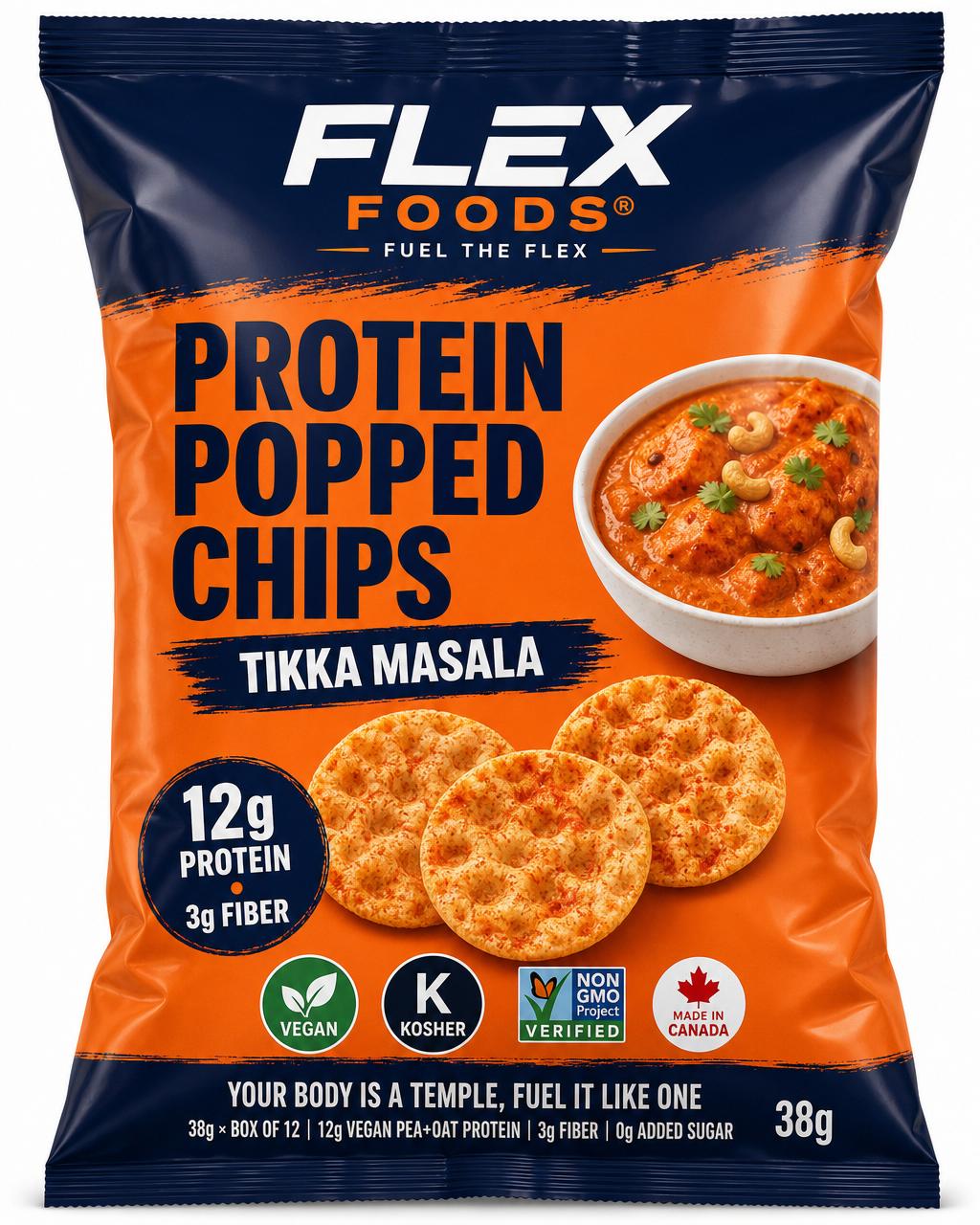
Brown rice is the third ingredient in our chips, after pea protein isolate and oat protein. It's the one that looks most like a filler, and it's the one that makes the product physically possible.
It also raises a legitimate question about arsenic that we'd rather address than leave hanging.
Why a protein chip needs a starch
The popping process works by flash-expansion. A hydrated dough is heated under pressure in a sealed mould; when the mould opens, trapped superheated water instantly converts to steam and forces the structure outward. As it cools below its glass transition temperature, the expanded structure locks in place — porous, rigid, brittle.
Starch is what makes that possible. Starch granules gelatinise under heat and moisture, forming a continuous viscoelastic matrix that can stretch as steam expands and then set rigid. It's the scaffolding.
Protein does close to the opposite. Under heat, protein molecules denature and cross-link into elastic networks — the chemistry that makes bread dough stretchy and cooks an egg white to rubber. An overly proteinaceous dough doesn't shatter outward when pressure drops; it stretches, then slumps. You get something dense and slightly leathery.
So a chip with 12 g of protein needs enough starch to build a matrix that the protein can't form on its own. Remove the brown rice and you don't get a higher-protein chip — you get a protein cracker nobody wants to eat. Full mechanics in what popping does to a chip.
Why brown rather than white
White rice would have worked structurally. Brown does three things it doesn't.
Fibre. Whole brown rice retains its bran layer, and the bran is where the fibre is. This is where most of the 3 g per bag comes from. Using white rice starch would have dropped the fibre line closer to 1 g for the same texture — same chip, worse snack. Why that matters: the 3 g fibre detail.
Micronutrients. The bran and germ carry magnesium, manganese, phosphorus, B vitamins and selenium. Milling to white rice removes most of them.
Flavour. Brown rice has a mild nuttiness that white rice starch doesn't. In a savoury snack, that's a small but real advantage — a more interesting base for seasoning to sit on.
What counts as a whole grain
Worth defining, since the term is used loosely.
A whole grain contains all three parts of the kernel in their original proportions: the bran (fibre, B vitamins, minerals), the germ (fats, vitamin E, more minerals) and the endosperm (starch, some protein). Refining removes bran and germ, leaving endosperm.
Brown rice is a whole grain. White rice is the same grain with bran and germ milled off. "Enriched" white rice has some B vitamins and iron added back, but not the fibre or the fat-soluble components.
Honest caveat about our product: brown rice is the third ingredient by weight, behind two protein ingredients. So the chips contain whole grain, and they are not a whole-grain food in the sense a bowl of brown rice is. Oatmeal, brown rice, quinoa and wholegrain bread deliver far more whole grain per serving, and always will.
The arsenic question
This deserves a direct answer rather than silence.
Rice takes up inorganic arsenic from soil and water more efficiently than most crops, because paddy conditions increase arsenic's bioavailability. Inorganic arsenic is a recognised carcinogen, and long-term exposure is a genuine public health concern rather than an internet scare.
Brown rice is generally higher than white, because arsenic concentrates in the bran — the same layer that carries the fibre and micronutrients. That's an uncomfortable trade-off and it's real.
What's also true:
- Levels vary enormously by growing region and variety, driven by soil arsenic and irrigation practices.
- Health Canada monitors arsenic in rice and rice products and has set standards for certain categories, with particular attention to infant rice cereal, since exposure per kilogram of bodyweight is highest in infants and young children.
- Dietary diversity is the general recommendation from food safety authorities — varying grains rather than eliminating rice.
For context on quantity: a 38 g bag contains considerably less rice than a serving of rice, since rice is the third ingredient and the bag is small. But we're not going to argue the exposure is zero, and if you're deliberately limiting rice intake — particularly for a young child — that's a reasonable position, and our chips contain rice.
If this is a concern for you: Health Canada's guidance on rice and arsenic is the right source, not a manufacturer's blog. Varying your grains, and being especially careful with rice-based products for infants and toddlers, is the mainstream advice.
The summary
Brown rice is in the recipe because a high-protein popped chip doesn't structurally exist without a starch matrix, and because brown rather than white triples the fibre for the same texture.
It's a whole grain, it isn't a whole-grain food, and it carries the rice-specific arsenic consideration that all rice products do. All three of those are true at once.