
Fuel Science
Baked, Never Fried: What 'Popping' Actually Does to a Chip
No fryer, no oil bath. Just pressure, heat and about two seconds of physics.
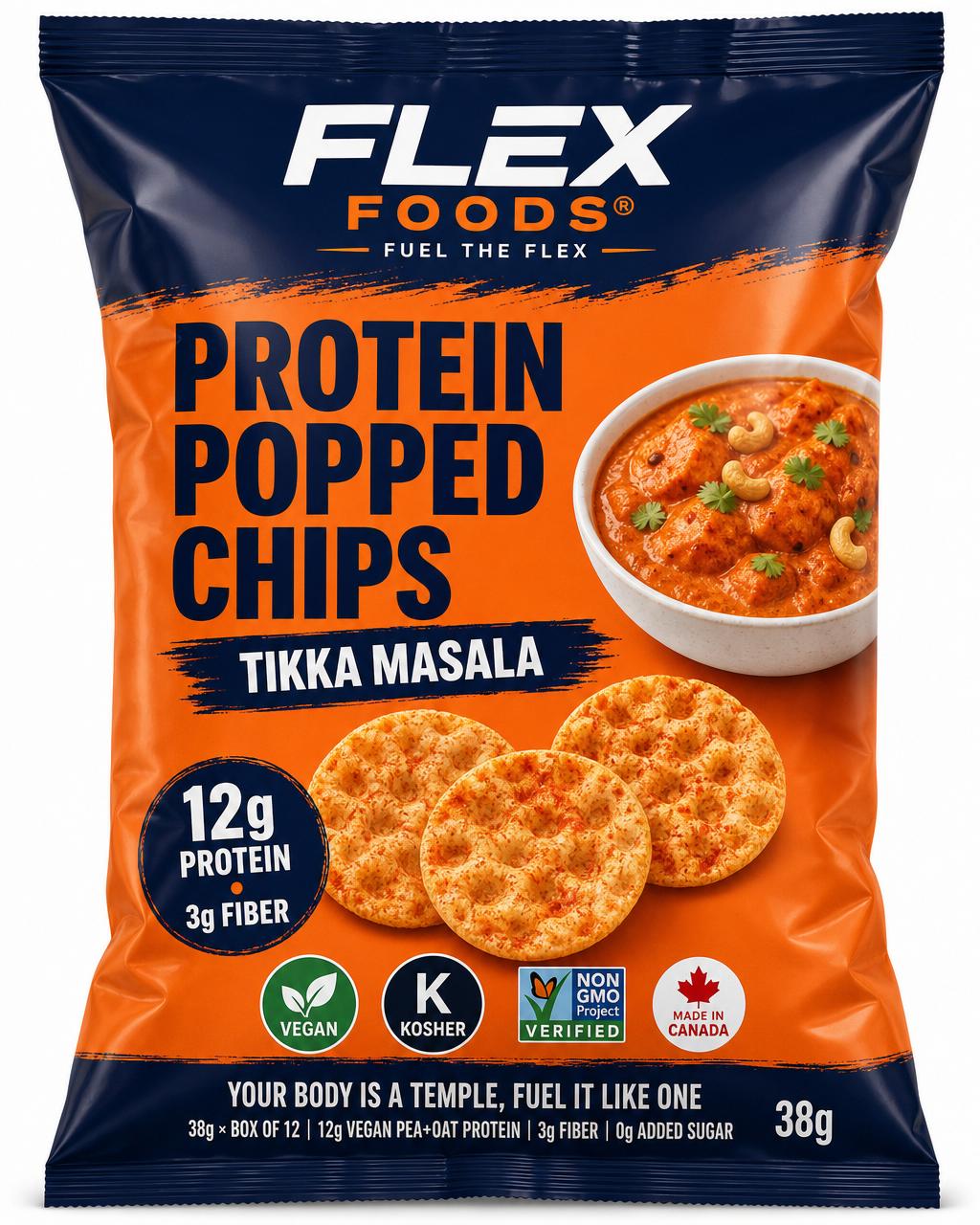
The phrase "baked, never fried" is on our bags, and it's accurate — but it undersells what's actually happening. Our chips aren't baked in the sense a cookie is baked. They're popped, and popping is a genuinely different process worth understanding, because it explains both why the fat content is low and why the texture is what it is.
The two seconds that make the chip
A measured portion of dough — pea protein isolate, oat protein and brown rice, hydrated to a specific moisture content — goes into a heated mould. The mould closes. Temperature and pressure spike simultaneously.
Inside the dough, water is trapped and superheated above its normal boiling point, held liquid by the pressure. Then the mould opens, the pressure drops to atmospheric in an instant, and every water molecule in that dough flashes to steam at once.
The expansion is violent. Steam occupies roughly 1,600 times the volume of the liquid water it came from, and it forces the softened protein-starch matrix outward from the inside. The disc balloons to several times its original thickness. As the steam escapes and the temperature falls below the glass transition point of the matrix, the structure locks in place — porous, rigid and brittle.
Total elapsed time: a couple of seconds. That's the whole cook.
Why this keeps the fat low
Deep frying is a heat-transfer method that uses oil as the medium. The oil doesn't just cook the food — it moves into it, occupying the space that water vacates. That's the fundamental reason a fried chip carries 13–15 g of fat per serving. The fat isn't a seasoning; it's structural.
Popping uses steam as its own leavening agent. There's no medium to absorb. Our 4 g of fat per bag comes from a thin sunflower oil coating applied after popping, which exists so the seasoning has something to adhere to. Remove it and the spices would sit in the bottom of the bag.
Same snack format. Roughly a third of the fat, arriving by a completely different route.
Why protein makes popping hard
Popping works beautifully with pure starch. Corn does it naturally — that's popcorn. Rice cakes are the same principle with less protein in the way.
Protein interferes. Under heat, protein molecules denature and cross-link, forming elastic networks. Elastic is the enemy of brittle. An overly proteinaceous dough doesn't shatter outward when the pressure drops; it stretches, then slumps, and you get something dense and slightly leathery.
Getting 12 g of protein into a disc that still snaps cleanly took most of our development time. The variables that matter:
- Moisture content — too dry and there's not enough steam to expand; too wet and the structure collapses before it sets
- Protein-to-starch ratio — brown rice supplies the expandable starch matrix that protein alone can't form
- Mould temperature and dwell time — measured in tenths of a second at the margins
- Particle size of the protein — coarser isolate leaves gritty spots; too fine and the dough goes gummy
The brown rice isn't a filler. It's the scaffolding that makes a high-protein chip physically possible.
What popping does to the nutrients
Two things worth knowing, one good and one neutral.
Short exposure limits heat damage. Because the thermal exposure lasts seconds rather than the tens of minutes a bake requires, heat-sensitive amino acids like lysine survive better than they would in a long, dry bake. Extended high-heat processing can cause Maillard reactions that bind lysine into forms the body can't use — a real concern in some baked protein products.
No oil oxidation from repeated heating. Commercial fryers hold oil at high temperature for extended periods, which degrades it and generates oxidation products. There's no fryer here, so that pathway doesn't exist.
Neither of these makes a chip a health food. They're just consequences of the process worth being accurate about.
Popped, baked, extruded, fried — a quick taxonomy
| Method | Mechanism | Typical fat | Texture |
|---|---|---|---|
| Deep fried | Oil as heat medium; oil replaces water | High | Brittle, greasy finish |
| Baked | Dry heat, slow water loss | Low–moderate | Harder, denser, cracker-like |
| Extruded | Pressure through a die, expands on exit | Low | Puffy, melts fast, often airy |
| Popped | Steam flash-expansion in a mould | Low | Light, aerated, clean snap |
Popping sits closest to what most people actually want from a chip: light and crisp rather than hard, with a clean break instead of a dissolve.
Why it matters to you
Mostly it doesn't — you should judge a snack by taste and by the nutrition panel, not by admiration for the manufacturing. But process claims are a genuinely useful shortcut, and "popped" is one of the more honest ones on a shelf full of vague language.
It tells you no oil bath was involved, which reliably predicts a lower fat number. Then you check the panel anyway, because some popped products spray on enough finishing oil to give most of that advantage back. Our post on reading a nutrition label covers how to verify it in a few seconds.